THE ADVENTURE COLLECTIVE® · Independent discovery and booking for outdoor travel

Spend a full day tracking the Big Five inside Pilanesberg National Park. This guided safari from Johannesburg pairs geological context with hands-on wildlife interpretation—ideal for first-time safari-goers and repeat visitors seeking concentrated game viewing.
Spend a full day tracking the Big Five inside Pilanesberg National Park. This guided safari from Johannesburg pairs geological context with hands-on wildlife interpretation—ideal for first-time safari-goers and repeat visitors seeking concentrated game viewing.
Dawn cracks over low volcanic ridges as the safari vehicle eases onto red tracks—acacia silhouettes sliding past, hornbills calling, and the scrub rising like breath. The Pilanesberg ring of extinct volcanoes frames the route; within that natural amphitheater, elephant bulls amble to water and lion roars carry across the plain.
Verified experiences and guided adventures in the surrounding area.
Operated by Mmile Africa Tours · Rustenburg, North West
Dawn cracks over low volcanic ridges as the safari vehicle eases onto red tracks—acacia silhouettes sliding past, hornbills calling, and the scrub rising like breath. The Pilanesberg ring of extinct volcanoes frames the route; within that natural amphitheater, elephant bulls amble to water and lion roars carry across the plain.
Pilanesberg sits inside the Pilanesberg Alkaline Ring Complex, a roughly circular geological structure born of ancient volcanic activity. The park’s formation created varied habitats—rocky koppies, mopane and marula woodlands, and permanent pans—that concentrate game and shape animal movement. The reserve also sits on land historically used by Tswana-speaking communities; today guided safaris often include natural-history commentary that links wildlife behavior to local ecology and culture.
On a full-day guided tour from Johannesburg or Pretoria expect 8–10 hours door-to-door. Guides run focused game drives—spotting the Big Five, explaining tracking cues and seasonal migrations—and they time stops for photography and short walks if permitted. Vehicles are open or pop-up roof Land Rovers; long stretches are smooth gravel but can be bumpy.
Practical edge: start early to catch predators at dawn, bring layered sun protection and plenty of water, and keep binoculars and a camera ready. Respect vehicle rules—no sudden movements or loud voices near resting animals. Weather shifts fast; summer thunder can cool dramatically, and winter mornings are crisp. A knowledgeable guide is the real value here: they turn sightings into insight, helping you read spoor, understand territorial behavior, and leave with a richer sense of Pilanesberg’s wild rhythms.
moderate.
8–10 hours.
Suitable for most fitness levels; requires ability to climb into safari vehicles and sit for extended periods
Expect roughly 8–10 hours including hotel pickup in Johannesburg/Pretoria, park drives, picnic stops, and return transfer.
Pilanesberg hosts the Big Five and guided drives increase sighting odds, but wildlife sightings cannot be guaranteed—timing and luck matter.
The operator lists the tour as accessible and suitable for all fitness levels; inform booking staff of mobility needs so they can arrange appropriate vehicles and pickup points.
Tipping is customary; 10–15% of the tour price or a per-person amount (e.g., R50–R150) is common depending on service and group size.
The park was established on former farmland in the late 1970s and early 1980s to conserve wildlife within the Pilanesberg volcanic ring; many communities nearby have historical ties to the land.
Pilanesberg uses managed reintroductions and anti-poaching patrols to protect populations; visitors are encouraged to follow park rules to minimize disturbance and support local conservation efforts.
Mmile Africa Tours operates guided outdoor trips and adventures with an emphasis on safety, stewardship, and memorable experiences.
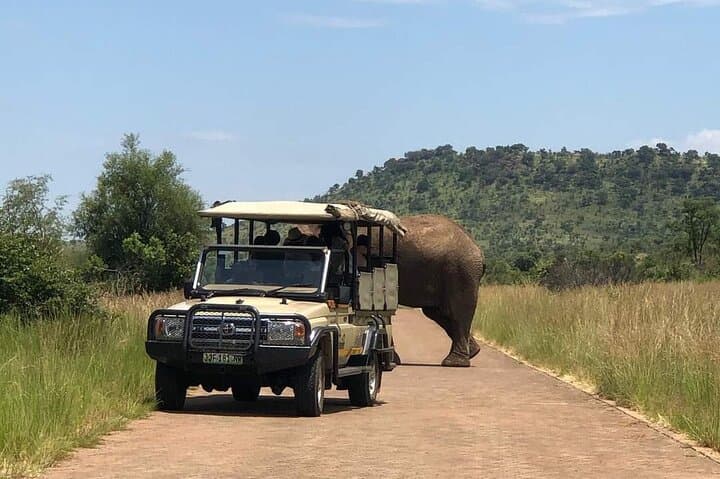
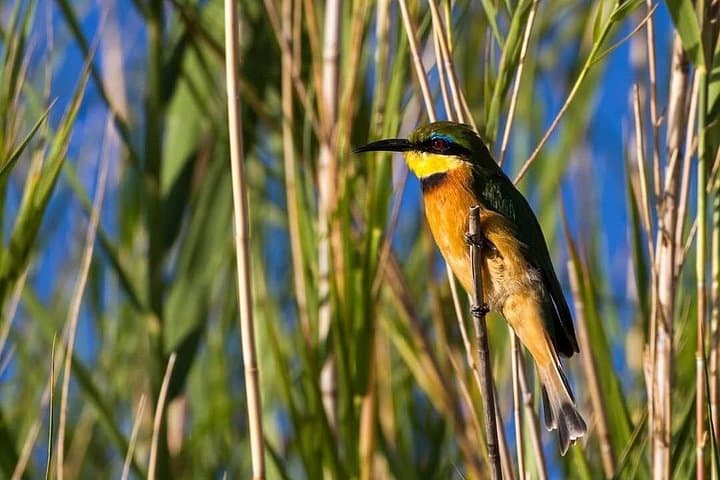
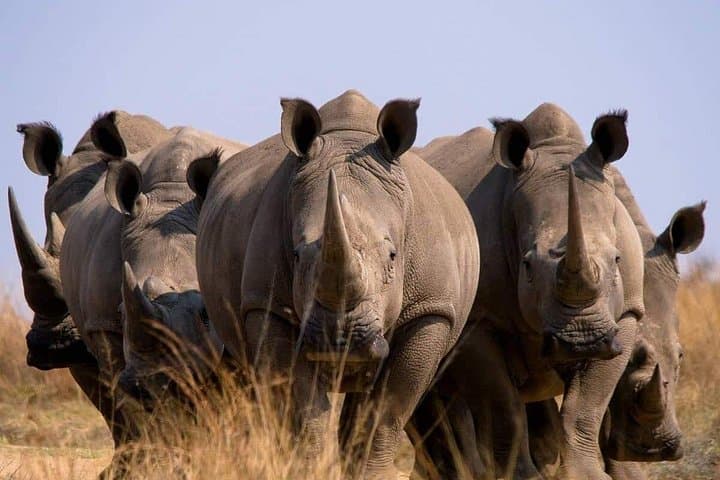
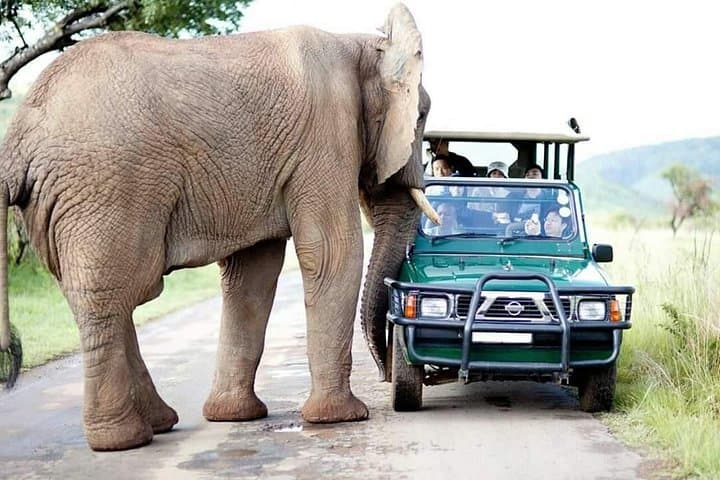
Dawn cracks over low volcanic ridges as the safari vehicle eases onto red tracks—acacia silhouettes sliding past, hornbills calling, and the scrub rising like breath. The Pilanesberg ring of extinct volcanoes frames the route; within that natural amphitheater, elephant bulls amble to water and lion roars carry across the plain.
Dawn cracks over low volcanic ridges as the safari vehicle eases onto red tracks—acacia silhouettes sliding past, hornbills calling, and the scrub rising like breath. The Pilanesberg ring of extinct volcanoes frames the route; within that natural amphitheater, elephant bulls amble to water and lion roars carry across the plain.
Pilanesberg sits inside the Pilanesberg Alkaline Ring Complex, a roughly circular geological structure born of ancient volcanic activity. The park’s formation created varied habitats—rocky koppies, mopane and marula woodlands, and permanent pans—that concentrate game and shape animal movement. The reserve also sits on land historically used by Tswana-speaking communities; today guided safaris often include natural-history commentary that links wildlife behavior to local ecology and culture.
On a full-day guided tour from Johannesburg or Pretoria expect 8–10 hours door-to-door. Guides run focused game drives—spotting the Big Five, explaining tracking cues and seasonal migrations—and they time stops for photography and short walks if permitted. Vehicles are open or pop-up roof Land Rovers; long stretches are smooth gravel but can be bumpy.
Practical edge: start early to catch predators at dawn, bring layered sun protection and plenty of water, and keep binoculars and a camera ready. Respect vehicle rules—no sudden movements or loud voices near resting animals. Weather shifts fast; summer thunder can cool dramatically, and winter mornings are crisp. A knowledgeable guide is the real value here: they turn sightings into insight, helping you read spoor, understand territorial behavior, and leave with a richer sense of Pilanesberg’s wild rhythms.