THE ADVENTURE COLLECTIVE® · Independent discovery and booking for outdoor travel

Combine a short, history-rich hike to Fort Rodney with a beach break and an exhilarating speedboat return to Castries. This three-hour land-and-sea tour gives a compact, active taste of northern Saint Lucia.
Combine a short, history-rich hike to Fort Rodney with a beach break and an exhilarating speedboat return to Castries. This three-hour land-and-sea tour gives a compact, active taste of northern Saint Lucia.
You step off the cruise terminal into Trinidad-scented salt air and a low, confident hum of engines — the island presses close, palms shading a bright highway that leads north. In under an hour you’re at Pigeon Island National Park, where scrubby hills and powder sand meet pale ruins. The guide points the way up a short, stepped path toward Fort Rodney; wind and surf push the view outward toward Rodney Bay and the blue arc of the Caribbean.
Verified experiences and guided adventures in the surrounding area.
Operated by Lush Excursions · Castries, Castries Quarter
You step off the cruise terminal into Trinidad-scented salt air and a low, confident hum of engines — the island presses close, palms shading a bright highway that leads north. In under an hour you’re at Pigeon Island National Park, where scrubby hills and powder sand meet pale ruins. The guide points the way up a short, stepped path toward Fort Rodney; wind and surf push the view outward toward Rodney Bay and the blue arc of the Caribbean.
Pigeon Island is a small military outpost turned public park. Fort Rodney’s stone emplacements date to the 18th and 19th centuries when the British and French fought for control of St. Lucia, and the hand-built causeway that now links the island to the mainland is a modern fix that shaped today’s shoreline access. Geology here is volcanic bedrock smoothed by centuries of wave action; trails are rocky in places and become sandy at the park’s beaches.
Culturally, the north coast blends local fishing communities, resort marinas, and vendor-run beach strips; on a short tour you get a quick cross-section: history, a seaworthy dip, then a speedboat that traces the coast past Reduit Beach, Rat Islet and Vigie’s headlands.
Practical guidance: the hike includes roughly 50 steps and short rock scrambles — wear sturdy, closed shoes and bring water and reef-safe sunscreen. Expect about 30–45 minutes of free time at the park for photos or a quick swim, followed by a 30–45 minute speedboat return. Mobility limitations make parts of the route difficult; if in doubt ask the operator about accessibility. Morning departures are cooler and clearer for photos; a dry bag keeps phones safe on the ride.
moderate.
3 hours.
Reasonable fitness for short uphill sections and steps; must be able to climb stairs and walk on uneven ground.
Expect about 20–30 minutes round trip to the main Fort Rodney viewpoints, with roughly 50 steps and some uneven surfaces.
Yes — you’ll have time to swim or sunbathe at the park during the one-hour stop; bring swimwear and a towel.
No — the route includes steps and short scrambles; it’s not recommended for travelers with limited mobility.
Arrive at least 10–15 minutes early; guides meet near the Colombian Emeralds store at the cruise terminal and will have a clipboard with the lead traveler’s name.
Fort Rodney’s gun emplacements were part of British defenses during the 18th–19th century; the causeway that links Pigeon Island to the mainland was completed in the 20th century, changing access and shoreline dynamics.
Pigeon Island is a protected national park; avoid walking on fragile vegetation, don’t touch coral, and carry out all trash to protect both terrestrial and marine habitats.
Lush Excursions operates guided outdoor trips and adventures with an emphasis on safety, stewardship, and memorable experiences.
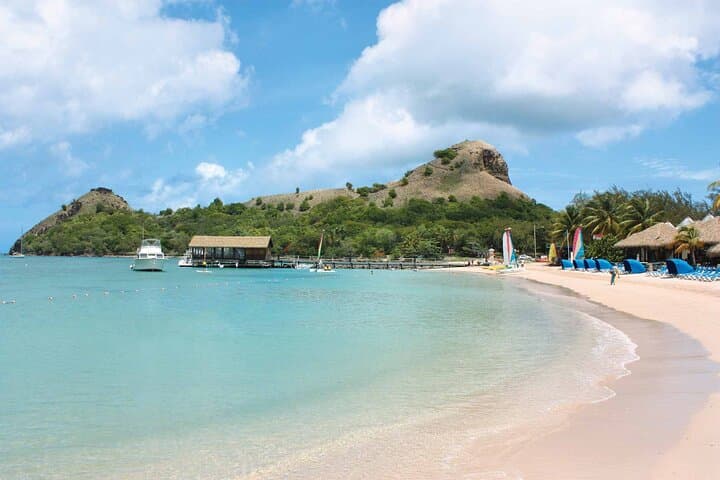
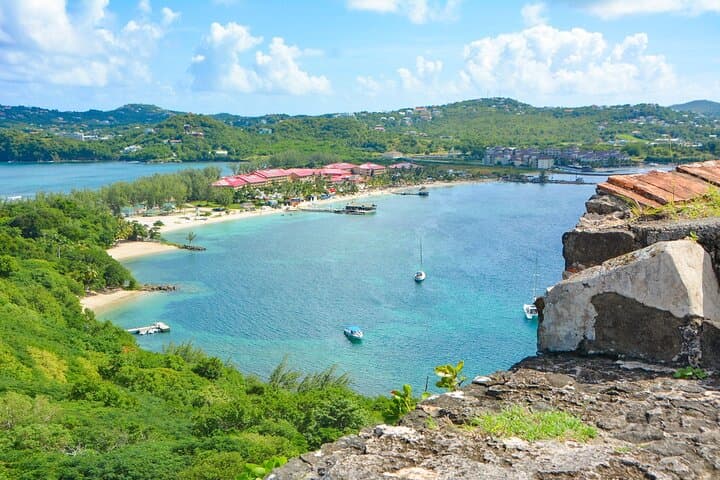
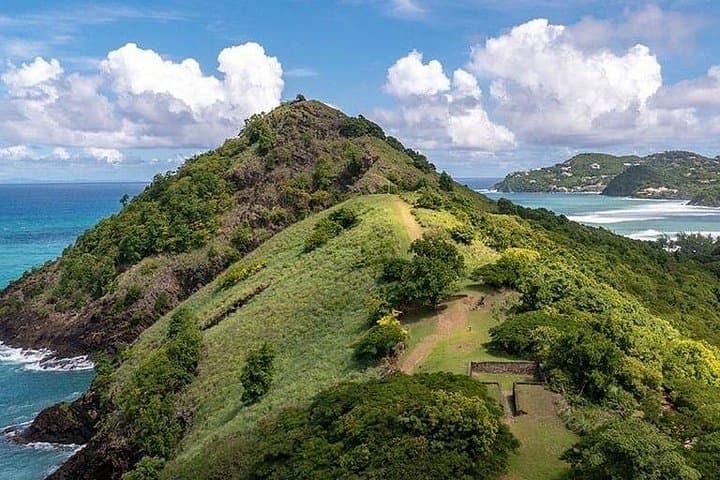
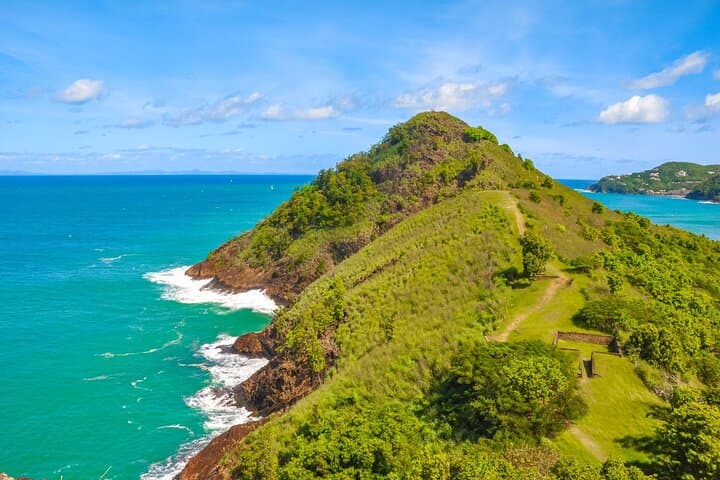
You step off the cruise terminal into Trinidad-scented salt air and a low, confident hum of engines — the island presses close, palms shading a bright highway that leads north. In under an hour you’re at Pigeon Island National Park, where scrubby hills and powder sand meet pale ruins. The guide points the way up a short, stepped path toward Fort Rodney; wind and surf push the view outward toward Rodney Bay and the blue arc of the Caribbean.
You step off the cruise terminal into Trinidad-scented salt air and a low, confident hum of engines — the island presses close, palms shading a bright highway that leads north. In under an hour you’re at Pigeon Island National Park, where scrubby hills and powder sand meet pale ruins. The guide points the way up a short, stepped path toward Fort Rodney; wind and surf push the view outward toward Rodney Bay and the blue arc of the Caribbean.
Pigeon Island is a small military outpost turned public park. Fort Rodney’s stone emplacements date to the 18th and 19th centuries when the British and French fought for control of St. Lucia, and the hand-built causeway that now links the island to the mainland is a modern fix that shaped today’s shoreline access. Geology here is volcanic bedrock smoothed by centuries of wave action; trails are rocky in places and become sandy at the park’s beaches.
Culturally, the north coast blends local fishing communities, resort marinas, and vendor-run beach strips; on a short tour you get a quick cross-section: history, a seaworthy dip, then a speedboat that traces the coast past Reduit Beach, Rat Islet and Vigie’s headlands.
Practical guidance: the hike includes roughly 50 steps and short rock scrambles — wear sturdy, closed shoes and bring water and reef-safe sunscreen. Expect about 30–45 minutes of free time at the park for photos or a quick swim, followed by a 30–45 minute speedboat return. Mobility limitations make parts of the route difficult; if in doubt ask the operator about accessibility. Morning departures are cooler and clearer for photos; a dry bag keeps phones safe on the ride.