THE ADVENTURE COLLECTIVE® · Independent discovery and booking for outdoor travel

Taste Tennessee: a guided afternoon through Pigeon Forge’s distilleries, a winery and a hearty Appalachian lunch. Expect grain-to-bottle demonstrations, backwoods storytelling and chances to buy bottles from family operations.
Taste Tennessee: a guided afternoon through Pigeon Forge’s distilleries, a winery and a hearty Appalachian lunch. Expect grain-to-bottle demonstrations, backwoods storytelling and chances to buy bottles from family operations.
You step out under the neon and Ferris-wheel hum of The Island at Pigeon Forge, the air carrying a hint of oak smoke and frying batter. Mike and Jenn meet you with quick smiles and a map of the day: distillery, lunch, winery, then a backwoods still that keeps the region’s outlaw history alive.
Verified experiences and guided adventures in the surrounding area.
You step out under the neon and Ferris-wheel hum of The Island at Pigeon Forge, the air carrying a hint of oak smoke and frying batter. Mike and Jenn meet you with quick smiles and a map of the day: distillery, lunch, winery, then a backwoods still that keeps the region’s outlaw history alive.
This loop runs through the foothills of the Great Smoky Mountains — low ridges of sandstone and shale that pushed early industry along the Little Pigeon River. Pigeon Forge itself grew from a 19th-century forge and later became a crossroads of Appalachian craft, food and illicit spirits; the modern tour traces that arc from grain-to-bottle distilleries to small Tennessee vineyards.
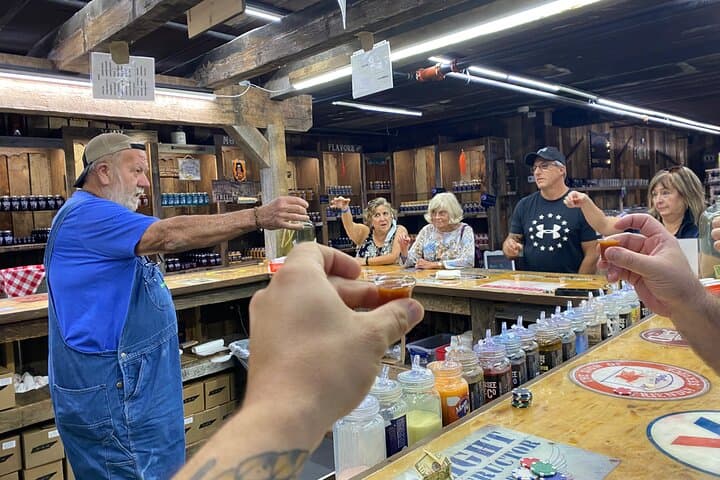
You’ll taste clear moonshine, toasted whiskey and local wines while hosts explain mash bills, barrel aging and why pumpkin-spiced shine shows up in autumn. The backwoods stop offers sharply different texture: raw, high-proof samples and stories about family-run operations that keep tradition alive.
Practically: bring a government photo ID (21+ for tastings), comfortable walking shoes, and a bottle-friendly mentality — you can often buy bottles on site, but laws and inventory vary. Expect about 3.5–4 hours with short drives between venues; the pace is social, not rushed. Hydrate between tastings and plan transportation after the tour — ride-share or a designated driver is the safest choice. By the end you’ll have tasted regional techniques, eaten a hearty Appalachian lunch, and left with clearer ideas about how mountain culture turned corn and grapes into a local industry.
easy.
3.5–4 hours.
Light activity level; you should be comfortable standing and walking short distances between venues.
Meeting point is inside The Island at Pigeon Forge; your booking confirmation will include specific meet-up details and host contact info.
The tour includes short drives arranged by the hosts between tasting locations; confirm pickup and drop-off arrangements with the operator when you book.
Most participating distilleries and wineries sell bottles on site, subject to stock and Tennessee liquor laws; bring payment and check shipping options if you want bottles mailed.
Hosts typically accommodate common dietary needs if notified in advance—add requests to your booking or message the operator before the tour.
Pigeon Forge began around a 19th-century iron forge on the Little Pigeon River; moonshining grew in the mountains as a way to preserve grain and supplement incomes during hard seasons.
Support small producers who follow local sourcing and packaging practices; avoid single-use plastics and return bottles to shops or recycle when possible.
You step out under the neon and Ferris-wheel hum of The Island at Pigeon Forge, the air carrying a hint of oak smoke and frying batter. Mike and Jenn meet you with quick smiles and a map of the day: distillery, lunch, winery, then a backwoods still that keeps the region’s outlaw history alive.
You step out under the neon and Ferris-wheel hum of The Island at Pigeon Forge, the air carrying a hint of oak smoke and frying batter. Mike and Jenn meet you with quick smiles and a map of the day: distillery, lunch, winery, then a backwoods still that keeps the region’s outlaw history alive.
This loop runs through the foothills of the Great Smoky Mountains — low ridges of sandstone and shale that pushed early industry along the Little Pigeon River. Pigeon Forge itself grew from a 19th-century forge and later became a crossroads of Appalachian craft, food and illicit spirits; the modern tour traces that arc from grain-to-bottle distilleries to small Tennessee vineyards.
You’ll taste clear moonshine, toasted whiskey and local wines while hosts explain mash bills, barrel aging and why pumpkin-spiced shine shows up in autumn. The backwoods stop offers sharply different texture: raw, high-proof samples and stories about family-run operations that keep tradition alive.
Practically: bring a government photo ID (21+ for tastings), comfortable walking shoes, and a bottle-friendly mentality — you can often buy bottles on site, but laws and inventory vary. Expect about 3.5–4 hours with short drives between venues; the pace is social, not rushed. Hydrate between tastings and plan transportation after the tour — ride-share or a designated driver is the safest choice. By the end you’ll have tasted regional techniques, eaten a hearty Appalachian lunch, and left with clearer ideas about how mountain culture turned corn and grapes into a local industry.