THE ADVENTURE COLLECTIVE® · Independent discovery and booking for outdoor travel

Swap Marseille’s port for sunlit hilltop villages, ochre cliffs and the spring-fed Sorgue on an eight-hour Luberon day trip. Expect markets, photo stops, short village walks and seasonal lavender views.
Swap Marseille’s port for sunlit hilltop villages, ochre cliffs and the spring-fed Sorgue on an eight-hour Luberon day trip. Expect markets, photo stops, short village walks and seasonal lavender views.
You step off the coach onto sun-warmed limestone, the air carrying the dry sweetness of thyme and a distant wash of lavender when in season.
Verified experiences and guided adventures in the surrounding area.
Operated by Bonjour Provence · Marseille, Provence-Alpes-Côte d'Azur
You step off the coach onto sun-warmed limestone, the air carrying the dry sweetness of thyme and a distant wash of lavender when in season.
On an eight‑hour loop through the Luberon massif you trade Marseille’s harbor skyline for cliff-top villages, ochre cliffs and the clear, emerald pool at the source of the Sorgue. The day often begins at a regional market—Isle-sur-la-Sorgue or Roussillon—where Provençal produce and pottery set a sensible, colorful pace.
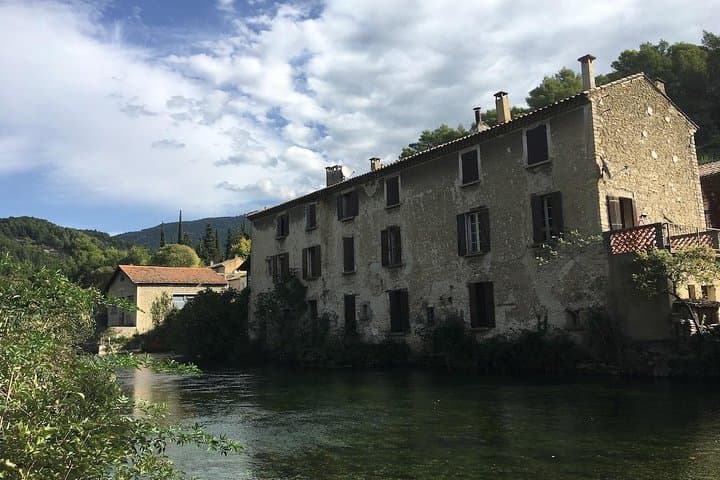
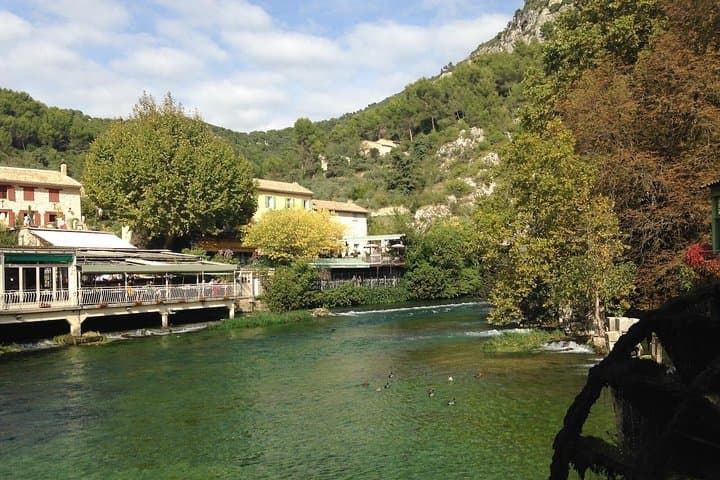
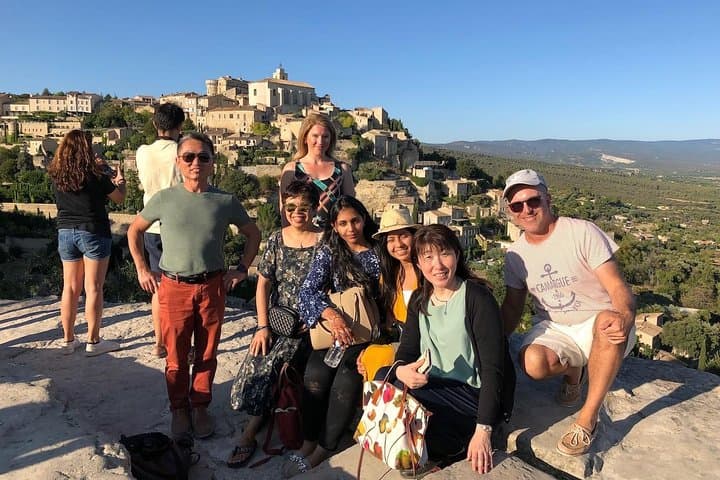
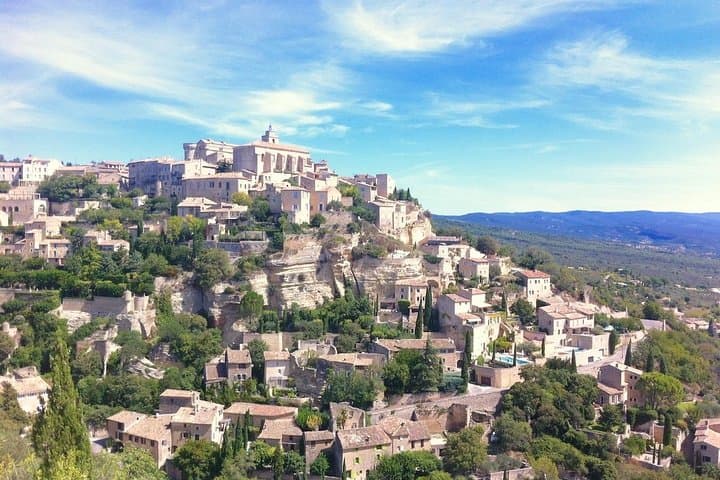
Geology shapes the route: Roussillon’s ochre cliffs are soft sedimentary rock worked by miners for centuries; Fontaine‑de‑Vaucluse issues from a deep karst spring that fed writers and pilgrims, including Petrarch in the 14th century. Gordes sits on a limestone escarpment with views across olive groves and lavender fields, while Lourmarin’s Renaissance chateau hints at the region’s mercantile past.
Expect short, paved village walks, narrow lanes, and viewpoint stops rather than strenuous hiking. Photographers target the ochres and, in July, the lavender bands near Sault; history fans linger at old mills and chapel ruins.
Practical notes: the tour runs about 8 hours and returns to Marseille; wear broken‑in walking shoes for cobbles and terraces, carry water and sun protection, and bring cash for market purchases. If you travel in summer, time market visits for morning freshness and use a light daypack for layers and camera gear. The route is accessible by coach but involves short uphill walks in villages—plan accordingly and book markets days if a visit to Gordes or Isle‑sur‑la‑Sorgue is your priority.
moderate.
8 hours.
Comfortable with short uphill walks and cobbled streets; not suited to those who cannot manage stairs or uneven pavement.
The tour departs from and returns to central Marseille; confirm pickup location at booking.
Lunch is not included; the itinerary allows time for markets and cafés where you can purchase regional food.
Visits depend on the day: Gordes is fully visited on market Tuesdays (other days it may be a photo stop); market visits correspond to the schedule (Isle‑sur‑la‑Sorgue Sunday, Roussillon Thursday).
Infant seats are available, but travelers should have at least moderate fitness for walking on uneven village streets.
The Luberon’s hilltop villages grew in medieval and Renaissance periods as defensive and agricultural centers; the Sorgue spring inspired poets such as Petrarch in the 14th century.
Stay on marked trails in ochre areas to avoid erosion, buy from local markets to support small producers, and avoid picking lavender on private fields.
Bonjour Provence operates guided outdoor trips and adventures with an emphasis on safety, stewardship, and memorable experiences.
You step off the coach onto sun-warmed limestone, the air carrying the dry sweetness of thyme and a distant wash of lavender when in season.
You step off the coach onto sun-warmed limestone, the air carrying the dry sweetness of thyme and a distant wash of lavender when in season.
On an eight‑hour loop through the Luberon massif you trade Marseille’s harbor skyline for cliff-top villages, ochre cliffs and the clear, emerald pool at the source of the Sorgue. The day often begins at a regional market—Isle-sur-la-Sorgue or Roussillon—where Provençal produce and pottery set a sensible, colorful pace.
Geology shapes the route: Roussillon’s ochre cliffs are soft sedimentary rock worked by miners for centuries; Fontaine‑de‑Vaucluse issues from a deep karst spring that fed writers and pilgrims, including Petrarch in the 14th century. Gordes sits on a limestone escarpment with views across olive groves and lavender fields, while Lourmarin’s Renaissance chateau hints at the region’s mercantile past.
Expect short, paved village walks, narrow lanes, and viewpoint stops rather than strenuous hiking. Photographers target the ochres and, in July, the lavender bands near Sault; history fans linger at old mills and chapel ruins.
Practical notes: the tour runs about 8 hours and returns to Marseille; wear broken‑in walking shoes for cobbles and terraces, carry water and sun protection, and bring cash for market purchases. If you travel in summer, time market visits for morning freshness and use a light daypack for layers and camera gear. The route is accessible by coach but involves short uphill walks in villages—plan accordingly and book markets days if a visit to Gordes or Isle‑sur‑la‑Sorgue is your priority.