THE ADVENTURE COLLECTIVE® · Independent discovery and booking for outdoor travel

Escape São Paulo’s urban sprawl for a half-day hike to Pico do Jaraguá. Follow shaded trails through Atlantic Forest to a 1,135 m summit that delivers a 360° view over the city — a compact, wildlife-rich trek perfect for moderate hikers.
Escape São Paulo’s urban sprawl for a half-day hike to Pico do Jaraguá. Follow shaded trails through Atlantic Forest to a 1,135 m summit that delivers a 360° view over the city — a compact, wildlife-rich trek perfect for moderate hikers.
You step out of the city’s smear of concrete and into a tunnel of green: the trail quickly narrows, palms and bromeliads pressing close while the air cools and the distant hum of traffic becomes a held breath. Trees lean and murmur as you follow the Pai Zé path, the forest seeming to push you upward toward the ridge.
Verified experiences and guided adventures in the surrounding area.
Operated by Gregtur Turismo · São Paulo, São Paulo
You step out of the city’s smear of concrete and into a tunnel of green: the trail quickly narrows, palms and bromeliads pressing close while the air cools and the distant hum of traffic becomes a held breath. Trees lean and murmur as you follow the Pai Zé path, the forest seeming to push you upward toward the ridge.
Jaraguá sits at the edge of São Paulo, a remnant of Atlantic Forest and Cerrado that marks the city’s highest point at 1,135 meters. Geologically the peak is an ancient outcrop, a hard, weather-resistant mass that creates the abrupt skyline above the metropolis. Culturally the hill has long been a lookout and meeting place — today locals come for views, birdwatching and a piece of wild near the city.
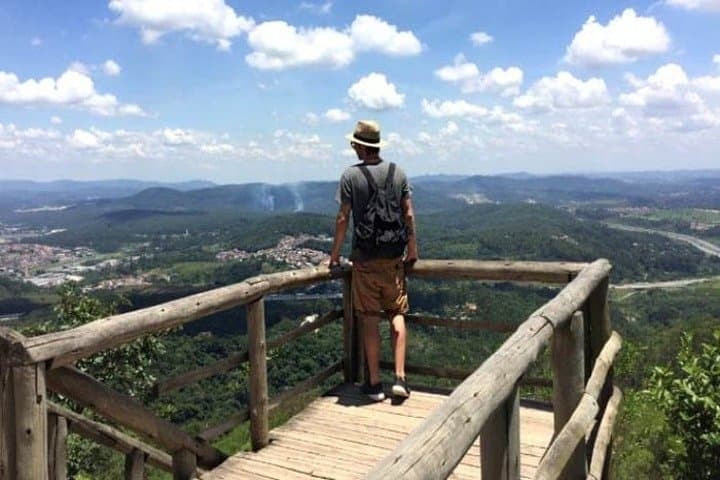
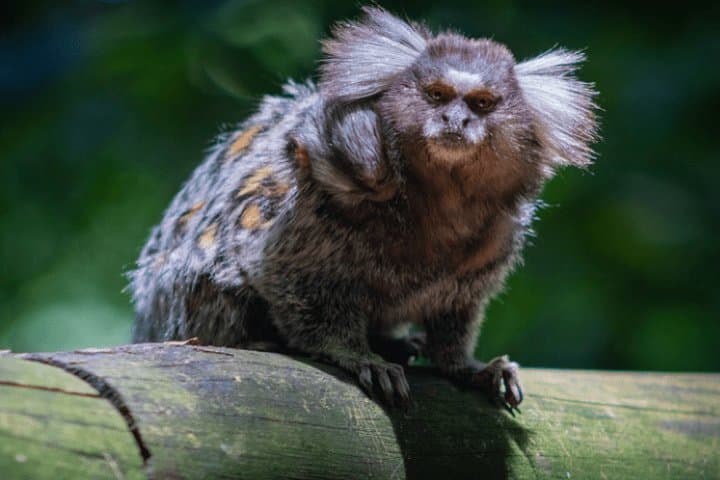
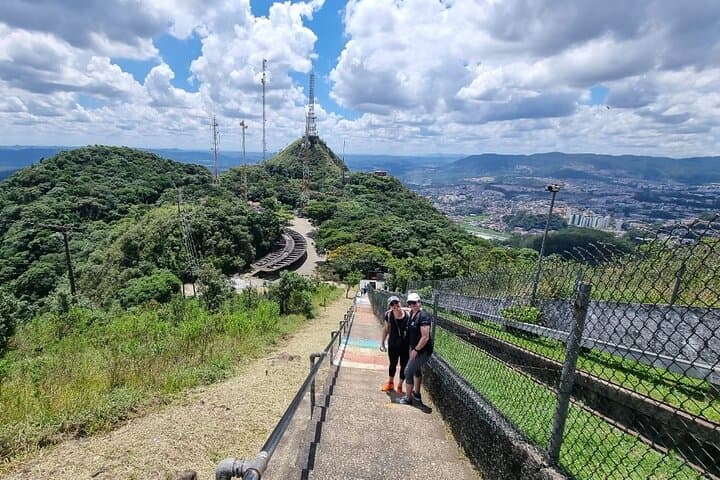
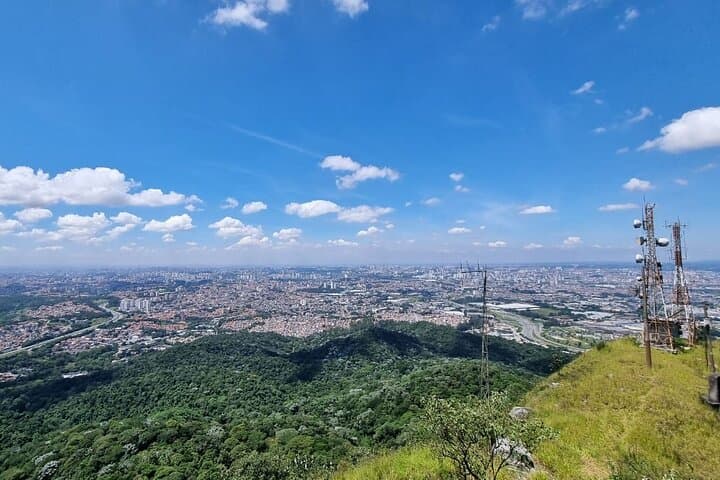
The route is roughly 3.6 km round-trip, mostly shaded, with a steady incline and a steeper final climb; a slow-paced ascent to the summit takes about 60–90 minutes. Marmosets and toucans are common companions, and on clear days the summit opens to a sweeping 360° panorama of São Paulo’s districts, punctuated by distant towers and the green belt that rings the city.
Practically: start early to avoid mid-day heat, bring water and a light rain layer (tropical showers are sudden), and wear shoes with good grip for the steeper rock sections. The tour often includes pick-up and a bilingual guide, so expect a mix of transport time and on-trail exploration — plan for half a day. Respect marked paths, give wildlife space, and leave no trace so this pocket of rainforest stays intact for the next group to discover.
moderate.
3–5 hours (including transport).
Moderate fitness; able to handle steady uphill walking for 60–90 minutes with some steeper scrambling near the top.
The trail is about 3.6 km round-trip with a steady incline and a steeper final section; expect 60–90 minutes each way at a moderate pace, rated light-to-medium difficulty.
This ecotour includes a licensed bilingual guide and transport; independent visitors can also hike from the park entrance without a guide.
Yes—small primates (marmosets), toucans and other forest birds are frequently seen; sightings aren’t guaranteed, so move quietly and early morning increases chances.
Visibility depends on weather and air quality; clearer views are common after rain and in the cooler months, while humidity and haze can reduce visibility on some days.
Pico do Jaraguá has been used historically as a lookout and boundary marker; the state park preserves one of the last patches of Atlantic Forest inside the São Paulo metropolitan area.
The park protects crucial Atlantic Forest and Cerrado edge habitat; stick to trails and avoid feeding wildlife to minimize human impact.
Gregtur Turismo operates guided outdoor trips and adventures with an emphasis on safety, stewardship, and memorable experiences.
You step out of the city’s smear of concrete and into a tunnel of green: the trail quickly narrows, palms and bromeliads pressing close while the air cools and the distant hum of traffic becomes a held breath. Trees lean and murmur as you follow the Pai Zé path, the forest seeming to push you upward toward the ridge.
You step out of the city’s smear of concrete and into a tunnel of green: the trail quickly narrows, palms and bromeliads pressing close while the air cools and the distant hum of traffic becomes a held breath. Trees lean and murmur as you follow the Pai Zé path, the forest seeming to push you upward toward the ridge.
Jaraguá sits at the edge of São Paulo, a remnant of Atlantic Forest and Cerrado that marks the city’s highest point at 1,135 meters. Geologically the peak is an ancient outcrop, a hard, weather-resistant mass that creates the abrupt skyline above the metropolis. Culturally the hill has long been a lookout and meeting place — today locals come for views, birdwatching and a piece of wild near the city.
The route is roughly 3.6 km round-trip, mostly shaded, with a steady incline and a steeper final climb; a slow-paced ascent to the summit takes about 60–90 minutes. Marmosets and toucans are common companions, and on clear days the summit opens to a sweeping 360° panorama of São Paulo’s districts, punctuated by distant towers and the green belt that rings the city.
Practically: start early to avoid mid-day heat, bring water and a light rain layer (tropical showers are sudden), and wear shoes with good grip for the steeper rock sections. The tour often includes pick-up and a bilingual guide, so expect a mix of transport time and on-trail exploration — plan for half a day. Respect marked paths, give wildlife space, and leave no trace so this pocket of rainforest stays intact for the next group to discover.