THE ADVENTURE COLLECTIVE® · Independent discovery and booking for outdoor travel

A compact, full-day hike from Kathmandu up to Phulchowki (2,760 m) rewards walkers with rhododendron corridors, high-altitude birding and broad Himalayan views. This guide covers what you'll encounter on trail, cultural highlights on the summit, and how to prepare for a day of steady climbing.
A compact, full-day hike from Kathmandu up to Phulchowki (2,760 m) rewards walkers with rhododendron corridors, high-altitude birding and broad Himalayan views. This guide covers what you'll encounter on trail, cultural highlights on the summit, and how to prepare for a day of steady climbing.
A cool morning in the Kathmandu Valley, and the road narrows as the city loosens its grip. Within an hour the bus drops you at Godawari and the trail swaps traffic noise for bird calls; the forest ahead pulls you upward in steady, loamy switchbacks. Phulchowki rises to 2,760 m, a high ridge that lays open views back across the valley and on clear days to the Annapurna and Langtang ranges.
Verified experiences and guided adventures in the surrounding area.
Operated by Adventure Vision Treks and Travels · Kathmandu, Bagmati Province
A cool morning in the Kathmandu Valley, and the road narrows as the city loosens its grip. Within an hour the bus drops you at Godawari and the trail swaps traffic noise for bird calls; the forest ahead pulls you upward in steady, loamy switchbacks. Phulchowki rises to 2,760 m, a high ridge that lays open views back across the valley and on clear days to the Annapurna and Langtang ranges.
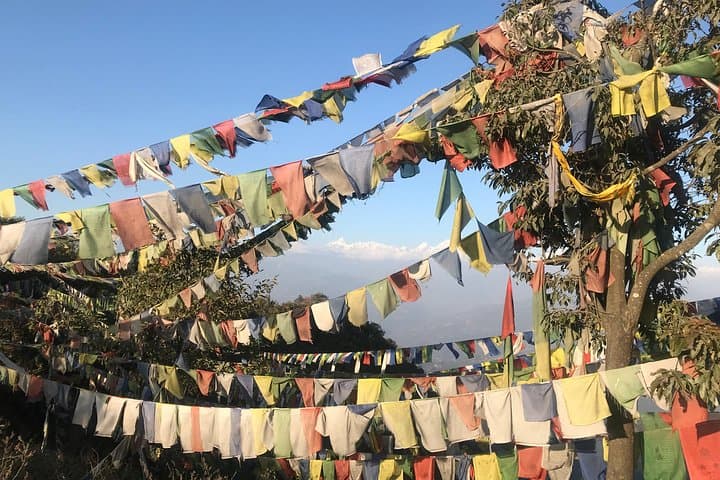
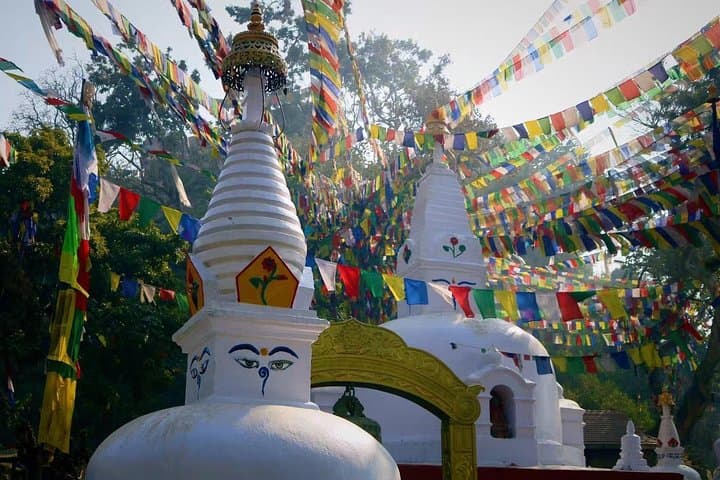
Geology and history are compact here: Phulchowki’s slopes are part of the Lesser Himalaya, rock and soil shaped by tectonic uplift and monsoon weathering. Culturally the summit hosts the Phulchowki Mai shrine and Tibetan prayer flags — an active pilgrimage site that blends local Newar practice with wider Himalayan religiosity. Botanically, spring floods the trail with rhododendron blooms; the hill supports hundreds of flowering-plant species and around a third of Nepal’s recorded birds, which makes morning birding particularly productive.
Expect a full day: a drive to Godawari, a 3–4 hour climb on a maintained but steep path, time to eat and explore the summit shrine, then a 2-hour descent. Terrain alternates packed dirt, roots and stone steps; some sections are exposed under the sun, others run through dense forest that seems to watch as you pass. Wildlife will test your patience more than your nerves — skulking warblers and laughingthrushes, not predators.
Practical edge: start early for cooler conditions and bird activity, wear sturdy boots and layer for wind at the top, bring 1.5–2 L water and rain protection during monsoon season, and respect the shrine and marked trails to protect fragile rhododendron understory.
moderate.
6–8 hours.
Suitable for hikers with steady cardiovascular fitness who can handle 3–4 hours of sustained uphill walking and a steep descent.
The hike is moderate: expect a sustained uphill of 3–4 hours and a 2-hour descent over packed dirt, roots and stone steps; no technical climbing required.
Spring (March–May) for rhododendron blooms and autumn (September–November) for clear views and stable weather; avoid the monsoon for trail comfort.
There are entry fees for protected areas and local taxes may apply; when booked with a guide these are typically included.
Active beginners with prior day-hiking experience and reasonable fitness can complete it, though they should plan for steady elevation gain and bring appropriate gear.
Phulchowki has long been both a religious site (Phulchowki Mai shrine) and a local source of medicinal and ornamental plants; its slopes are integral to Newar hill-culture around Kathmandu.
Trails pass sensitive rhododendron forest; stick to marked paths, pack out waste, and avoid trampling understory to protect breeding bird habitat.
Adventure Vision Treks and Travels operates guided outdoor trips and adventures with an emphasis on safety, stewardship, and memorable experiences.
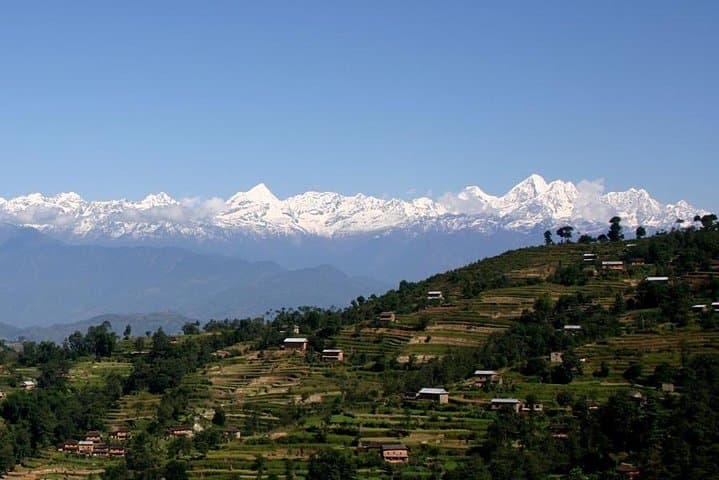
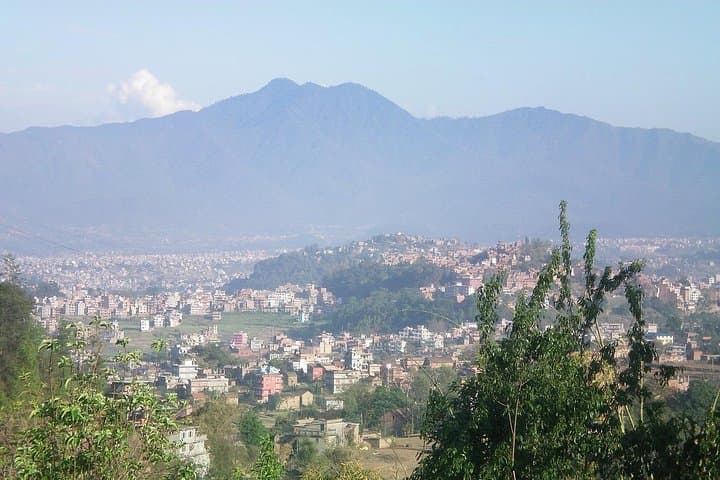
A cool morning in the Kathmandu Valley, and the road narrows as the city loosens its grip. Within an hour the bus drops you at Godawari and the trail swaps traffic noise for bird calls; the forest ahead pulls you upward in steady, loamy switchbacks. Phulchowki rises to 2,760 m, a high ridge that lays open views back across the valley and on clear days to the Annapurna and Langtang ranges.
A cool morning in the Kathmandu Valley, and the road narrows as the city loosens its grip. Within an hour the bus drops you at Godawari and the trail swaps traffic noise for bird calls; the forest ahead pulls you upward in steady, loamy switchbacks. Phulchowki rises to 2,760 m, a high ridge that lays open views back across the valley and on clear days to the Annapurna and Langtang ranges.
Geology and history are compact here: Phulchowki’s slopes are part of the Lesser Himalaya, rock and soil shaped by tectonic uplift and monsoon weathering. Culturally the summit hosts the Phulchowki Mai shrine and Tibetan prayer flags — an active pilgrimage site that blends local Newar practice with wider Himalayan religiosity. Botanically, spring floods the trail with rhododendron blooms; the hill supports hundreds of flowering-plant species and around a third of Nepal’s recorded birds, which makes morning birding particularly productive.
Expect a full day: a drive to Godawari, a 3–4 hour climb on a maintained but steep path, time to eat and explore the summit shrine, then a 2-hour descent. Terrain alternates packed dirt, roots and stone steps; some sections are exposed under the sun, others run through dense forest that seems to watch as you pass. Wildlife will test your patience more than your nerves — skulking warblers and laughingthrushes, not predators.
Practical edge: start early for cooler conditions and bird activity, wear sturdy boots and layer for wind at the top, bring 1.5–2 L water and rain protection during monsoon season, and respect the shrine and marked trails to protect fragile rhododendron understory.