THE ADVENTURE COLLECTIVE® · Independent discovery and booking for outdoor travel

Make the 60–90 minute speedboat crossing from Phuket’s Rassada Pier to Tonsai Pier for a fast, direct way to reach Koh Phi Phi. This transfer is practical for day-trippers and early-arrival travelers who want to maximize time on the islands.
Make the 60–90 minute speedboat crossing from Phuket’s Rassada Pier to Tonsai Pier for a fast, direct way to reach Koh Phi Phi. This transfer is practical for day-trippers and early-arrival travelers who want to maximize time on the islands.
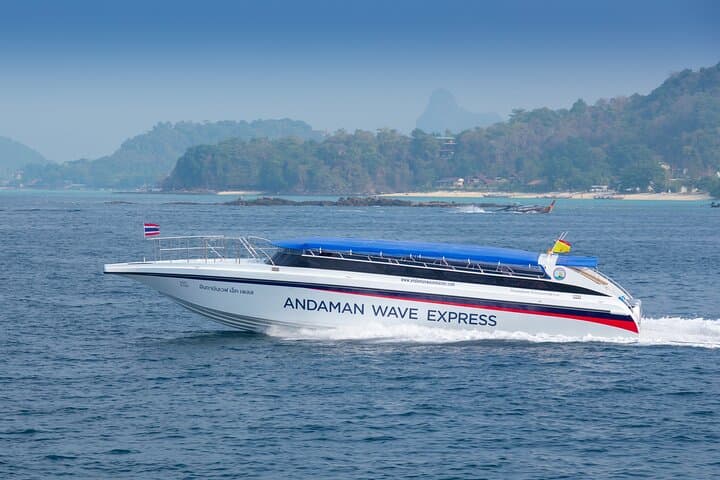
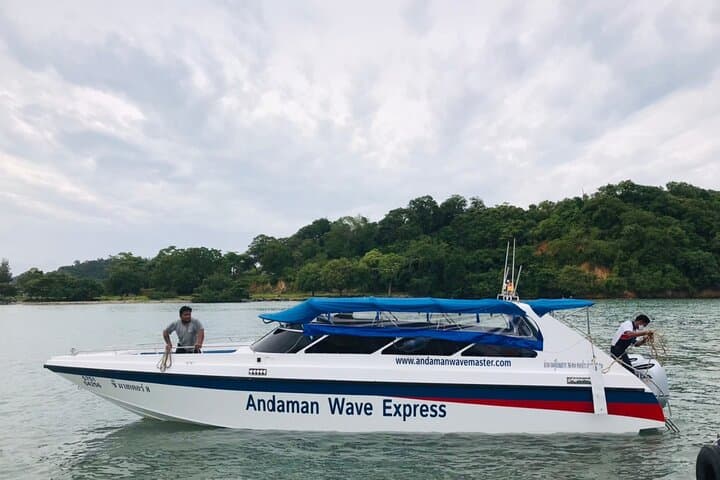
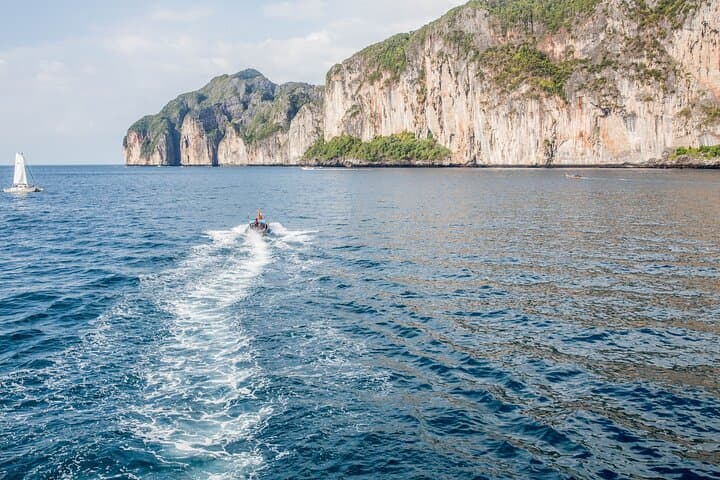
You step onto Rassada Pier with the harbor breathing salt and diesel; the speedboat waits like a low-lying comet, engines willing and crew ready. Thirty minutes after check-in you are cutting across the Andaman Sea—waves lifting the hull, sunlight turning spray into quicksilver—as Koh Phi Phi's sheer limestone faces resolve out of the horizon.
Verified experiences and guided adventures in the surrounding area.
Operated by Andaman Wave Master · Phuket, Phuket
You step onto Rassada Pier with the harbor breathing salt and diesel; the speedboat waits like a low-lying comet, engines willing and crew ready. Thirty minutes after check-in you are cutting across the Andaman Sea—waves lifting the hull, sunlight turning spray into quicksilver—as Koh Phi Phi's sheer limestone faces resolve out of the horizon.
The Phi Phi archipelago is a young marine landscape of karst limestone and coral platforms. Islands formed by uplift and erosion, their cliffs record ancient reefs and tropical seas. Phi Phi Don grew into a small fishing and farming community and has since become a hub for day-trippers and divers; the 2004 tsunami is a recent part of its story and reshaped both shoreline and local planning.
Culture here is informal and maritime—local long-tail boats, family-run dive shops, and restaurants serving freshly caught snapper. The islands sit within Thailand’s marine protection footprint, and visitors are now asked to follow stricter rules around coral and anchoring.
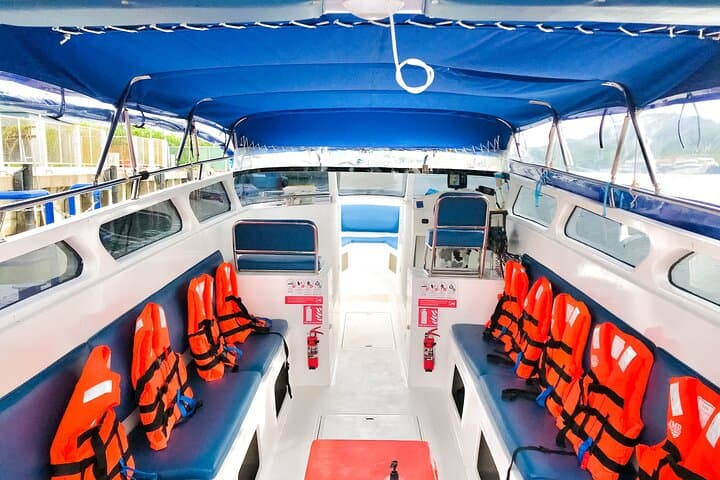
Practical guidance: departures run from Rassada Pier at 08:30, 12:30 and 13:30; check in at Andaman Wave Master Counter 3 (Gate 1) at least 30 minutes before departure. Pickup service in Phuket begins roughly 90 minutes before sail time from major resort areas. The crossing is advertised as 60–90 minutes; life jackets are provided and bottled water is included. Bring motion-sickness medication if you’re prone to seasickness, carry a passport and proof of vaccination for check-in, and pack light—pier space and luggage storage are limited. Arriving at Tonsai Pier places you within walking distance of beaches, viewpoints, and onward boats—ready to press further into Phi Phi’s cliffs and coves.
easy.
1–1.5 hours.
Basic mobility; able to board a boat and manage uneven decking and short pier stairs.
Scheduled departures are 08:30, 12:30 and 13:30 from Rassada Pier; total crossing time is about 60–90 minutes.
Yes—pickup is provided from areas including Patong, Kata, Karon, Naiharn, Rawai, Chalong, Phuket Town and Bypass Road; pickup typically starts ~90 minutes before sail time.
Bring your passport and Covid-19 vaccination certificate to show at the Andaman Wave Master counter during check-in.
Large luggage is discouraged due to limited pier space; the transfer is not recommended for wheelchair users or travelers with serious mobility or cardiovascular issues.
Phi Phi’s cliffs are limestone karst uplifted over millennia; the islands remained sparsely populated until tourism grew in the late 20th century and were heavily impacted by the 2004 tsunami.
Phi Phi sits within a managed marine area—follow no-touch rules for coral, use reef-safe sunscreen, and avoid anchoring on reefs to limit damage.
Andaman Wave Master operates guided outdoor trips and adventures with an emphasis on safety, stewardship, and memorable experiences.
You step onto Rassada Pier with the harbor breathing salt and diesel; the speedboat waits like a low-lying comet, engines willing and crew ready. Thirty minutes after check-in you are cutting across the Andaman Sea—waves lifting the hull, sunlight turning spray into quicksilver—as Koh Phi Phi's sheer limestone faces resolve out of the horizon.
You step onto Rassada Pier with the harbor breathing salt and diesel; the speedboat waits like a low-lying comet, engines willing and crew ready. Thirty minutes after check-in you are cutting across the Andaman Sea—waves lifting the hull, sunlight turning spray into quicksilver—as Koh Phi Phi's sheer limestone faces resolve out of the horizon.
The Phi Phi archipelago is a young marine landscape of karst limestone and coral platforms. Islands formed by uplift and erosion, their cliffs record ancient reefs and tropical seas. Phi Phi Don grew into a small fishing and farming community and has since become a hub for day-trippers and divers; the 2004 tsunami is a recent part of its story and reshaped both shoreline and local planning.
Culture here is informal and maritime—local long-tail boats, family-run dive shops, and restaurants serving freshly caught snapper. The islands sit within Thailand’s marine protection footprint, and visitors are now asked to follow stricter rules around coral and anchoring.
Practical guidance: departures run from Rassada Pier at 08:30, 12:30 and 13:30; check in at Andaman Wave Master Counter 3 (Gate 1) at least 30 minutes before departure. Pickup service in Phuket begins roughly 90 minutes before sail time from major resort areas. The crossing is advertised as 60–90 minutes; life jackets are provided and bottled water is included. Bring motion-sickness medication if you’re prone to seasickness, carry a passport and proof of vaccination for check-in, and pack light—pier space and luggage storage are limited. Arriving at Tonsai Pier places you within walking distance of beaches, viewpoints, and onward boats—ready to press further into Phi Phi’s cliffs and coves.