THE ADVENTURE COLLECTIVE® · Independent discovery and booking for outdoor travel

Glide across the Andaman Sea aboard the Phi Phi Cruiser and arrive at Tonsai Pier in about two hours. This practical guide explains what to expect on the crossing, local context, and smart tips for a smooth transfer from Phuket to Phi Phi Don.
Glide across the Andaman Sea aboard the Phi Phi Cruiser and arrive at Tonsai Pier in about two hours. This practical guide explains what to expect on the crossing, local context, and smart tips for a smooth transfer from Phuket to Phi Phi Don.
The pier slips away and the Andaman opens up: a low hum of the Phi Phi Cruiser, a spray of salt, and limestone karsts rising like cut stones from the sea. In two hours the ferry moves steadily from Rassada Pier in Phuket across open water to Tonsai Pier on Phi Phi Don, giving travelers a clear-eyed first view of the islands' steep cliffs, small beaches, and turquoise shelves.
Verified experiences and guided adventures in the surrounding area.
Operated by Oh-Hoo · Phi Phi Don, Krabi Province
The pier slips away and the Andaman opens up: a low hum of the Phi Phi Cruiser, a spray of salt, and limestone karsts rising like cut stones from the sea. In two hours the ferry moves steadily from Rassada Pier in Phuket across open water to Tonsai Pier on Phi Phi Don, giving travelers a clear-eyed first view of the islands' steep cliffs, small beaches, and turquoise shelves.
Geology here is immediate — towering limestone caused by ancient reef uplift and erosion — and history is visible in human scale: small fishing villages and the rebuilt resorts of Phi Phi Don, recovered and adapted after the 2004 tsunami. The islands sit within an area long used by seafarers and local Chao Leh (sea gypsy) communities; today they are part of a protected marine landscape that attracts snorkelers and day-trippers.
Practicalities matter: the scheduled crossing lasts about 2 hours; ferries sail year-round but seas are choppier in the monsoon months. Hotel pickup from Phuket Town, Patong, Kata, Karon, Rawai and Nai Harn simplifies logistics, and the ferry has toilets and air-conditioning.
For planning, book morning departures to maximize daylight on arrival, pack reef-safe sunscreen and a light layer for sea breeze, and keep motion-sickness remedies handy if you’re sensitive. Arrive at Rassada at least 30–45 minutes before departure for check-in and boarding. Once ashore, Tonsai Village places beaches, viewpoints and boat operators within easy walking distance — an efficient, low-friction way to move between Phuket and one of Thailand’s most photographed island groups.
easy.
2 hours.
Minimal fitness required—suitable for most travelers comfortable boarding a ferry and walking short distances with luggage
The scheduled crossing is approximately 2 hours from Rassada Pier to Tonsai Pier.
Yes—hotel pickup is offered from Phuket Town, Patong, Kata, Karon, Rawai and Nai Harn; confirm your pickup point when booking.
Large luggage is accepted, but keep in mind the walk from Tonsai Pier to many hotels involves steps and uneven paths; travel light when possible.
Trips may be postponed or cancelled in bad weather with a full refund; always check local conditions and the operator’s notices before departure.
Phi Phi’s steep limestone islands are the result of coral reefs uplifted by tectonic forces and sculpted by erosion; the islands have supported small fishing communities and increased tourism since the late 20th century.
Phi Phi lies within a sensitive marine area; recent management actions (seasonal closures and mooring buoys) aim to reduce reef damage—use reef-safe products and follow no-touch rules.
Oh-Hoo operates guided outdoor trips and adventures with an emphasis on safety, stewardship, and memorable experiences.
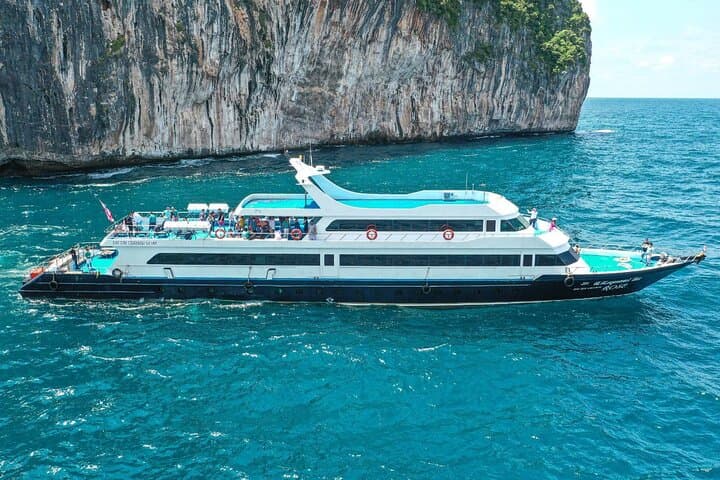
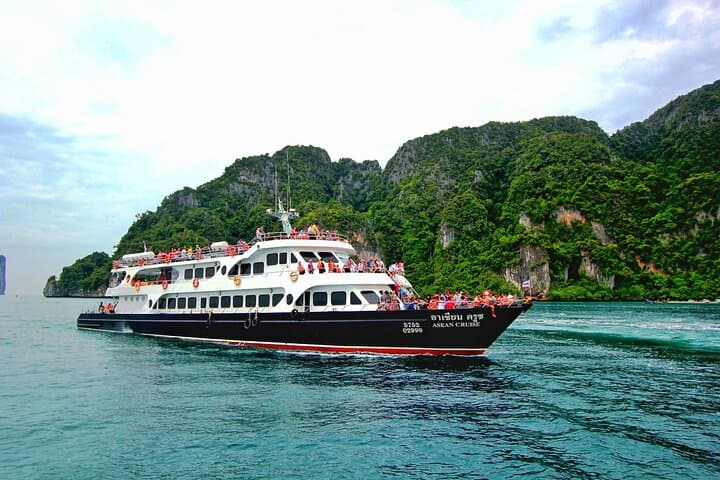
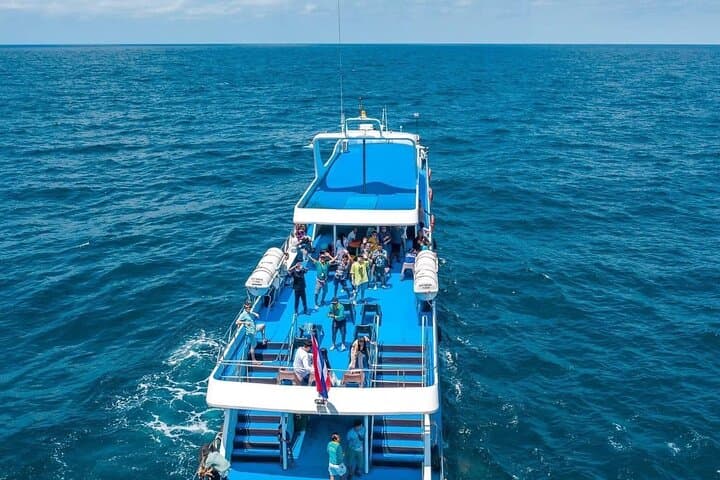
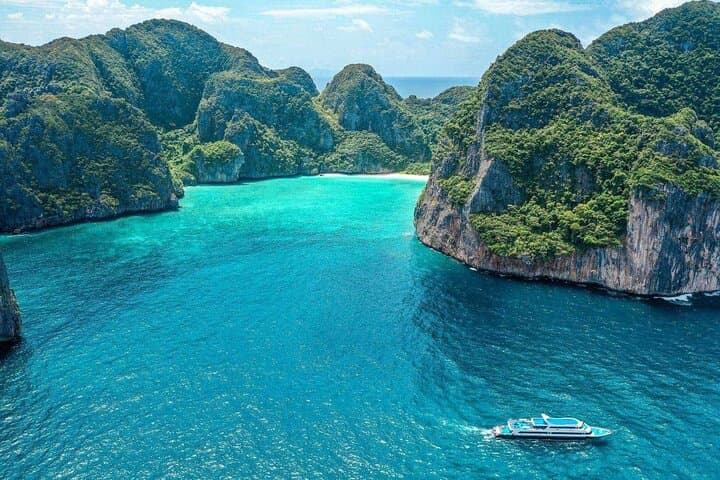
The pier slips away and the Andaman opens up: a low hum of the Phi Phi Cruiser, a spray of salt, and limestone karsts rising like cut stones from the sea. In two hours the ferry moves steadily from Rassada Pier in Phuket across open water to Tonsai Pier on Phi Phi Don, giving travelers a clear-eyed first view of the islands' steep cliffs, small beaches, and turquoise shelves.
The pier slips away and the Andaman opens up: a low hum of the Phi Phi Cruiser, a spray of salt, and limestone karsts rising like cut stones from the sea. In two hours the ferry moves steadily from Rassada Pier in Phuket across open water to Tonsai Pier on Phi Phi Don, giving travelers a clear-eyed first view of the islands' steep cliffs, small beaches, and turquoise shelves.
Geology here is immediate — towering limestone caused by ancient reef uplift and erosion — and history is visible in human scale: small fishing villages and the rebuilt resorts of Phi Phi Don, recovered and adapted after the 2004 tsunami. The islands sit within an area long used by seafarers and local Chao Leh (sea gypsy) communities; today they are part of a protected marine landscape that attracts snorkelers and day-trippers.
Practicalities matter: the scheduled crossing lasts about 2 hours; ferries sail year-round but seas are choppier in the monsoon months. Hotel pickup from Phuket Town, Patong, Kata, Karon, Rawai and Nai Harn simplifies logistics, and the ferry has toilets and air-conditioning.
For planning, book morning departures to maximize daylight on arrival, pack reef-safe sunscreen and a light layer for sea breeze, and keep motion-sickness remedies handy if you’re sensitive. Arrive at Rassada at least 30–45 minutes before departure for check-in and boarding. Once ashore, Tonsai Village places beaches, viewpoints and boat operators within easy walking distance — an efficient, low-friction way to move between Phuket and one of Thailand’s most photographed island groups.