THE ADVENTURE COLLECTIVE® · Independent discovery and booking for outdoor travel

Spend a respectful half-day with rescued elephants in the hills behind Patong. This small-group visit focuses on feeding and learning — no riding or shows — with hotel transfers included.
Spend a respectful half-day with rescued elephants in the hills behind Patong. This small-group visit focuses on feeding and learning — no riding or shows — with hotel transfers included.
You climb out of the air-conditioned transfer into a narrower road where the hills behind Patong open into rough granite slopes and shaded rubber groves. The air smells of earth and herbs; elephants move through the clearing with slow confidence, trunks exploring the ground as local caretakers call soft greetings. This is not a performance — it’s a deliberately quiet hour spent preparing herbal snacks and offering them under guidance while the animals browse freely.
Verified experiences and guided adventures in the surrounding area.
Operated by MY Holiday Centre · Phuket, Phuket
You climb out of the air-conditioned transfer into a narrower road where the hills behind Patong open into rough granite slopes and shaded rubber groves. The air smells of earth and herbs; elephants move through the clearing with slow confidence, trunks exploring the ground as local caretakers call soft greetings. This is not a performance — it’s a deliberately quiet hour spent preparing herbal snacks and offering them under guidance while the animals browse freely.
The sanctuary model here grew from shifting local economies: as logging declined and tourism boomed, several rescue projects began converting private land into chain-free refuges for displaced elephants. The ground underfoot is the island’s older granite and weathered soils, patched with plantation and secondary forest; cultural layers include the working lives of former mahouts who now serve as caretakers and educators.
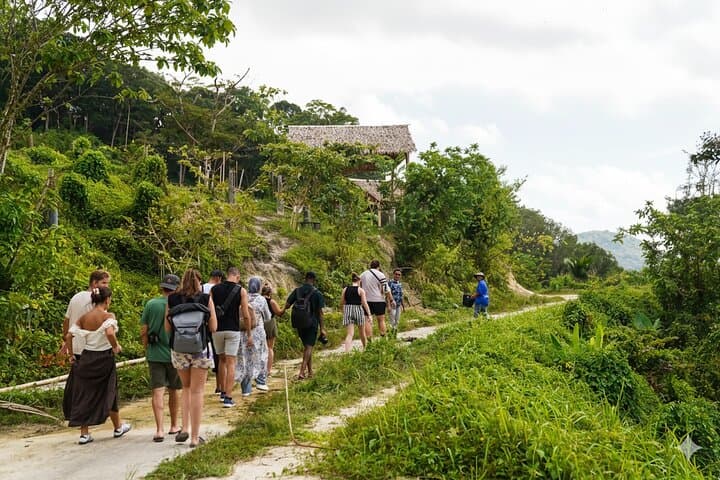
Expect a short, focused visit: about 60 minutes at the sanctuary with round-trip hotel transfers that make this a half-day outing from Patong or nearby beaches. Guides explain elephant diet, social behavior, and the limits of visitor contact — no riding or bathing, but hands-on feeding and treat preparation are part of the experience. Photographs are welcome, though keep interaction minimal and follow caretakers’ instructions.
Practical tips: wear closed-toe shoes and sun protection, bring water and insect repellent, and arrive with an open, respectful attitude. Groups are small (up to ten), the program suits most fitness levels, and the operator’s 24-hour cancellation policy applies. This visit offers a grounded, educational encounter that supports local welfare efforts while keeping the animals’ needs first.
easy.
3–4 hours (includes transfers).
Light activity; suitable for most fitness levels with short periods of standing and gentle walking
No — this experience is explicitly chain-free with no riding, shows, or bathing; interactions are limited to supervised feeding and treat preparation.
The sanctuary visit itself is about 60 minutes; with round-trip hotel pickup and drop-off expect a 3–4 hour window depending on your hotel location.
Yes, the tour is family-friendly and rated easy for most fitness levels; infants should be reported at booking so operators can advise on seating during transfers.
Yes — photography is allowed but avoid flash, stay at the distances caretakers set, and prioritize the animals’ comfort over getting close shots.
Many rescue sanctuaries in Phuket evolved as logging and traditional elephant work waned; former mahouts and local families converted private land to provide safer spaces for displaced animals.
The site emphasizes non-exploitative visitor programs and supports local livelihoods; visitors should follow rules that minimize stress on animals and reduce waste.
MY Holiday Centre operates guided outdoor trips and adventures with an emphasis on safety, stewardship, and memorable experiences.
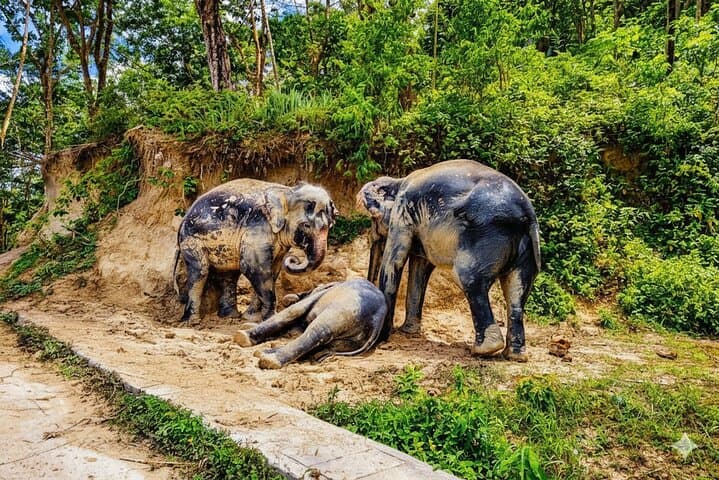
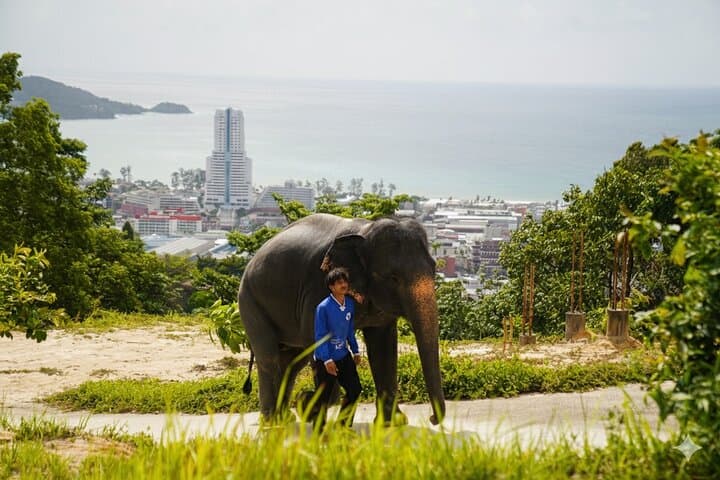
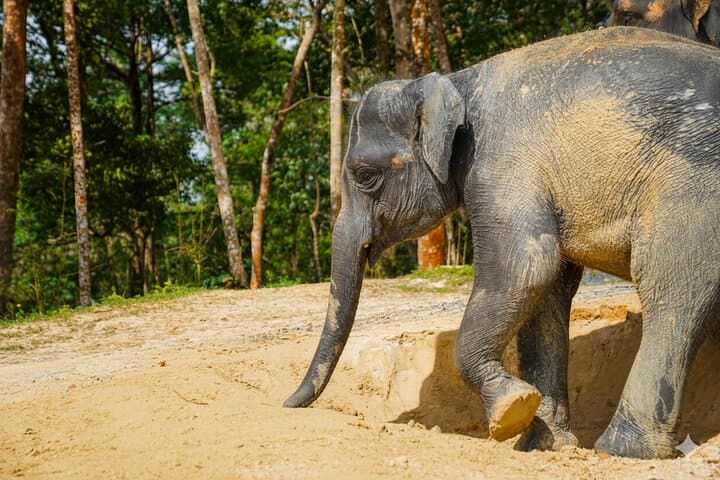
You climb out of the air-conditioned transfer into a narrower road where the hills behind Patong open into rough granite slopes and shaded rubber groves. The air smells of earth and herbs; elephants move through the clearing with slow confidence, trunks exploring the ground as local caretakers call soft greetings. This is not a performance — it’s a deliberately quiet hour spent preparing herbal snacks and offering them under guidance while the animals browse freely.
You climb out of the air-conditioned transfer into a narrower road where the hills behind Patong open into rough granite slopes and shaded rubber groves. The air smells of earth and herbs; elephants move through the clearing with slow confidence, trunks exploring the ground as local caretakers call soft greetings. This is not a performance — it’s a deliberately quiet hour spent preparing herbal snacks and offering them under guidance while the animals browse freely.
The sanctuary model here grew from shifting local economies: as logging declined and tourism boomed, several rescue projects began converting private land into chain-free refuges for displaced elephants. The ground underfoot is the island’s older granite and weathered soils, patched with plantation and secondary forest; cultural layers include the working lives of former mahouts who now serve as caretakers and educators.
Expect a short, focused visit: about 60 minutes at the sanctuary with round-trip hotel transfers that make this a half-day outing from Patong or nearby beaches. Guides explain elephant diet, social behavior, and the limits of visitor contact — no riding or bathing, but hands-on feeding and treat preparation are part of the experience. Photographs are welcome, though keep interaction minimal and follow caretakers’ instructions.
Practical tips: wear closed-toe shoes and sun protection, bring water and insect repellent, and arrive with an open, respectful attitude. Groups are small (up to ten), the program suits most fitness levels, and the operator’s 24-hour cancellation policy applies. This visit offers a grounded, educational encounter that supports local welfare efforts while keeping the animals’ needs first.