THE ADVENTURE COLLECTIVE® · Independent discovery and booking for outdoor travel

Spend four thoughtful hours with rescued elephants on a small-group tour in Phuket. Walk forest trails, learn about herbal diets and care, and feed elephants by hand—no riding or shows.
Spend four thoughtful hours with rescued elephants on a small-group tour in Phuket. Walk forest trails, learn about herbal diets and care, and feed elephants by hand—no riding or shows.
You arrive with the scent of damp earth and crushed leaves, stepping from an air-conditioned van onto a shaded trail where trunks and trunks of grey bulk move with deliberate curiosity. The sanctuary’s paths wind through low, tropical forest; elephants forage, toss branches, and approach with slow, inquisitive gestures that make a camera feel secondary to the moment.
Verified experiences and guided adventures in the surrounding area.
Operated by MY Holiday Centre · Phuket, Phuket Province
You arrive with the scent of damp earth and crushed leaves, stepping from an air-conditioned van onto a shaded trail where trunks and trunks of grey bulk move with deliberate curiosity. The sanctuary’s paths wind through low, tropical forest; elephants forage, toss branches, and approach with slow, inquisitive gestures that make a camera feel secondary to the moment.
Thailand’s relationship with elephants spans centuries—from royal mounts and timber work to contemporary rescue and rehabilitation. In Phuket, sanctuaries have shifted focus from spectacle to welfare: animals live in forested enclosures, fed herbal diets and cared for by mahouts and vets who emphasize natural behavior over performances.
Geologically, Phuket’s rolling limestone foothills and coastal soils support dense secondary forest and freshwater ponds that the elephants favor. Culturally, visits are framed by Thai hospitality—guides who explain individual elephants’ histories and the sanctuary’s care practices, making the encounter educational as well as emotional.
Practically, expect a structured, four-hour program: hotel pickup, safety briefing, a guided walk on mostly flat dirt trails, a snack-prep demo, and supervised hand-feeding. There’s no riding or shows—interaction is close but controlled to prioritize animal welfare.
Bring sun protection, light but sturdy shoes, and a sense of patience—elephants set the pace. Photography is welcome but follow guides’ instructions. The visit supports rescue and ongoing care, so arriving informed and respectful improves the experience for both visitors and animals.
easy.
4 hours.
Suitable for most fitness levels; requires short, gentle walks on uneven ground
No; this sanctuary operates on an ethical model with no riding or performance activities.
The program is approximately four hours, including hotel transfers, a guided walk, feeding, and refreshments.
Children are typically welcome but must be supervised; check age or booking restrictions with the operator at time of booking.
Yes—hotel pickup and return in an air-conditioned vehicle are included in the tour price.
Elephants in Thailand historically worked in logging and ceremonial roles; many modern sanctuaries rehabilitate animals retired from labor or tourism, focusing on natural behaviors and veterinary care.
The sanctuary model emphasizes no-riding policies, habitat-based care, and educational outreach; visitors can help by following rules, avoiding single-use plastics, and supporting sanctuaries with transparent welfare practices.
MY Holiday Centre operates guided outdoor trips and adventures with an emphasis on safety, stewardship, and memorable experiences.
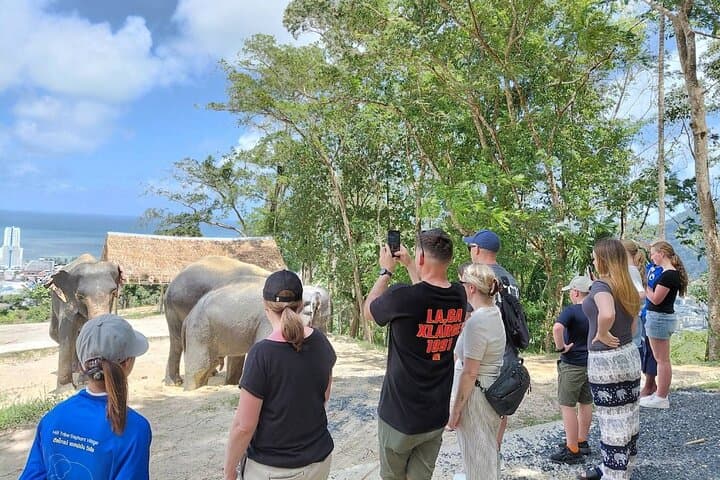


You arrive with the scent of damp earth and crushed leaves, stepping from an air-conditioned van onto a shaded trail where trunks and trunks of grey bulk move with deliberate curiosity. The sanctuary’s paths wind through low, tropical forest; elephants forage, toss branches, and approach with slow, inquisitive gestures that make a camera feel secondary to the moment.
You arrive with the scent of damp earth and crushed leaves, stepping from an air-conditioned van onto a shaded trail where trunks and trunks of grey bulk move with deliberate curiosity. The sanctuary’s paths wind through low, tropical forest; elephants forage, toss branches, and approach with slow, inquisitive gestures that make a camera feel secondary to the moment.
Thailand’s relationship with elephants spans centuries—from royal mounts and timber work to contemporary rescue and rehabilitation. In Phuket, sanctuaries have shifted focus from spectacle to welfare: animals live in forested enclosures, fed herbal diets and cared for by mahouts and vets who emphasize natural behavior over performances.
Geologically, Phuket’s rolling limestone foothills and coastal soils support dense secondary forest and freshwater ponds that the elephants favor. Culturally, visits are framed by Thai hospitality—guides who explain individual elephants’ histories and the sanctuary’s care practices, making the encounter educational as well as emotional.
Practically, expect a structured, four-hour program: hotel pickup, safety briefing, a guided walk on mostly flat dirt trails, a snack-prep demo, and supervised hand-feeding. There’s no riding or shows—interaction is close but controlled to prioritize animal welfare.
Bring sun protection, light but sturdy shoes, and a sense of patience—elephants set the pace. Photography is welcome but follow guides’ instructions. The visit supports rescue and ongoing care, so arriving informed and respectful improves the experience for both visitors and animals.