THE ADVENTURE COLLECTIVE® · Independent discovery and booking for outdoor travel

Meet rescued Asian elephants and learn Karen cultural traditions on a 4-hour sanctuary visit near Phuket. Expect hands-on feeding, a jungle walk, mud baths, and a traditional Thai cooking demo—designed around ethical, non-riding interactions.
Meet rescued Asian elephants and learn Karen cultural traditions on a 4-hour sanctuary visit near Phuket. Expect hands-on feeding, a jungle walk, mud baths, and a traditional Thai cooking demo—designed around ethical, non-riding interactions.
A humid, green morning on Phuket begins with the low rumble of elephants and the steady rhythm of a jungle that has waited generations for visitors who come to learn rather than exploit. You arrive after a coastal drive, change into a lightweight mahout shirt, and the scent of coffee and coconut rice cakes sets the pace for the day.
Verified experiences and guided adventures in the surrounding area.
Operated by Cyclope · Phuket, Phuket Province
A humid, green morning on Phuket begins with the low rumble of elephants and the steady rhythm of a jungle that has waited generations for visitors who come to learn rather than exploit. You arrive after a coastal drive, change into a lightweight mahout shirt, and the scent of coffee and coconut rice cakes sets the pace for the day.
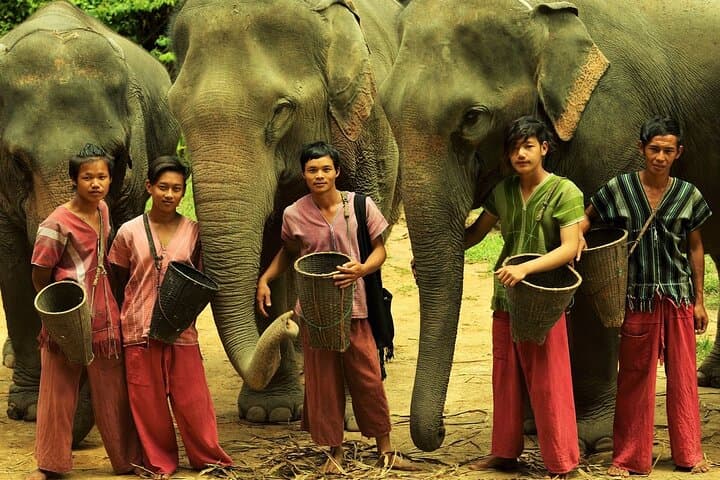
The sanctuary sits on reclaimed farmland and secondary tropical forest where the Karen people—an ethnic group with a long mahout tradition—care for rescued Asian elephants. Geologically, the landscape is low hills and limestone outcrops typical of southern Thailand, with shaded trails cutting across clay and compacted sand. Cultural elements are woven through the visit: tie-dye fabric crafts, a live cooking demonstration of kanom krok, and an explanation of elephant blessing rituals rooted in Karen spiritual practice.
On the activity side, expect close but respectful encounters: feeding, supervised mud spa time, and a 30–60 minute jungle walk over mostly flat to gently undulating terrain. Trails are forested with occasional rocky roots; wear sturdy, closed-toe shoes and prepare for splashy sections near the river where the elephants bathe. Guides emphasize non-ridden interaction and animal welfare—photography is welcome but avoid flash and sudden movements.
Practical note: pick-up from Phuket hotels is typically included; the full program is about 4 hours. Bring sun protection, insect repellent, and a small towel. The experience balances sensory moments—water daring you to cool off, trunks exploring hands—with clear conservation-minded practice, making it a hands-on, ethical way to meet elephants and learn Karen traditions.
easy.
4 hours.
Suitable for most fitness levels; requires short periods of walking on uneven, sometimes muddy terrain.
No—this sanctuary focuses on ethical, non-riding interactions such as feeding, bathing, and observing natural behaviors.
Yes, pick-up and drop-off service from selected Phuket areas is typically included; confirm your pickup point when booking.
Yes—families are welcome, but children should be supervised and follow guide safety instructions at all times.
A traditional Thai meal or buffet and drinking water are provided as part of the program; notify organizers of dietary restrictions when booking.
The Karen people of southern Thailand have long-standing mahout traditions; community knowledge of elephant care and ritual forms part of the sanctuary’s cultural program.
The site emphasizes rescue and rehabilitation over entertainment—visitors are encouraged to support habitat restoration practices and avoid activities like riding that harm elephant welfare.
Cyclope operates guided outdoor trips and adventures with an emphasis on safety, stewardship, and memorable experiences.


A humid, green morning on Phuket begins with the low rumble of elephants and the steady rhythm of a jungle that has waited generations for visitors who come to learn rather than exploit. You arrive after a coastal drive, change into a lightweight mahout shirt, and the scent of coffee and coconut rice cakes sets the pace for the day.
A humid, green morning on Phuket begins with the low rumble of elephants and the steady rhythm of a jungle that has waited generations for visitors who come to learn rather than exploit. You arrive after a coastal drive, change into a lightweight mahout shirt, and the scent of coffee and coconut rice cakes sets the pace for the day.
The sanctuary sits on reclaimed farmland and secondary tropical forest where the Karen people—an ethnic group with a long mahout tradition—care for rescued Asian elephants. Geologically, the landscape is low hills and limestone outcrops typical of southern Thailand, with shaded trails cutting across clay and compacted sand. Cultural elements are woven through the visit: tie-dye fabric crafts, a live cooking demonstration of kanom krok, and an explanation of elephant blessing rituals rooted in Karen spiritual practice.
On the activity side, expect close but respectful encounters: feeding, supervised mud spa time, and a 30–60 minute jungle walk over mostly flat to gently undulating terrain. Trails are forested with occasional rocky roots; wear sturdy, closed-toe shoes and prepare for splashy sections near the river where the elephants bathe. Guides emphasize non-ridden interaction and animal welfare—photography is welcome but avoid flash and sudden movements.
Practical note: pick-up from Phuket hotels is typically included; the full program is about 4 hours. Bring sun protection, insect repellent, and a small towel. The experience balances sensory moments—water daring you to cool off, trunks exploring hands—with clear conservation-minded practice, making it a hands-on, ethical way to meet elephants and learn Karen traditions.