THE ADVENTURE COLLECTIVE® · Independent discovery and booking for outdoor travel

Stand under an Arctic sky and learn to read the northern lights. This two-hour photography workshop in Pyhä-Luosto blends hands-on camera instruction with guided viewing at a low-light clearing near Kurulas Resort.
Stand under an Arctic sky and learn to read the northern lights. This two-hour photography workshop in Pyhä-Luosto blends hands-on camera instruction with guided viewing at a low-light clearing near Kurulas Resort.
A hush falls over the pine forest as the bus doors close behind you. The air is clean and sharp—small clouds of your breath drift toward the low, rolling fells. Under a sky that seems too wide for the human eye, a guide checks a camera and points toward a thinning band of green. You move along a track rimmed by old Scots pines, snow soft underfoot or frost-crisp needles depending on the season, until an open bowl of tundra gives the sky room to move. This two-hour workshop at Pyhä-Luosto turns that raw Arctic ceiling into a classroom.
Verified experiences and guided adventures in the surrounding area.
Operated by Kairankutsu Oy · Pyhätunturi, Lapland
A hush falls over the pine forest as the bus doors close behind you. The air is clean and sharp—small clouds of your breath drift toward the low, rolling fells. Under a sky that seems too wide for the human eye, a guide checks a camera and points toward a thinning band of green. You move along a track rimmed by old Scots pines, snow soft underfoot or frost-crisp needles depending on the season, until an open bowl of tundra gives the sky room to move. This two-hour workshop at Pyhä-Luosto turns that raw Arctic ceiling into a classroom.
Pyhä-Luosto sits where ancient bedrock rises into low fells carved by ice. The geology is blunt and honest: hard quartzite ridges and rounded summits that survived glaciers and time. Human history here is compact—reindeer routes and Sámi skalds have read these skies for generations, and the modern lodges at Pyhätunturi now offer a base for both scientific curiosity and creative practice.
The tour focuses on practical skills: understanding auroral behavior, reading cloud and light conditions, and translating those signals into camera settings. Guides explain exposure, ISO, and how color in the aurora shifts with solar intensity. You’ll learn how long to expose without trailing stars, when to open the aperture to preserve foreground silhouettes, and how cold affects batteries and electronics.
The route itself is gentle—a well-marked trail through old-growth pines leading to a natural clearing chosen for wide sky views and minimal artificial light. Groups are small (up to eight), and transportation from Kurulas Resort is included. This is not a strenuous trek; it’s a photographic stakeout built around patient observation and technique.
Timing is everything: clear, cold nights with active solar winds produce the most dramatic displays, while cloud cover or the midnight sun in summer can wipe the show out entirely. Practicalities matter here—dress in insulating layers, bring spare batteries stored close to your body, and use a sturdy tripod. Guides are wheelchair accessible and welcome families, but check pickup options and bring a compact headlamp with a red filter to keep night vision.
If you want an aurora that performs, come prepared and leave with images that reflect what you actually saw. This workshop is part lesson, part guided reconnaissance: it teaches you to interpret the sky on its terms and to work with Arctic conditions that can change from wind-slick clear to low cloud in an hour. Whether you’re a DSLR devotee or a mirrorless beginner, you’ll depart with sharper technique, better shots, and a clearer sense of how the northern sky moves.
easy.
2 hours.
Suitable for most fitness levels; involves short, flat walks on forest trails and standing outdoors in cold conditions.
Yes—this workshop teaches camera settings, so bring a camera with manual controls; phones may work but DSLRs/mirrorless are recommended.
Tours may run in cloudy conditions because auroras can appear through breaks, but check the supplier’s cancellation policy—full refund available if canceled 24+ hours in advance.
Yes—transportation from Kurulas Resort is included; confirm your pickup point when you book.
Absolutely—guides cover basic camera operation and settings suitable for beginners and intermediate shooters.
Yes—tour info lists stroller and wheelchair accessibility and allows children, but extreme cold can be hard on young kids.
Late autumn through early spring (September–April) offers the darkest skies and highest aurora visibility; avoid summer months with midnight sun.
Pyhä-Luosto sits on ancient quartzite fells used historically by Sámi herders; the area’s ridges were shaped by glacial action over millennia.
Pyhä-Luosto National Park emphasizes low-impact travel—stay on marked trails, minimize light pollution, and pack out all waste to protect fragile tundra.
Kairankutsu Oy operates guided outdoor trips and adventures with an emphasis on safety, stewardship, and memorable experiences.
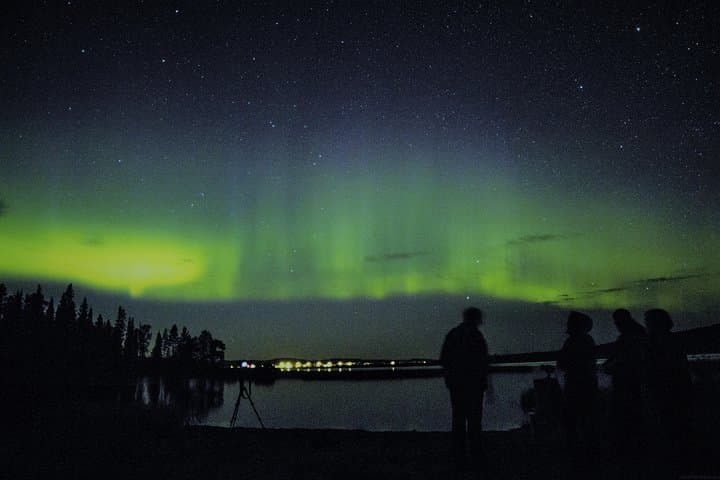
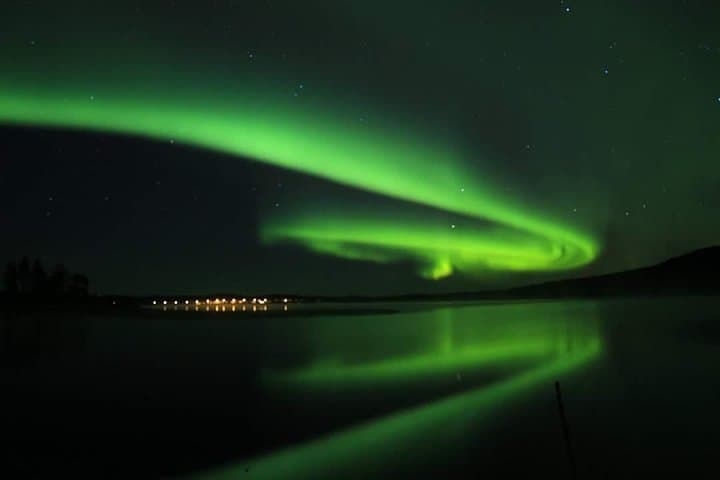
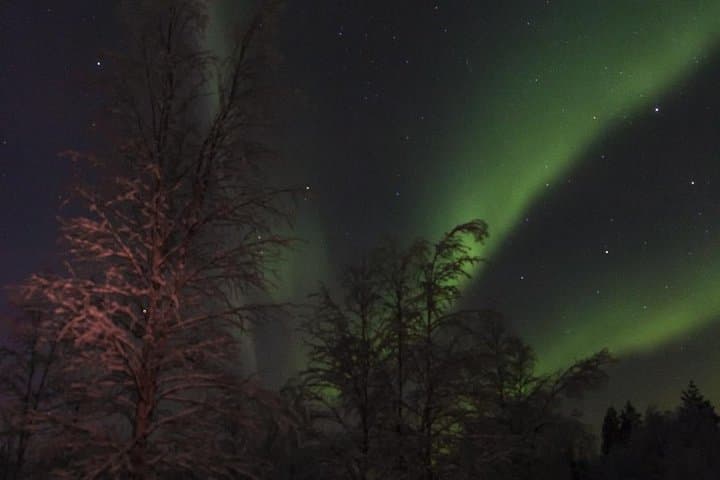
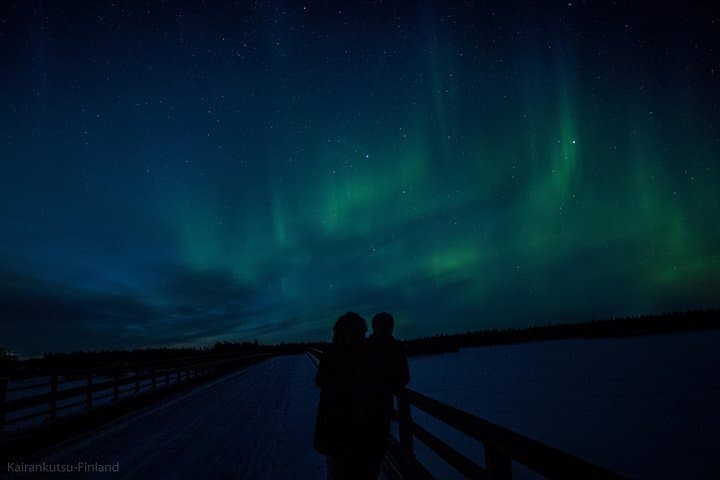
A hush falls over the pine forest as the bus doors close behind you. The air is clean and sharp—small clouds of your breath drift toward the low, rolling fells. Under a sky that seems too wide for the human eye, a guide checks a camera and points toward a thinning band of green. You move along a track rimmed by old Scots pines, snow soft underfoot or frost-crisp needles depending on the season, until an open bowl of tundra gives the sky room to move. This two-hour workshop at Pyhä-Luosto turns that raw Arctic ceiling into a classroom.
A hush falls over the pine forest as the bus doors close behind you. The air is clean and sharp—small clouds of your breath drift toward the low, rolling fells. Under a sky that seems too wide for the human eye, a guide checks a camera and points toward a thinning band of green. You move along a track rimmed by old Scots pines, snow soft underfoot or frost-crisp needles depending on the season, until an open bowl of tundra gives the sky room to move. This two-hour workshop at Pyhä-Luosto turns that raw Arctic ceiling into a classroom.
Pyhä-Luosto sits where ancient bedrock rises into low fells carved by ice. The geology is blunt and honest: hard quartzite ridges and rounded summits that survived glaciers and time. Human history here is compact—reindeer routes and Sámi skalds have read these skies for generations, and the modern lodges at Pyhätunturi now offer a base for both scientific curiosity and creative practice.
The tour focuses on practical skills: understanding auroral behavior, reading cloud and light conditions, and translating those signals into camera settings. Guides explain exposure, ISO, and how color in the aurora shifts with solar intensity. You’ll learn how long to expose without trailing stars, when to open the aperture to preserve foreground silhouettes, and how cold affects batteries and electronics.
The route itself is gentle—a well-marked trail through old-growth pines leading to a natural clearing chosen for wide sky views and minimal artificial light. Groups are small (up to eight), and transportation from Kurulas Resort is included. This is not a strenuous trek; it’s a photographic stakeout built around patient observation and technique.
Timing is everything: clear, cold nights with active solar winds produce the most dramatic displays, while cloud cover or the midnight sun in summer can wipe the show out entirely. Practicalities matter here—dress in insulating layers, bring spare batteries stored close to your body, and use a sturdy tripod. Guides are wheelchair accessible and welcome families, but check pickup options and bring a compact headlamp with a red filter to keep night vision.
If you want an aurora that performs, come prepared and leave with images that reflect what you actually saw. This workshop is part lesson, part guided reconnaissance: it teaches you to interpret the sky on its terms and to work with Arctic conditions that can change from wind-slick clear to low cloud in an hour. Whether you’re a DSLR devotee or a mirrorless beginner, you’ll depart with sharper technique, better shots, and a clearer sense of how the northern sky moves.