THE ADVENTURE COLLECTIVE® · Independent discovery and booking for outdoor travel

Kayak into one of Vietnam’s largest cave mouths, hike past ancient stalactites and swim in an underground lake on this full-day Phong Nha adventure. Practical guidance and local context prepare you for an accessible but wild cave experience.
Kayak into one of Vietnam’s largest cave mouths, hike past ancient stalactites and swim in an underground lake on this full-day Phong Nha adventure. Practical guidance and local context prepare you for an accessible but wild cave experience.
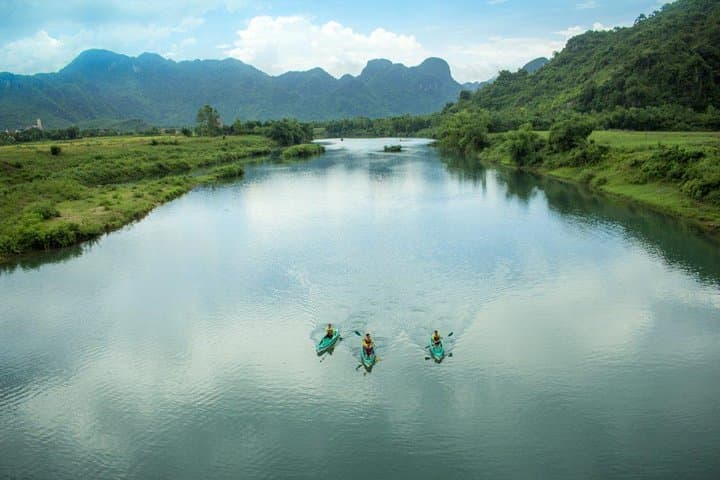
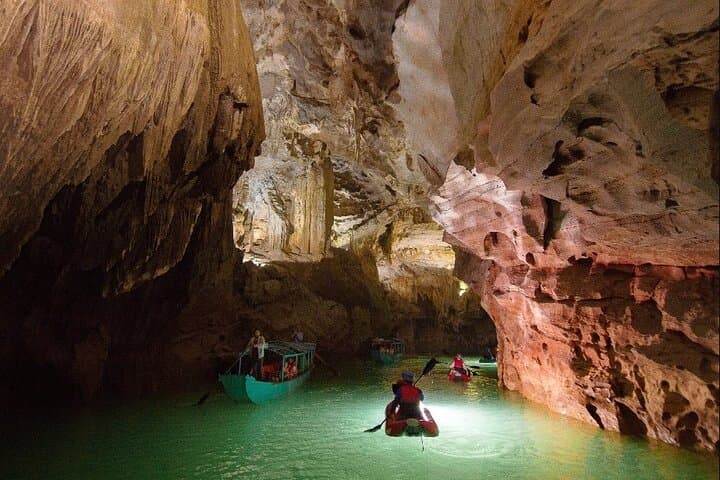
The river narrows to a dark throat and the kayak slips forward as the cave mouth swallows sound. Morning light lingers on limestone ribs; paddles whisper while the guide calls out route markers in Vietnamese and soft English. Phong Nha’s entrance—one of the largest in the park—opens into caverns scored by ancient water, where sandy banks give way to a calm underground lake.
Verified experiences and guided adventures in the surrounding area.
Operated by Phong Nha Locals Travel & Transport · Phong Nha, Quang Binh
The river narrows to a dark throat and the kayak slips forward as the cave mouth swallows sound. Morning light lingers on limestone ribs; paddles whisper while the guide calls out route markers in Vietnamese and soft English. Phong Nha’s entrance—one of the largest in the park—opens into caverns scored by ancient water, where sandy banks give way to a calm underground lake.
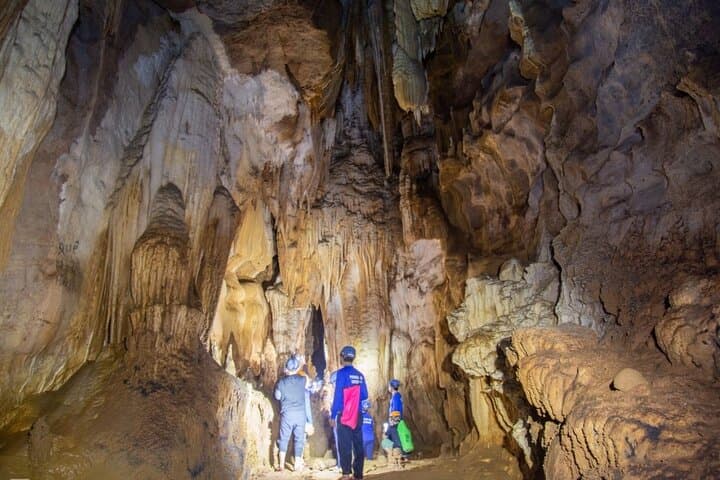
Geology here is brazenly visible: karst towers, high ceilings and curtain-like stalactites formed over millions of years by a persistent underground river. The British Royal Cave Association highlighted Phong Nha in 1997 for features including its length, massive entrance and underground lake. Local villages along the Son River still launch boats and tend small orchards, adding living culture to the landscape.
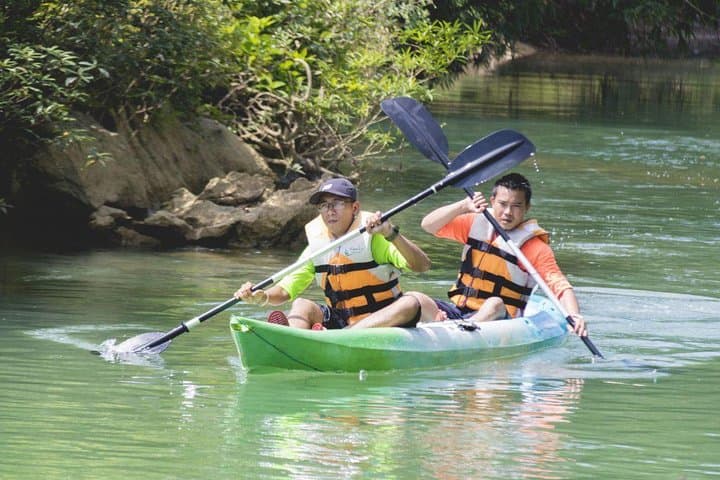
Expect a mixed half-day of paddling and walking: about 3 km of flat-water kayaking to the cave mouth, a 1.5 km guided hike through well-trodden cave passages, then a cool swim in the subterranean pool. Guides provide life jackets, helmets with torches, waterproof bags and a picnic lunch; transfers are in air-conditioned vehicles from Phong Nha town.
Practical edge: wear secure water shoes, use a dry bag for electronics, and bring a quick-dry set for the swim. Moderate fitness is required—longer exposure to humidity and low light can fatigue even experienced paddlers. Start in the morning to avoid midday heat and follow the guide’s safety brief about low ceilings and slippery sections. Conservation matters: avoid touching formations and pack out any waste—these caves are fragile and nationally protected.
moderate.
8 hours.
Moderate fitness: comfortable paddling for 3 km, walking 1.5 km in uneven cave terrain, and basic swimming ability.
Yes—guides provide basic kayak instruction and the initial stretch is flat water; participants should be comfortable in a kayak and able to follow safety briefings.
Transfers from Phong Nha town, kayaks and paddles, life jackets, helmets with torches, waterproof bags, a picnic lunch, guide services and entrance fees are included.
Yes if kept in a waterproof bag; consider a small waterproof camera or a phone in a sealed dry bag to protect against splashes and humidity.
Travelers should have moderate fitness; not recommended for those with spinal, heart conditions, or pregnancy. Infants must sit on an adult’s lap.
Phong Nha is part of Phong Nha–Ke Bang National Park, a UNESCO World Heritage Site recognized for its extensive karst systems and significant caves.
Tours operate within protected areas—stay on guided routes, avoid touching formations, and carry out all trash to reduce impact.
Phong Nha Locals Travel & Transport operates guided outdoor trips and adventures with an emphasis on safety, stewardship, and memorable experiences.
The river narrows to a dark throat and the kayak slips forward as the cave mouth swallows sound. Morning light lingers on limestone ribs; paddles whisper while the guide calls out route markers in Vietnamese and soft English. Phong Nha’s entrance—one of the largest in the park—opens into caverns scored by ancient water, where sandy banks give way to a calm underground lake.
The river narrows to a dark throat and the kayak slips forward as the cave mouth swallows sound. Morning light lingers on limestone ribs; paddles whisper while the guide calls out route markers in Vietnamese and soft English. Phong Nha’s entrance—one of the largest in the park—opens into caverns scored by ancient water, where sandy banks give way to a calm underground lake.
Geology here is brazenly visible: karst towers, high ceilings and curtain-like stalactites formed over millions of years by a persistent underground river. The British Royal Cave Association highlighted Phong Nha in 1997 for features including its length, massive entrance and underground lake. Local villages along the Son River still launch boats and tend small orchards, adding living culture to the landscape.
Expect a mixed half-day of paddling and walking: about 3 km of flat-water kayaking to the cave mouth, a 1.5 km guided hike through well-trodden cave passages, then a cool swim in the subterranean pool. Guides provide life jackets, helmets with torches, waterproof bags and a picnic lunch; transfers are in air-conditioned vehicles from Phong Nha town.
Practical edge: wear secure water shoes, use a dry bag for electronics, and bring a quick-dry set for the swim. Moderate fitness is required—longer exposure to humidity and low light can fatigue even experienced paddlers. Start in the morning to avoid midday heat and follow the guide’s safety brief about low ceilings and slippery sections. Conservation matters: avoid touching formations and pack out any waste—these caves are fragile and nationally protected.