THE ADVENTURE COLLECTIVE® · Independent discovery and booking for outdoor travel

Spend a day moving between memory and monarchy: visit Tuol Sleng and Choeung Ek for a grounded history lesson, then switch to the gilded halls of the Royal Palace and the hilltop Wat Phnom. Practical, private, and comprehensive for first-time visitors.
Spend a day moving between memory and monarchy: visit Tuol Sleng and Choeung Ek for a grounded history lesson, then switch to the gilded halls of the Royal Palace and the hilltop Wat Phnom. Practical, private, and comprehensive for first-time visitors.
Morning light slants across the Mekong and Tonle Sap junction as a private car eases out of central Phnom Penh. The river seems to pull the city forward — ferrying traders, food stalls and a steady stream of motorbikes — while the guide outlines a day that moves from quiet remembrance to royal ceremony.
Verified experiences and guided adventures in the surrounding area.
Operated by Day Trip Cambodia · Phnom Penh, Phnom Penh
Morning light slants across the Mekong and Tonle Sap junction as a private car eases out of central Phnom Penh. The river seems to pull the city forward — ferrying traders, food stalls and a steady stream of motorbikes — while the guide outlines a day that moves from quiet remembrance to royal ceremony.
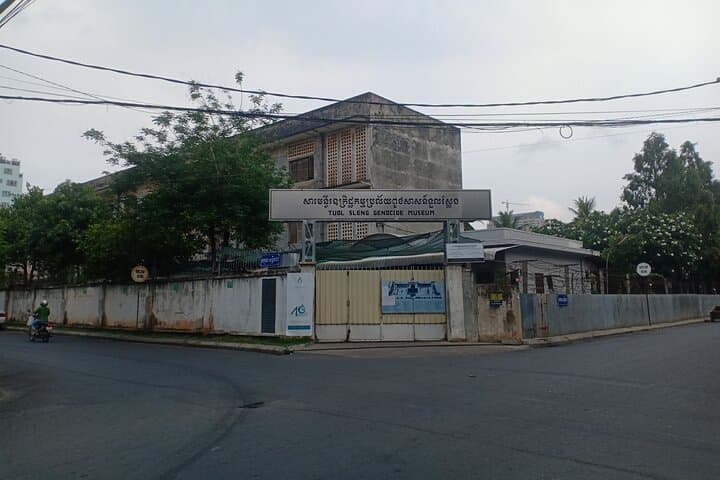
The tour begins at Tuol Sleng (S-21), a former school turned security prison where exhibits and cell blocks document the Khmer Rouge period. A short drive south brings visitors to Choeung Ek’s memorial stupa and orchard graves outside the city — sites that frame Cambodia’s recent history with sober clarity.
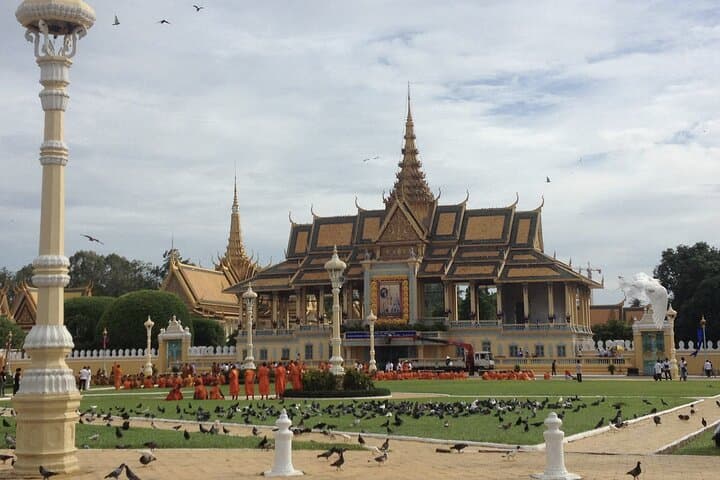
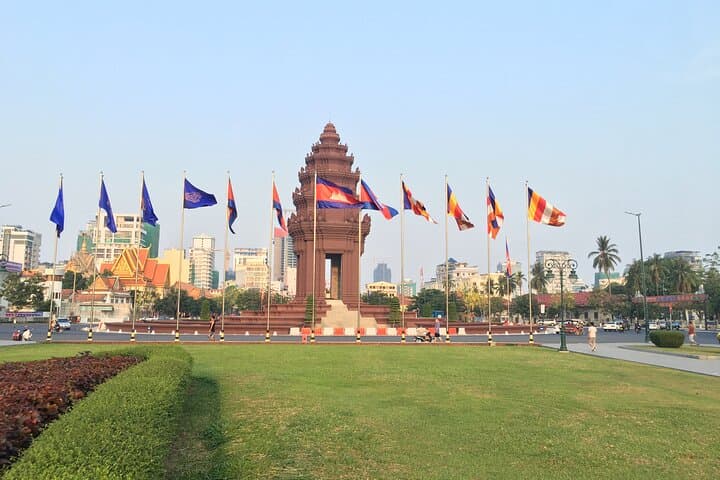
Returning to the riverside for lunch, travelers get a sense of Phnom Penh’s layered geography: a low, alluvial floodplain shaped by seasonal Mekong flows, punctuated by colonial boulevards and Khmer pagodas. The afternoon shifts tone at the Royal Palace, built in the 19th century in Khmer style, and then to Wat Phnom, the city’s historic hilltop shrine.
Practicalities matter on a day like this. Expect 6–8 hours of light walking, some stairs and outdoor exposure. Entrance fees for museums and memorial sites are typically paid on arrival; private pickup and a friendly driver are usually included. Dress respectfully for religious sites (shoulders and knees covered). Carry a refillable water bottle, sun protection and a small notebook if you want to record dates and names — these stops reward quiet attention. The tour balances hard history with active urban observation, giving travelers both context and concrete logistics for a full day in Cambodia’s capital.
easy.
6–8 hours.
Suitable for most travelers comfortable with light walking, stairs, and standing during museum visits.
No, admission fees are typically paid on arrival; your private guide can advise current prices and ticket locations.
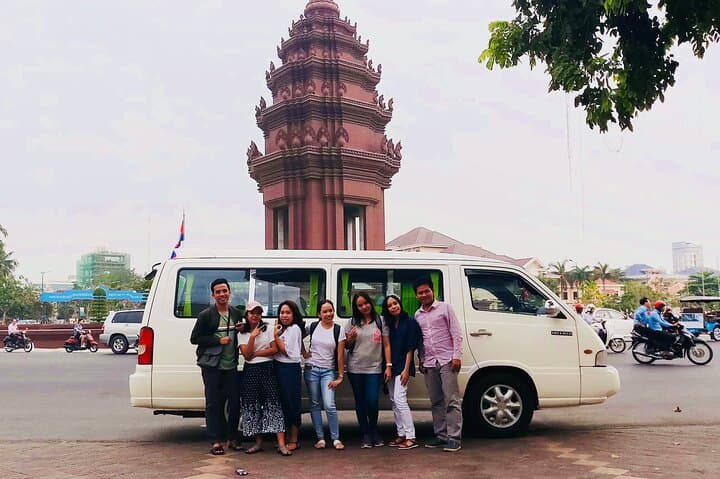
Yes, the tour usually includes private pickup from hotels within central Phnom Penh — confirm your pickup point when booking.
Yes, the tour is rated easy with light walking, but the memorial sites can be emotionally intense and may involve uneven paths.
Full refunds are generally available if you cancel at least 24 hours before the scheduled departure time; check the provider’s exact terms on booking.
Phnom Penh became Cambodia’s capital in the 15th century and later developed into the royal seat built around the Royal Palace in the 19th century; the Khmer Rouge period (1975–1979) left deep scars memorialized at Tuol Sleng and Choeung Ek.
Visitor sites like Choeung Ek and Tuol Sleng work with local NGOs to preserve memorials and support education; tourists are encouraged to minimize waste and respect signage to protect fragile exhibits and grounds.
Day Trip Cambodia operates guided outdoor trips and adventures with an emphasis on safety, stewardship, and memorable experiences.
Morning light slants across the Mekong and Tonle Sap junction as a private car eases out of central Phnom Penh. The river seems to pull the city forward — ferrying traders, food stalls and a steady stream of motorbikes — while the guide outlines a day that moves from quiet remembrance to royal ceremony.
Morning light slants across the Mekong and Tonle Sap junction as a private car eases out of central Phnom Penh. The river seems to pull the city forward — ferrying traders, food stalls and a steady stream of motorbikes — while the guide outlines a day that moves from quiet remembrance to royal ceremony.
The tour begins at Tuol Sleng (S-21), a former school turned security prison where exhibits and cell blocks document the Khmer Rouge period. A short drive south brings visitors to Choeung Ek’s memorial stupa and orchard graves outside the city — sites that frame Cambodia’s recent history with sober clarity.
Returning to the riverside for lunch, travelers get a sense of Phnom Penh’s layered geography: a low, alluvial floodplain shaped by seasonal Mekong flows, punctuated by colonial boulevards and Khmer pagodas. The afternoon shifts tone at the Royal Palace, built in the 19th century in Khmer style, and then to Wat Phnom, the city’s historic hilltop shrine.
Practicalities matter on a day like this. Expect 6–8 hours of light walking, some stairs and outdoor exposure. Entrance fees for museums and memorial sites are typically paid on arrival; private pickup and a friendly driver are usually included. Dress respectfully for religious sites (shoulders and knees covered). Carry a refillable water bottle, sun protection and a small notebook if you want to record dates and names — these stops reward quiet attention. The tour balances hard history with active urban observation, giving travelers both context and concrete logistics for a full day in Cambodia’s capital.