THE ADVENTURE COLLECTIVE® · Independent discovery and booking for outdoor travel

A full‑day escape from Siem Reap that pairs a cooling waterfall swim with early Khmer history — see the 1000 lingas, a hilltop reclining Buddha and a sacred pool while traveling through rice paddies and village life.
A full‑day escape from Siem Reap that pairs a cooling waterfall swim with early Khmer history — see the 1000 lingas, a hilltop reclining Buddha and a sacred pool while traveling through rice paddies and village life.
You step off the air‑conditioned van into a wash of green — rice paddies giving way to a low, jungle-draped ridge where river water finds its teeth. The waterfall roars ahead, white against black stone, and the trail smells of damp leaves and palm sugar smoke from nearby villages.
Verified experiences and guided adventures in the surrounding area.
Operated by Royal Phnom Penh Tours · Siem Reap, Siem Reap Province
You step off the air‑conditioned van into a wash of green — rice paddies giving way to a low, jungle-draped ridge where river water finds its teeth. The waterfall roars ahead, white against black stone, and the trail smells of damp leaves and palm sugar smoke from nearby villages.
Phnom Kulen is not just a swimming hole; it’s the cradle of the Khmer Empire. In 804 CE King Jayavarman II declared sovereignty here, and remnants of that moment remain: carved lingas in the riverbed, a sacred crystal pool, and the giant reclining Buddha perched on the hill like a guardian. Geologically, Kulen is an uplifted sandstone massif whose plateaus and shallow streams have allowed artisans to carve sacred motifs directly into the bedrock.
Culturally the park remains active — locals maintain shrines and small markets, selling fresh coconut and palm sugar. Expect a mix of easy jungle walking, short uphill sections to viewpoints, and time for a cooling swim beneath the falls.
Practical guidance: plan for a full day (6–7 hours) with hotel pickup from Siem Reap; the drive is roughly an hour each way over countryside roads. Wear sturdy sandals or trail shoes that grip wet rock, carry sun protection and a dry bag for electronics, and bring cash for village snacks and entrance fees covered by the tour. Hydrate before the hike; shaded picnic areas are limited. Visit early in the day when water is clearest and crowds are smaller, and always respect carved sites — they’re living religious places as well as historical ones.
easy.
6–7 hours.
Suitable for travelers in light to moderate fitness able to walk short uneven trails and climb a few rocky steps.
Expect roughly a 50–70 minute drive each way depending on traffic and stops through rice paddies and small villages.
Yes — the tour includes free time to swim, but exercise caution on slippery rocks and avoid swimming after heavy rains when currents are stronger.
This tour notes that the Phnom Kulen ticket is included; bring a small amount of cash for local purchases and donations at shrines.
The tour is rated easy and suitable for most ages, though those with mobility issues should be cautious on uneven paths and steps to some viewpoints.
Phnom Kulen was a ceremonial heartland where Jayavarman II proclaimed himself sovereign in 804 CE; many riverbed lingas were carved to mark the site’s sanctity.
The park balances visitor access with sacred site protection; stick to marked paths, avoid touching carvings, and carry out any trash to reduce impact on fragile river ecosystems.
Royal Phnom Penh Tours operates guided outdoor trips and adventures with an emphasis on safety, stewardship, and memorable experiences.
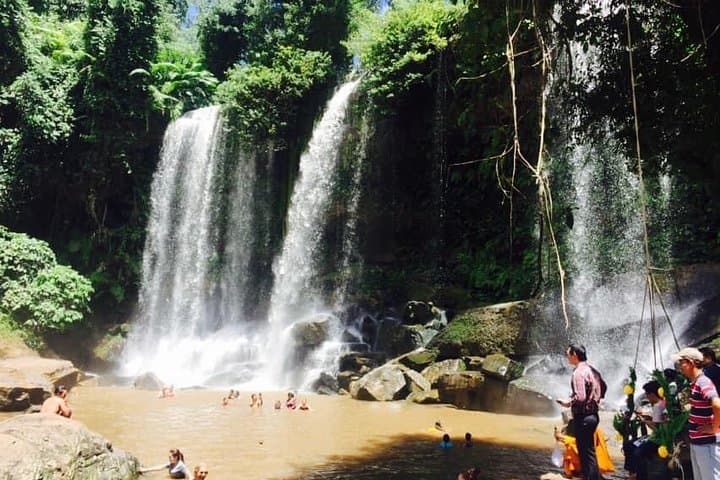
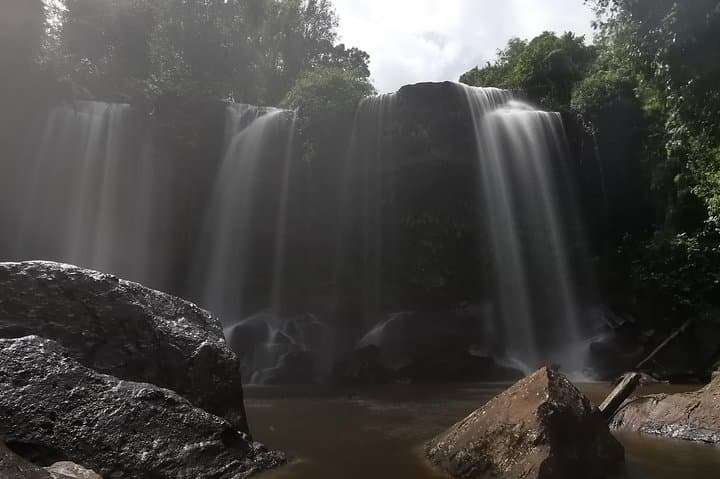
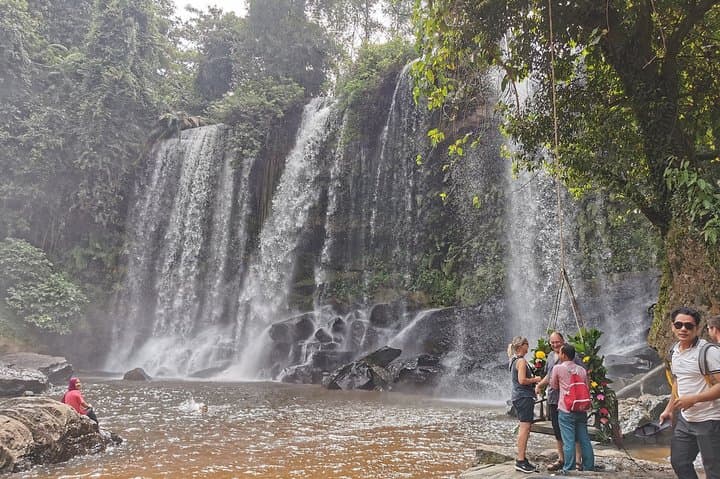
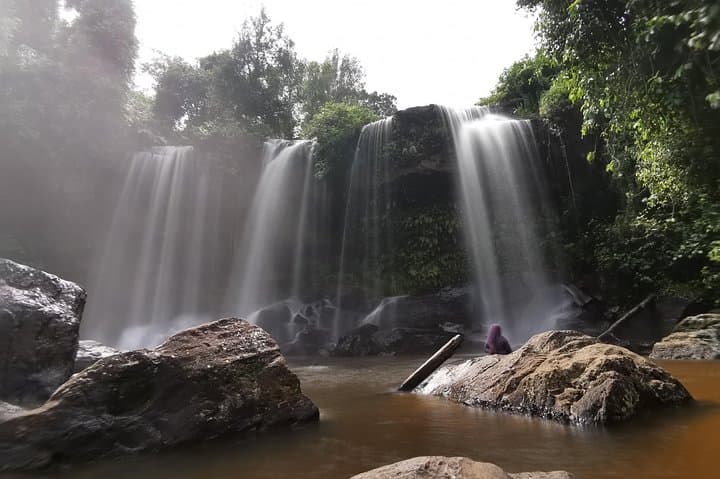
You step off the air‑conditioned van into a wash of green — rice paddies giving way to a low, jungle-draped ridge where river water finds its teeth. The waterfall roars ahead, white against black stone, and the trail smells of damp leaves and palm sugar smoke from nearby villages.
You step off the air‑conditioned van into a wash of green — rice paddies giving way to a low, jungle-draped ridge where river water finds its teeth. The waterfall roars ahead, white against black stone, and the trail smells of damp leaves and palm sugar smoke from nearby villages.
Phnom Kulen is not just a swimming hole; it’s the cradle of the Khmer Empire. In 804 CE King Jayavarman II declared sovereignty here, and remnants of that moment remain: carved lingas in the riverbed, a sacred crystal pool, and the giant reclining Buddha perched on the hill like a guardian. Geologically, Kulen is an uplifted sandstone massif whose plateaus and shallow streams have allowed artisans to carve sacred motifs directly into the bedrock.
Culturally the park remains active — locals maintain shrines and small markets, selling fresh coconut and palm sugar. Expect a mix of easy jungle walking, short uphill sections to viewpoints, and time for a cooling swim beneath the falls.
Practical guidance: plan for a full day (6–7 hours) with hotel pickup from Siem Reap; the drive is roughly an hour each way over countryside roads. Wear sturdy sandals or trail shoes that grip wet rock, carry sun protection and a dry bag for electronics, and bring cash for village snacks and entrance fees covered by the tour. Hydrate before the hike; shaded picnic areas are limited. Visit early in the day when water is clearest and crowds are smaller, and always respect carved sites — they’re living religious places as well as historical ones.