THE ADVENTURE COLLECTIVE® · Independent discovery and booking for outdoor travel

Experience Phnom Kulen’s waterfall, hilltop pagoda and the River of a Thousand Lingas on a private day tour from Siem Reap. This route blends easy hikes, sacred carvings, and cooling pools—ideal for culture-minded outdoor travelers.
Experience Phnom Kulen’s waterfall, hilltop pagoda and the River of a Thousand Lingas on a private day tour from Siem Reap. This route blends easy hikes, sacred carvings, and cooling pools—ideal for culture-minded outdoor travelers.
The road climbs out of rice flats and into a spine of forested sandstone until the air changes—cooler, scented with leaf mold and wet stone. You arrive at Phnom Kulen’s waterfall, where tiers of clear water spill from a shallow plateau and locals bathe and offer prayers. The rush of the falls and the hush of the jungle set the pace for the day.
Verified experiences and guided adventures in the surrounding area.
Operated by Asia Voyage Travel · Siem Reap, Siem Reap Province
The road climbs out of rice flats and into a spine of forested sandstone until the air changes—cooler, scented with leaf mold and wet stone. You arrive at Phnom Kulen’s waterfall, where tiers of clear water spill from a shallow plateau and locals bathe and offer prayers. The rush of the falls and the hush of the jungle set the pace for the day.
Phnom Kulen is more than a scenic stop: in AD 802, Jayavarman II proclaimed the Khmer Empire here, and the mountain has been revered in both Hindu and Buddhist practice since. Geologically, the plateau is sandstone carved by centuries of seasonal streams; downstream, the River of a Thousand Lingas reveals a deliberate program of Shiva linga carvings cut into the riverbed as devotional offerings. Cultural landmarks include a hilltop pagoda and a large reclining Buddha whose scale anchors the mountaintop pilgrimage.
Expect easy to moderate walking on uneven stone and forest tracks, slippery rock near pools, and short uphill sections to the river and pagoda. Guides explain the religious meaning of the lingas and local customs—accept a blessing with respect, and cover shoulders and knees at sacred sites. Bring cash for small local fees and snacks; bottled water and cold towels are often provided by operators, but carry a refill bottle.
Plan the visit early or late in the day to avoid heat and crowds, wear sturdy sandals or light hiking shoes, and allow time to sit by the falls and watch local life—this is an active sacred landscape where geology, history, and daily ritual meet.
moderate.
6 hours.
Suitable for travelers in light to moderate shape comfortable with short uphill walks and uneven terrain
Most private tours do not include official park or site entrance fees; bring local currency for permits or donations.
Yes—many visitors swim in the pools, but watch for slippery rocks and follow guide instructions during the wet season.
The tour is described as suitable for all fitness levels, but it involves uneven terrain and short climbs; children and older visitors should exercise caution near water and edges.
Hotel pickup and drop-off can usually be arranged if requested—confirm at booking and provide your pickup point details.
Phnom Kulen is considered the birthplace of the Khmer Empire where Jayavarman II declared sovereignty in AD 802; the River of a Thousand Lingas reflects historic Hindu devotion integrated into later Buddhist practices.
Visitors should stick to marked paths, avoid disturbing carvings and vegetation, and use refillable bottles to reduce plastic; local guides help protect sensitive river carvings by directing foot traffic.
Asia Voyage Travel operates guided outdoor trips and adventures with an emphasis on safety, stewardship, and memorable experiences.


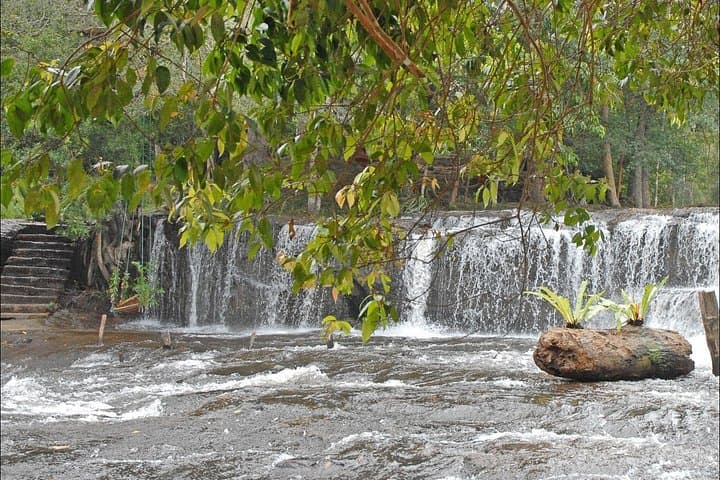

The road climbs out of rice flats and into a spine of forested sandstone until the air changes—cooler, scented with leaf mold and wet stone. You arrive at Phnom Kulen’s waterfall, where tiers of clear water spill from a shallow plateau and locals bathe and offer prayers. The rush of the falls and the hush of the jungle set the pace for the day.
The road climbs out of rice flats and into a spine of forested sandstone until the air changes—cooler, scented with leaf mold and wet stone. You arrive at Phnom Kulen’s waterfall, where tiers of clear water spill from a shallow plateau and locals bathe and offer prayers. The rush of the falls and the hush of the jungle set the pace for the day.
Phnom Kulen is more than a scenic stop: in AD 802, Jayavarman II proclaimed the Khmer Empire here, and the mountain has been revered in both Hindu and Buddhist practice since. Geologically, the plateau is sandstone carved by centuries of seasonal streams; downstream, the River of a Thousand Lingas reveals a deliberate program of Shiva linga carvings cut into the riverbed as devotional offerings. Cultural landmarks include a hilltop pagoda and a large reclining Buddha whose scale anchors the mountaintop pilgrimage.
Expect easy to moderate walking on uneven stone and forest tracks, slippery rock near pools, and short uphill sections to the river and pagoda. Guides explain the religious meaning of the lingas and local customs—accept a blessing with respect, and cover shoulders and knees at sacred sites. Bring cash for small local fees and snacks; bottled water and cold towels are often provided by operators, but carry a refill bottle.
Plan the visit early or late in the day to avoid heat and crowds, wear sturdy sandals or light hiking shoes, and allow time to sit by the falls and watch local life—this is an active sacred landscape where geology, history, and daily ritual meet.