THE ADVENTURE COLLECTIVE® · Independent discovery and booking for outdoor travel

Spend a full day from Siem Reap exploring Phnom Kulen’s sacred river carvings, a giant reclining Buddha, and the cooling pools of Kulen Waterfall. This small-group trip blends light rainforest hiking, local culture, and ancient Khmer engineering.
Spend a full day from Siem Reap exploring Phnom Kulen’s sacred river carvings, a giant reclining Buddha, and the cooling pools of Kulen Waterfall. This small-group trip blends light rainforest hiking, local culture, and ancient Khmer engineering.
A humid morning light filters through towering dipterocarp and fig trees as the minivan climbs the dusty road toward Phnom Kulen. The air smells of wet earth and palm sugar; frogs call from roadside puddles. Participants step out into cooler mountain air and follow a guide along shaded tracks that open to river-carved stone and cascades.
Verified experiences and guided adventures in the surrounding area.
Operated by Before2 · Phnom Kulen, Siem Reap Province
A humid morning light filters through towering dipterocarp and fig trees as the minivan climbs the dusty road toward Phnom Kulen. The air smells of wet earth and palm sugar; frogs call from roadside puddles. Participants step out into cooler mountain air and follow a guide along shaded tracks that open to river-carved stone and cascades.
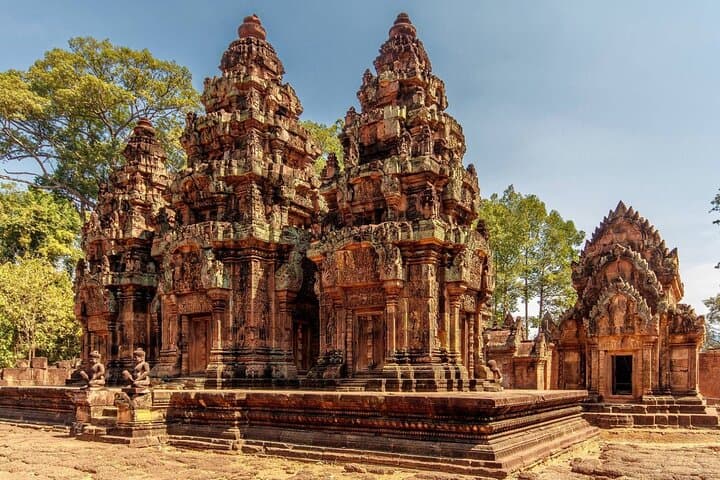
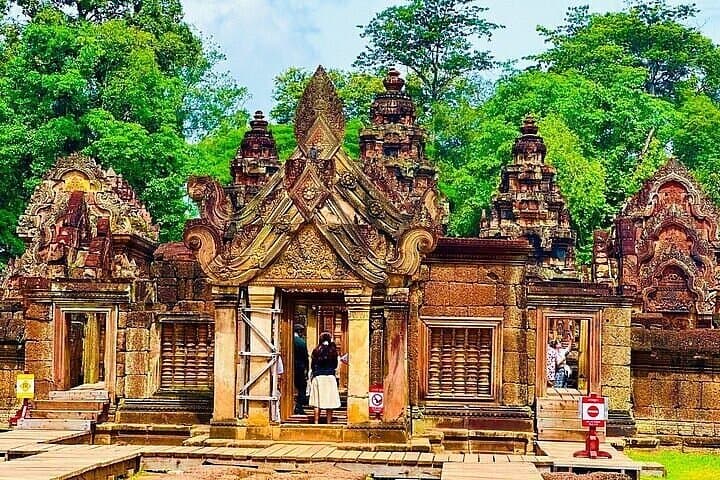
Phnom Kulen is both a natural ridge and a cradle of Angkor-era engineering. The plateau’s sandstone was quarried for 9th-century temples, and the River of a Thousand Lingas—carvings of Shiva symbols in the bedrock—was shaped to mark sacred water channels. The reclining Buddha on the hill and scattered bas-reliefs emphasize the site’s spiritual role; nearby villages preserve palm-sugar production and artisanal life that have supported local communities for generations.
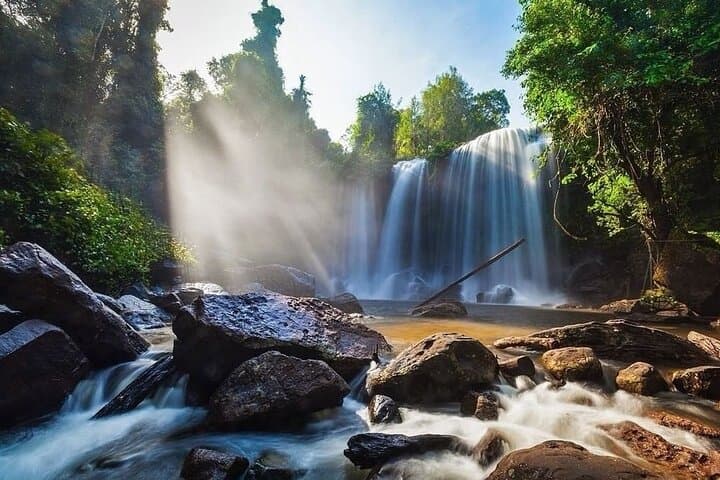
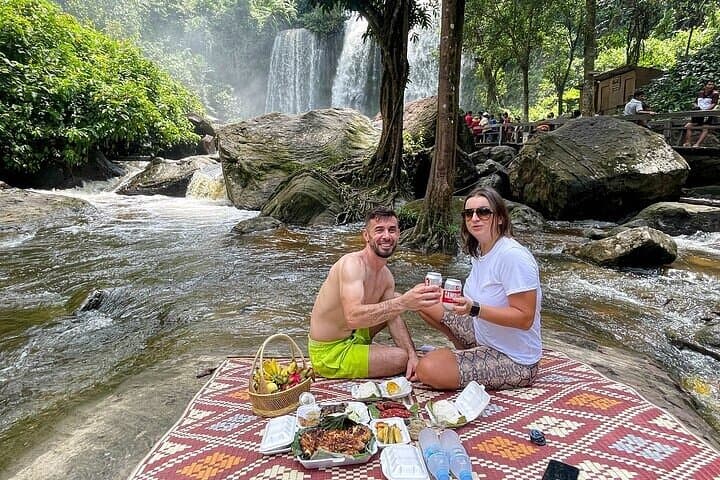
Expect a mix of gentle rainforest walking, short stair climbs to viewpoints, and time to swim at the main waterfall where cool pools collect below the drop. The terrain alternates between packed dirt trails and slick river stone; comfortable shoes with grip matter. Guides typically include historical context, a stop at the landmine museum for modern history, and a village visit demonstrating traditional palm-sugar making.
Practical notes: bring swimwear and a quick-dry towel, insect repellent, sun protection, and a small daypack with water. Morning departures avoid the hottest hours and crowds. Respect religious sites—cover shoulders and knees at pagodas—and follow local guidance around the water. This full-day loop balances natural refreshment, cultural depth, and straightforward, low-impact hiking.
easy.
8–9 hours.
Suitable for travelers in average fitness; involves short hikes, stairs, and standing at viewpoints.
The full-day shared tour runs about 8–9 hours with hiking segments that are short and moderate; you’ll have time at each major site including a 60–90 minute waterfall stop.
Yes—most itineraries allow a supervised swim at Kulen Waterfall; be cautious on slippery rocks and follow your guide’s instructions.
Park entrance fees and air-conditioned round-trip transfer from Siem Reap are typically included in the tour price.
Dress modestly at pagodas (cover shoulders and knees), remove shoes where requested, and avoid swimming directly over carved lingas out of respect for sacred areas.
Phnom Kulen supplied sandstone and hosted hydraulic works during the early Angkor period; the river-carved lingas mark sacred channels created around the 9th century.
Visitors are asked to stay on marked paths, avoid touching archaeological carvings, and support local guides to reinforce sustainable tourism income for communities.
Before2 operates guided outdoor trips and adventures with an emphasis on safety, stewardship, and memorable experiences.
A humid morning light filters through towering dipterocarp and fig trees as the minivan climbs the dusty road toward Phnom Kulen. The air smells of wet earth and palm sugar; frogs call from roadside puddles. Participants step out into cooler mountain air and follow a guide along shaded tracks that open to river-carved stone and cascades.
A humid morning light filters through towering dipterocarp and fig trees as the minivan climbs the dusty road toward Phnom Kulen. The air smells of wet earth and palm sugar; frogs call from roadside puddles. Participants step out into cooler mountain air and follow a guide along shaded tracks that open to river-carved stone and cascades.
Phnom Kulen is both a natural ridge and a cradle of Angkor-era engineering. The plateau’s sandstone was quarried for 9th-century temples, and the River of a Thousand Lingas—carvings of Shiva symbols in the bedrock—was shaped to mark sacred water channels. The reclining Buddha on the hill and scattered bas-reliefs emphasize the site’s spiritual role; nearby villages preserve palm-sugar production and artisanal life that have supported local communities for generations.
Expect a mix of gentle rainforest walking, short stair climbs to viewpoints, and time to swim at the main waterfall where cool pools collect below the drop. The terrain alternates between packed dirt trails and slick river stone; comfortable shoes with grip matter. Guides typically include historical context, a stop at the landmine museum for modern history, and a village visit demonstrating traditional palm-sugar making.
Practical notes: bring swimwear and a quick-dry towel, insect repellent, sun protection, and a small daypack with water. Morning departures avoid the hottest hours and crowds. Respect religious sites—cover shoulders and knees at pagodas—and follow local guidance around the water. This full-day loop balances natural refreshment, cultural depth, and straightforward, low-impact hiking.