THE ADVENTURE COLLECTIVE® · Independent discovery and booking for outdoor travel

A half-day to full-day journey from Siem Reap across upland jungle to Phnom Kulen’s carved riverbeds, reclining Buddha and waterfall pools. This practical guide explains what to expect on the trails, cultural highlights, and how to prepare.
A half-day to full-day journey from Siem Reap across upland jungle to Phnom Kulen’s carved riverbeds, reclining Buddha and waterfall pools. This practical guide explains what to expect on the trails, cultural highlights, and how to prepare.
You step off the minivan into a humid hush: the jungle climbs immediately, leaves slick with mist and runoff, and the distant roar of a waterfall pulls you uphill.
Verified experiences and guided adventures in the surrounding area.
Operated by Monkey Angkor · Siem Reap, Siem Reap Province
You step off the minivan into a humid hush: the jungle climbs immediately, leaves slick with mist and runoff, and the distant roar of a waterfall pulls you uphill.
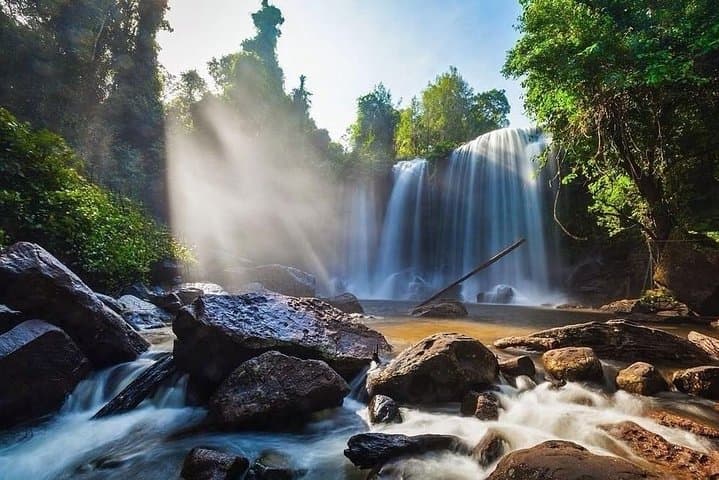
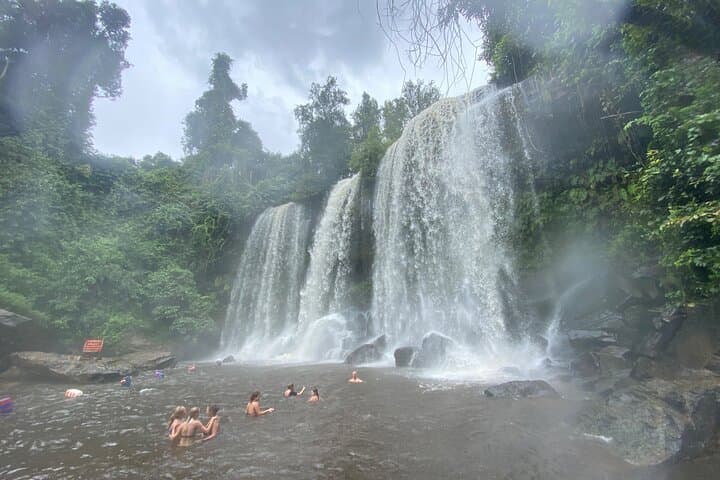
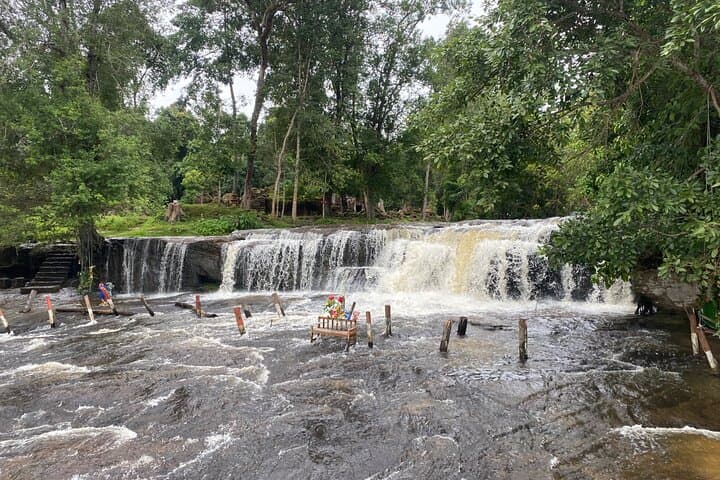
Phnom Kulen is an uplifted sandstone plateau north of Siem Reap, its crest hovering around 400–500 m above the plain. The day tour threads together cliff-top viewpoints, the carved riverbed known for the "Thousand Lingas," a reclining Buddha hewn into the rock, and a cascade that makes a clear pool for wading. The geology is simple but dramatic—ancient sandstone sculpted by seasonal streams that now carve shallow basins and channels.
The mountain is also a cultural marker: early Khmer rulers used Kulen for sacred rites, and local villagers still regard parts of the park as holy. Along the trails you’ll meet resin-tapping trees, orchids tucked in ferns, and interpretive plaques near the carvings.
Expect mixed terrain: short paved approaches, muddy jungle tracks, and slippery riverbed steps. Total on-foot distance for main stops is commonly 3–5 km with roughly 150–350 m of cumulative elevation gain depending on how many viewpoints you climb.
Practical edge: start early to avoid the hottest hours and the busiest parking areas, wear sturdy shoes with grip, and bring at least 1–2 liters of water. A rain jacket or quick-dry layers are useful in the wet season; the pools are tempting but can be deceptively shallow and rocky. Guided day trips from Siem Reap package transport and local knowledge, letting you focus on the landscape and history rather than logistics.
moderate.
5–7 hours.
Moderately fit: able to handle uneven trail, short stair climbs and multiple stops over several hours.
Most operators take about 45–75 minutes each way depending on traffic and pickup location; expect 1–2 hours total transfer time.
Yes, visitors often wade or swim in designated pools, but check local signage for safety and avoid areas with fast flow or slippery rock.
Some tours include park entrance fees while others list them separately—confirm with your operator before booking.
Short sections are family-friendly but uneven terrain, river crossings and heat mean young children should be monitored closely; infant seats are sometimes available in vans.
Phnom Kulen is both a geological plateau and a historic ceremonial site where early Khmer rulers performed royal rites; riverbed carvings date to Angkor-period temple artisans.
Visitor pressure and litter can stress fragile sandstone and aquatic habitats; stick to marked trails, avoid removing artifacts, and pack out trash to minimize impact.
Monkey Angkor operates guided outdoor trips and adventures with an emphasis on safety, stewardship, and memorable experiences.
You step off the minivan into a humid hush: the jungle climbs immediately, leaves slick with mist and runoff, and the distant roar of a waterfall pulls you uphill.
You step off the minivan into a humid hush: the jungle climbs immediately, leaves slick with mist and runoff, and the distant roar of a waterfall pulls you uphill.
Phnom Kulen is an uplifted sandstone plateau north of Siem Reap, its crest hovering around 400–500 m above the plain. The day tour threads together cliff-top viewpoints, the carved riverbed known for the "Thousand Lingas," a reclining Buddha hewn into the rock, and a cascade that makes a clear pool for wading. The geology is simple but dramatic—ancient sandstone sculpted by seasonal streams that now carve shallow basins and channels.
The mountain is also a cultural marker: early Khmer rulers used Kulen for sacred rites, and local villagers still regard parts of the park as holy. Along the trails you’ll meet resin-tapping trees, orchids tucked in ferns, and interpretive plaques near the carvings.
Expect mixed terrain: short paved approaches, muddy jungle tracks, and slippery riverbed steps. Total on-foot distance for main stops is commonly 3–5 km with roughly 150–350 m of cumulative elevation gain depending on how many viewpoints you climb.
Practical edge: start early to avoid the hottest hours and the busiest parking areas, wear sturdy shoes with grip, and bring at least 1–2 liters of water. A rain jacket or quick-dry layers are useful in the wet season; the pools are tempting but can be deceptively shallow and rocky. Guided day trips from Siem Reap package transport and local knowledge, letting you focus on the landscape and history rather than logistics.