THE ADVENTURE COLLECTIVE® · Independent discovery and booking for outdoor travel

Spend a full day from Siem Reap exploring Phnom Kulen: hike shaded trails, swim beneath a waterfall, inspect the River of a Thousand Lingas' ancient carvings and visit the giant reclining Buddha. This accessible, spiritual day trip blends nature, history and easy adventure.
Spend a full day from Siem Reap exploring Phnom Kulen: hike shaded trails, swim beneath a waterfall, inspect the River of a Thousand Lingas' ancient carvings and visit the giant reclining Buddha. This accessible, spiritual day trip blends nature, history and easy adventure.
The morning light slices through the green of Kulen's ridgeline as the minivan climbs from Siem Reap and the jungle closes in. You step out into humid air scented with earth and flowering trees, then follow a shaded trail to a thunderous waterfall where locals and pilgrims mix — some wading, others pausing to leave offerings. Later the riverbed reveals shallow bas-reliefs carved centuries ago; water pushes over stone like a storyteller turning the page.
Verified experiences and guided adventures in the surrounding area.
Operated by Angkor 𝐓𝐫𝐚𝐯𝐞𝐥 𝐆𝐮𝐢𝐝𝐞 · Siem Reap, Siem Reap Province
The morning light slices through the green of Kulen's ridgeline as the minivan climbs from Siem Reap and the jungle closes in. You step out into humid air scented with earth and flowering trees, then follow a shaded trail to a thunderous waterfall where locals and pilgrims mix — some wading, others pausing to leave offerings. Later the riverbed reveals shallow bas-reliefs carved centuries ago; water pushes over stone like a storyteller turning the page.
Phnom Kulen is more than a scenic stop: it’s where Jayavarman II proclaimed the Khmer kingdom’s independence in 802 CE, and the mountain’s sandstone supplied blocks and carvings that echo Angkor’s early art. Geologically, Kulen is a raised sandstone plateau with fissured cliffs, shallow rivers and seasonal cascades that reflect monsoon rhythms. The River of a Thousand Lingas (Kbal Spean) holds low-relief Hindu carvings etched into the streambed, their details most visible in the dry months. The giant reclining Buddha and scattered ruins speak to a layered spiritual landscape where worship, geology and forest meet.
Practicalities: tours run as full-day outings from Siem Reap (about 1–1.5 hours drive). Trails are short but can be uneven and slippery after rain; bring sturdy shoes and a quick-dry swimsuit. Respect sacred sites—cover shoulders and knees at temples—and carry water, sunscreen and insect repellent. If you plan to swim, stick to calmer pools and watch current strength. Aim for early morning arrival to beat crowds and midday heat.
easy.
8–9 hours.
Suitable for travelers in average fitness: short hikes on uneven terrain, brief river crossings and optional swimming.
Most visitors join an organized day tour (1–1.5 hour drive). Private taxis or motorbike hires are options, but roads can be bumpy; expect a dirt-road approach near the park.
Yes—there are designated swimming pools below the falls, but currents vary with season; avoid swimming after heavy rain and supervise children closely.
Visibility depends on water level—during the dry season the carved lingas in Kbal Spean are easier to see; monsoon flows may submerge portions.
Many viewpoints and the main waterfall have short approaches and are family-friendly, but some paths have uneven steps; check tour accessibility options if mobility is limited.
Phnom Kulen is considered the cradle of the Khmer kingdom—King Jayavarman II declared independence here in 802 CE—and many carvings predate the Angkor temple complex.
High visitor numbers and monsoon erosion threaten shallow carvings and river ecology; stick to marked trails, avoid touching carvings and pack out all trash.
Angkor 𝐓𝐫𝐚𝐯𝐞𝐥 𝐆𝐮𝐢𝐝𝐞 operates guided outdoor trips and adventures with an emphasis on safety, stewardship, and memorable experiences.
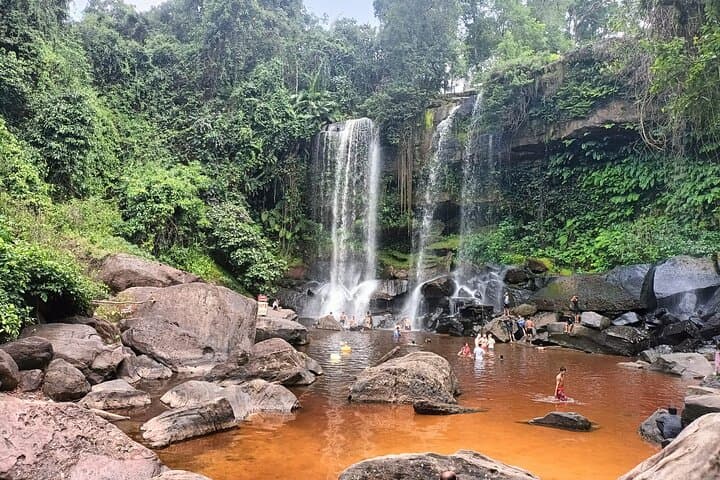
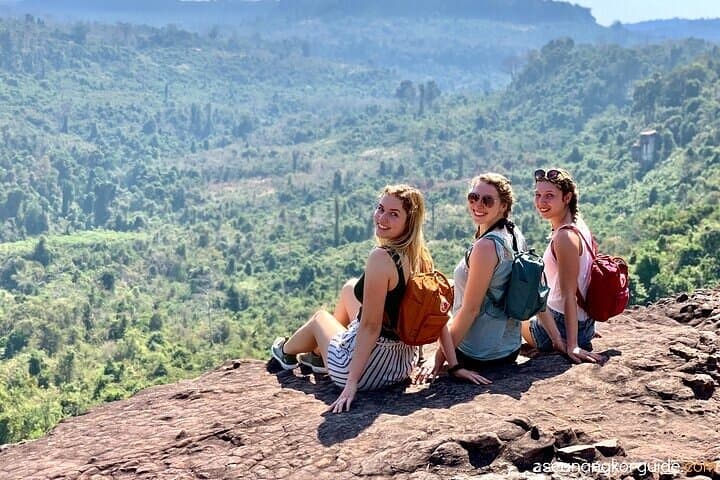
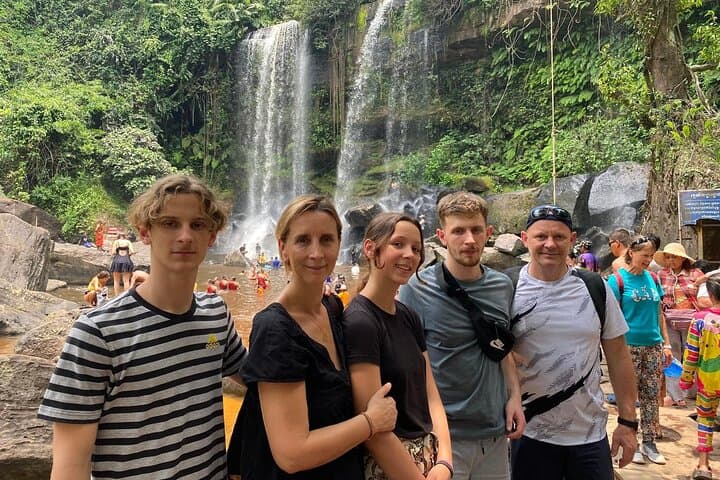
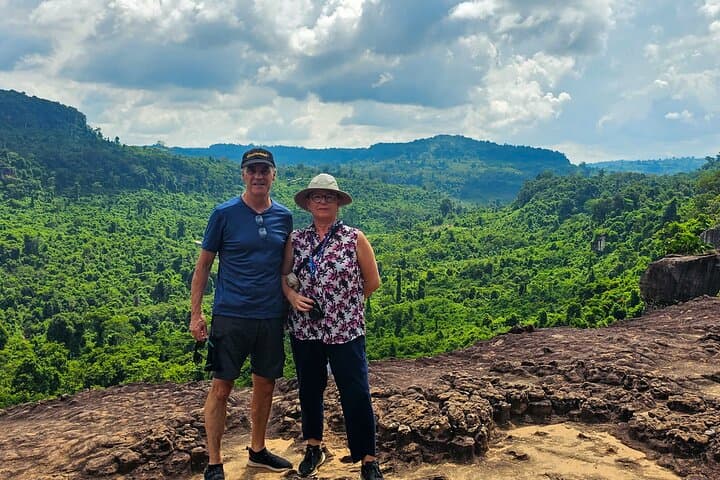
The morning light slices through the green of Kulen's ridgeline as the minivan climbs from Siem Reap and the jungle closes in. You step out into humid air scented with earth and flowering trees, then follow a shaded trail to a thunderous waterfall where locals and pilgrims mix — some wading, others pausing to leave offerings. Later the riverbed reveals shallow bas-reliefs carved centuries ago; water pushes over stone like a storyteller turning the page.
The morning light slices through the green of Kulen's ridgeline as the minivan climbs from Siem Reap and the jungle closes in. You step out into humid air scented with earth and flowering trees, then follow a shaded trail to a thunderous waterfall where locals and pilgrims mix — some wading, others pausing to leave offerings. Later the riverbed reveals shallow bas-reliefs carved centuries ago; water pushes over stone like a storyteller turning the page.
Phnom Kulen is more than a scenic stop: it’s where Jayavarman II proclaimed the Khmer kingdom’s independence in 802 CE, and the mountain’s sandstone supplied blocks and carvings that echo Angkor’s early art. Geologically, Kulen is a raised sandstone plateau with fissured cliffs, shallow rivers and seasonal cascades that reflect monsoon rhythms. The River of a Thousand Lingas (Kbal Spean) holds low-relief Hindu carvings etched into the streambed, their details most visible in the dry months. The giant reclining Buddha and scattered ruins speak to a layered spiritual landscape where worship, geology and forest meet.
Practicalities: tours run as full-day outings from Siem Reap (about 1–1.5 hours drive). Trails are short but can be uneven and slippery after rain; bring sturdy shoes and a quick-dry swimsuit. Respect sacred sites—cover shoulders and knees at temples—and carry water, sunscreen and insect repellent. If you plan to swim, stick to calmer pools and watch current strength. Aim for early morning arrival to beat crowds and midday heat.