THE ADVENTURE COLLECTIVE® · Independent discovery and booking for outdoor travel

Escape Siem Reap for a 5–6 hour journey to Phnom Kulen: hike jungle trails, explore the River of a Thousand Lingas, swim beneath Kulen Waterfall, and visit the mountaintop Reclining Buddha. This day tour blends Khmer history with hands-on nature.
Escape Siem Reap for a 5–6 hour journey to Phnom Kulen: hike jungle trails, explore the River of a Thousand Lingas, swim beneath Kulen Waterfall, and visit the mountaintop Reclining Buddha. This day tour blends Khmer history with hands-on nature.
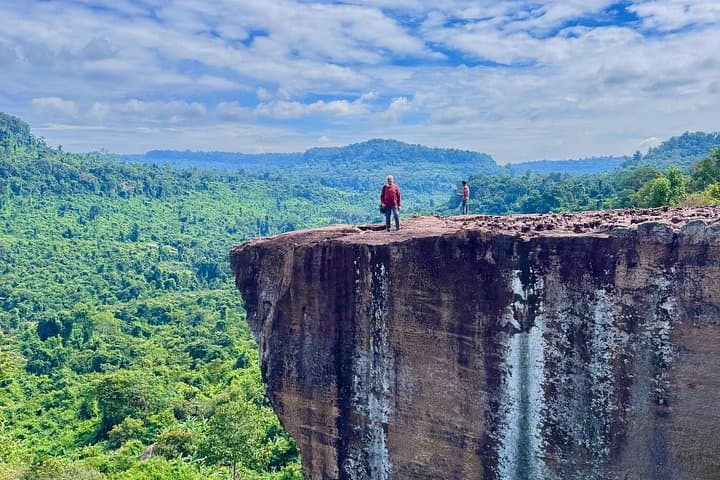
A humid morning drive lifts out of Siem Reap and into ascending green—roads that tighten, paddy fields give way to thicker jungle, and the mountain ahead grows like a promise. Arrive on the rim of Phnom Kulen and the forest opens to the River of a Thousand Lingas, where carved sandstone lies half-submerged and the current dares you to study its ancient grooves.
Verified experiences and guided adventures in the surrounding area.
Operated by Inspire the Journeys · Siem Reap, Siem Reap Province
A humid morning drive lifts out of Siem Reap and into ascending green—roads that tighten, paddy fields give way to thicker jungle, and the mountain ahead grows like a promise. Arrive on the rim of Phnom Kulen and the forest opens to the River of a Thousand Lingas, where carved sandstone lies half-submerged and the current dares you to study its ancient grooves.
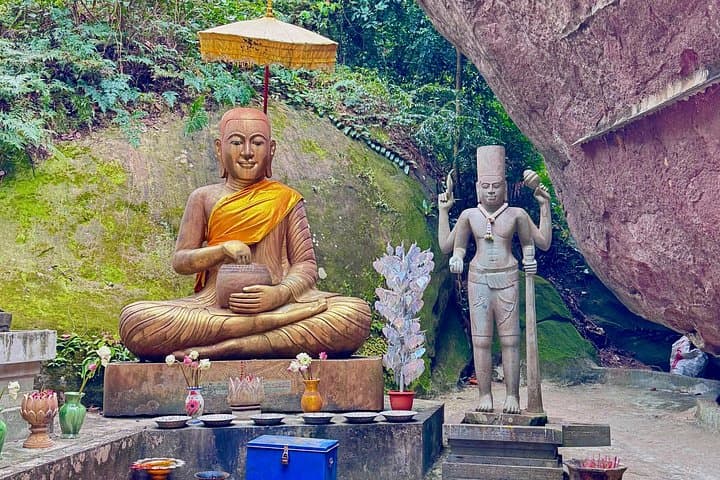
Phnom Kulen is where the Angkor story began: in 802 CE Jayavarman II declared the Khmer kingdom here, making the ridge both a geological plateau of sandstone and a spiritual birthplace. The riverbed carvings—lingas and yonis—are soft-edged from centuries of water, and the reclining Buddha atop the plateau watches over terraces of weathered temple stones and small village shrines.
Culturally, the mountain still functions as a pilgrimage site; local vendors sell palm wine and snacks beside pilgrimage trails, and monks chant at morning shrines. Geologically, the sandstone shelf shapes shallow channels and plunge pools that fill dramatically after rains, creating sections safe to splash in and others that are deceptively powerful.
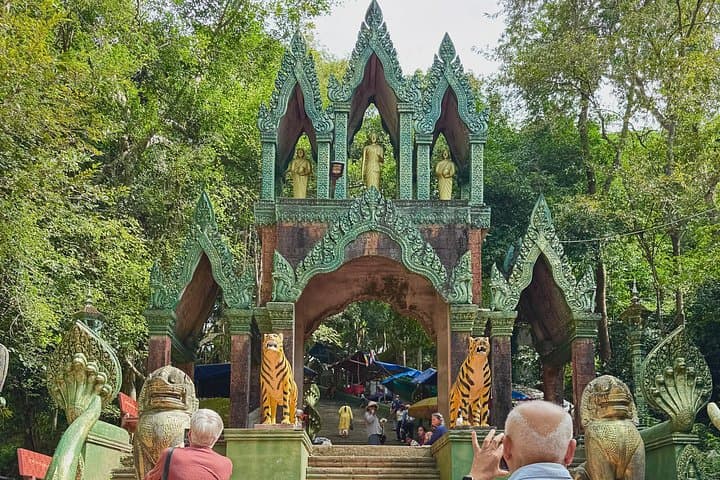
Practically: this is a 5–6 hour day out from Siem Reap with light to moderate walking on uneven jungle tracks, short stair climbs to viewpoints, and a swim at Kulen Waterfall. Expect basic facilities and intermittent shade; bring snacks, sun and insect protection, and durable footwear you don’t mind getting wet.
For travelers who want both archaeology and a green, noisy waterfall, this day tour pairs Khmer history with a hands-on river experience—part pilgrimage, part outdoor swim—and a straightforward logistical footprint for a single-day escape from the temple circuit.
moderate.
5–6 hours.
Light to moderate fitness; must handle short hikes, uneven steps and brief river crossings.
Expect about 1.5 hours each way depending on traffic and road conditions; the tour is typically a 5–6 hour outing including travel time.
Yes—designated plunge pools at Kulen Waterfall are safe for swimming when water levels are normal; avoid carved sections where the current runs over sandstone carvings.
Some tour options include the park entrance fee—confirm at booking. Independent visitors must pay the park fee on arrival.
Dress modestly at temples, remove shoes at shrine platforms when requested, and be respectful around monks and worshippers.
Phnom Kulen is regarded as the birthplace of the Angkor Empire—King Jayavarman II proclaimed Khmer sovereignty here in 802 CE—and contains carved riverbeds linked to Khmer ritual practice.
The park is sensitive to erosion around carved sandstone and cultural sites; stick to marked paths, avoid climbing on fragile carvings, and pack out trash to help protect both archaeology and habitat.
Inspire the Journeys operates guided outdoor trips and adventures with an emphasis on safety, stewardship, and memorable experiences.
A humid morning drive lifts out of Siem Reap and into ascending green—roads that tighten, paddy fields give way to thicker jungle, and the mountain ahead grows like a promise. Arrive on the rim of Phnom Kulen and the forest opens to the River of a Thousand Lingas, where carved sandstone lies half-submerged and the current dares you to study its ancient grooves.
A humid morning drive lifts out of Siem Reap and into ascending green—roads that tighten, paddy fields give way to thicker jungle, and the mountain ahead grows like a promise. Arrive on the rim of Phnom Kulen and the forest opens to the River of a Thousand Lingas, where carved sandstone lies half-submerged and the current dares you to study its ancient grooves.
Phnom Kulen is where the Angkor story began: in 802 CE Jayavarman II declared the Khmer kingdom here, making the ridge both a geological plateau of sandstone and a spiritual birthplace. The riverbed carvings—lingas and yonis—are soft-edged from centuries of water, and the reclining Buddha atop the plateau watches over terraces of weathered temple stones and small village shrines.
Culturally, the mountain still functions as a pilgrimage site; local vendors sell palm wine and snacks beside pilgrimage trails, and monks chant at morning shrines. Geologically, the sandstone shelf shapes shallow channels and plunge pools that fill dramatically after rains, creating sections safe to splash in and others that are deceptively powerful.
Practically: this is a 5–6 hour day out from Siem Reap with light to moderate walking on uneven jungle tracks, short stair climbs to viewpoints, and a swim at Kulen Waterfall. Expect basic facilities and intermittent shade; bring snacks, sun and insect protection, and durable footwear you don’t mind getting wet.
For travelers who want both archaeology and a green, noisy waterfall, this day tour pairs Khmer history with a hands-on river experience—part pilgrimage, part outdoor swim—and a straightforward logistical footprint for a single-day escape from the temple circuit.