THE ADVENTURE COLLECTIVE® · Independent discovery and booking for outdoor travel

Spend a full day from Siem Reap exploring Phnom Kulen’s waterfalls, the River of a Thousand Lingas and a reclining Buddha, then cross to Kampong Phluk to boat through flooded forests and stilt villages. This compact day tour blends geology, Khmer history and river culture.
Spend a full day from Siem Reap exploring Phnom Kulen’s waterfalls, the River of a Thousand Lingas and a reclining Buddha, then cross to Kampong Phluk to boat through flooded forests and stilt villages. This compact day tour blends geology, Khmer history and river culture.
Morning light breaks over a sandstone ridge and a convoy of air-conditioned vans threads through rice paddies toward Phnom Kulen. By the time you arrive the road has climbed into an open, rocky upland where a ribbon of river cuts shallow channels through carved rock. The waterfall waits, its pool cool enough to cut the heat of the plains, and the River of a Thousand Lingas—sandstone carvings in the riverbed—runs like a history lesson you can stand in.
Verified experiences and guided adventures in the surrounding area.
Operated by Angkor Doors · Siem Reap, Siem Reap Province
Morning light breaks over a sandstone ridge and a convoy of air-conditioned vans threads through rice paddies toward Phnom Kulen. By the time you arrive the road has climbed into an open, rocky upland where a ribbon of river cuts shallow channels through carved rock. The waterfall waits, its pool cool enough to cut the heat of the plains, and the River of a Thousand Lingas—sandstone carvings in the riverbed—runs like a history lesson you can stand in.
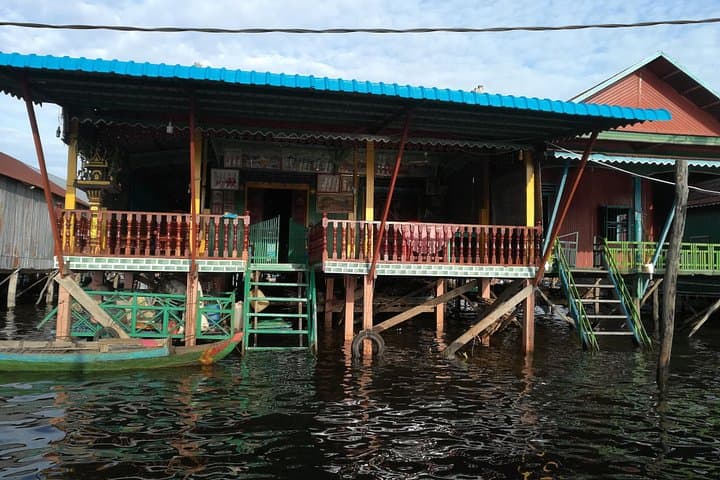
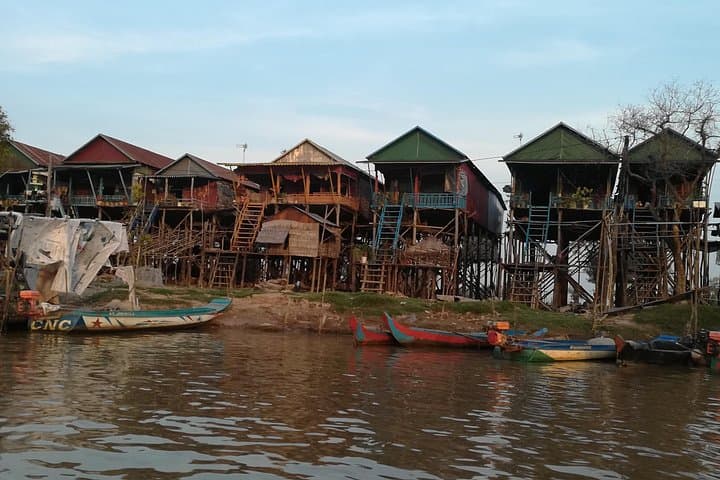
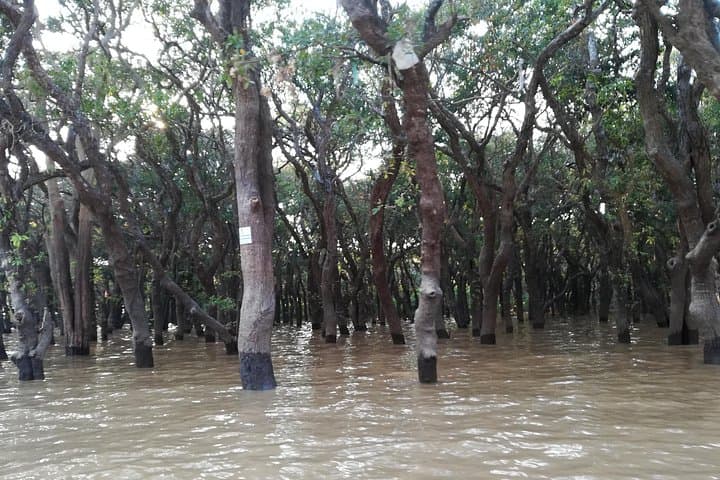
Phnom Kulen was the quarry that supplied much of Angkor’s sandstone; the mountain range is now protected as a national park and still carries Khmer Empire echoes in its stone. Geologically it’s an uplifted sandstone plateau—steep approaches and flat summits—where seasonal flows reshape channels and expose ancient carvings. Later you descend to Kampong Phluk, a riverside community of roughly 700 families where stilt houses and a flooded forest tell the Tonle Sap’s seasonal story: in the dry months houses rise 6–8 meters above cracked ground, while in the wet season water levels lift dwellings to shoulder height.
Expect about 8–9 hours total: an hour drive each way from Siem Reap, time for a swim at the falls, visits to the reclining Buddha and the River of a Thousand Lingas, plus a boat trip among flooded trees. Practicalities: wear modest, sun-protective clothing for temple sites, bring insect repellent, quick-drying swimwear and sturdy sandals or trail shoes. Carry cash for small boat fees and local purchases; a refillable water bottle is useful even though bottled water is provided. The tour suits most fitness levels and gives a compact mix of geology, history, and living river culture in a single day.
easy.
8–9 hours.
Suitable for most fitness levels; involves short walks, steps, and optional swimming—basic mobility required.
The tour runs about 8–9 hours with typical pickup around 8:00 AM; exact pickup is confirmed when booking.
Yes—there is a designated swimming area at the waterfall; check local conditions and follow your guide’s safety advice.
Boat fees and entrance to the floating village are included on this tour, but carry small cash for souvenirs and optional purchases.
The tour is rated easy and suitable for most ages, but steep access paths and uneven surfaces may challenge limited mobility—inform the operator at booking.
Phnom Kulen supplied much of the sandstone used to build Angkor monuments and holds carved religious sites commissioned by early Khmer kings.
The area is protected as Phnom Kulen National Park; visitors should avoid touching carved stone, carry out trash, and support local boat operators who follow sustainable practices.
Angkor Doors operates guided outdoor trips and adventures with an emphasis on safety, stewardship, and memorable experiences.
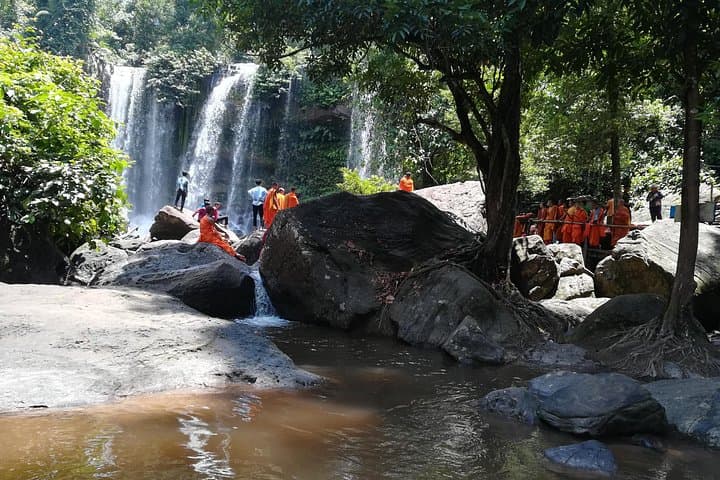
Morning light breaks over a sandstone ridge and a convoy of air-conditioned vans threads through rice paddies toward Phnom Kulen. By the time you arrive the road has climbed into an open, rocky upland where a ribbon of river cuts shallow channels through carved rock. The waterfall waits, its pool cool enough to cut the heat of the plains, and the River of a Thousand Lingas—sandstone carvings in the riverbed—runs like a history lesson you can stand in.
Morning light breaks over a sandstone ridge and a convoy of air-conditioned vans threads through rice paddies toward Phnom Kulen. By the time you arrive the road has climbed into an open, rocky upland where a ribbon of river cuts shallow channels through carved rock. The waterfall waits, its pool cool enough to cut the heat of the plains, and the River of a Thousand Lingas—sandstone carvings in the riverbed—runs like a history lesson you can stand in.
Phnom Kulen was the quarry that supplied much of Angkor’s sandstone; the mountain range is now protected as a national park and still carries Khmer Empire echoes in its stone. Geologically it’s an uplifted sandstone plateau—steep approaches and flat summits—where seasonal flows reshape channels and expose ancient carvings. Later you descend to Kampong Phluk, a riverside community of roughly 700 families where stilt houses and a flooded forest tell the Tonle Sap’s seasonal story: in the dry months houses rise 6–8 meters above cracked ground, while in the wet season water levels lift dwellings to shoulder height.
Expect about 8–9 hours total: an hour drive each way from Siem Reap, time for a swim at the falls, visits to the reclining Buddha and the River of a Thousand Lingas, plus a boat trip among flooded trees. Practicalities: wear modest, sun-protective clothing for temple sites, bring insect repellent, quick-drying swimwear and sturdy sandals or trail shoes. Carry cash for small boat fees and local purchases; a refillable water bottle is useful even though bottled water is provided. The tour suits most fitness levels and gives a compact mix of geology, history, and living river culture in a single day.