THE ADVENTURE COLLECTIVE® · Independent discovery and booking for outdoor travel

A private half-day journey to Phnom Kulen combines easy summit visits, sacred river carvings and a refreshing waterfall swim. Learn what to expect—history, terrain, and the practical gear that makes the trip smooth.
A private half-day journey to Phnom Kulen combines easy summit visits, sacred river carvings and a refreshing waterfall swim. Learn what to expect—history, terrain, and the practical gear that makes the trip smooth.
You step off the shaded track and the forest opens: a carved sandstone slope, cool mist from a waterfall, and the low, sleeping form of the Reclining Buddha carved into the mountain. The air tastes faintly of wet earth and incense from nearby shrines; distant calls of birds and the gentle rush of the 1000 Lingas river frame the scene.
Verified experiences and guided adventures in the surrounding area.
Operated by Marvel Angkor Tours · Phnom Kulen, Siem Reap Province
You step off the shaded track and the forest opens: a carved sandstone slope, cool mist from a waterfall, and the low, sleeping form of the Reclining Buddha carved into the mountain. The air tastes faintly of wet earth and incense from nearby shrines; distant calls of birds and the gentle rush of the 1000 Lingas river frame the scene.
Phnom Kulen is a sandstone plateau rising to about 487 m above sea level and sits roughly 50 km north of Siem Reap. The park’s geology—hard sandstone layers cut by seasonal streams—created natural cascades and flat rock slabs that Khmer artisans later engraved with lingas (stone carvings dedicated to Shiva). The site blends Khmer religious history (notably links to Jayavarman-era projects) with later Buddhist practice; temples, carved stones, and pilgrimage springs all speak to centuries of layered belief.
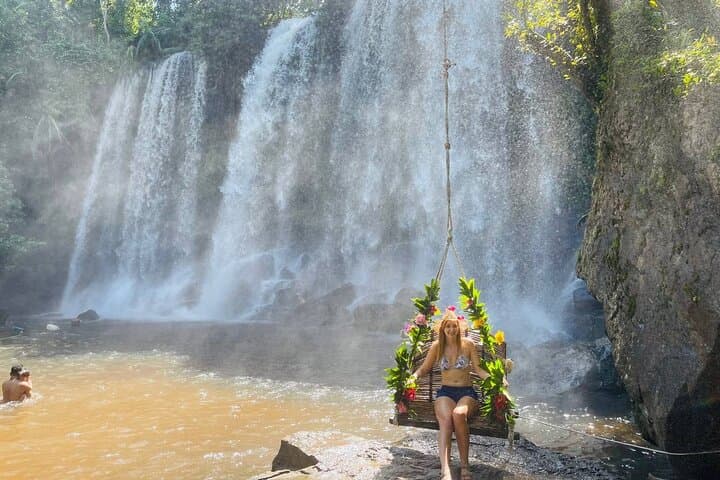
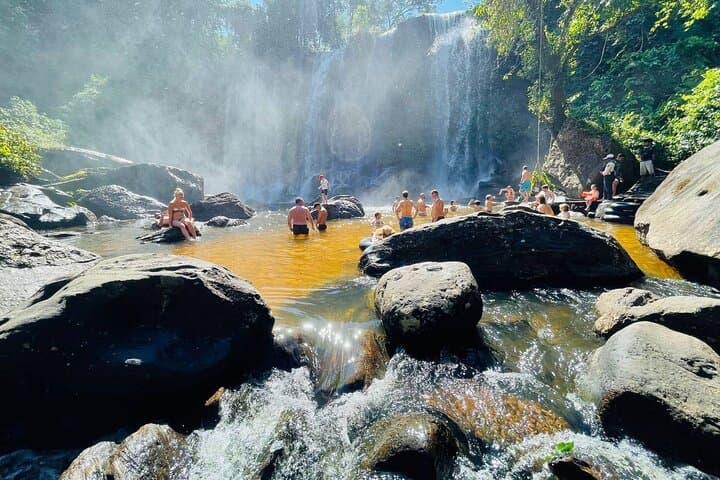
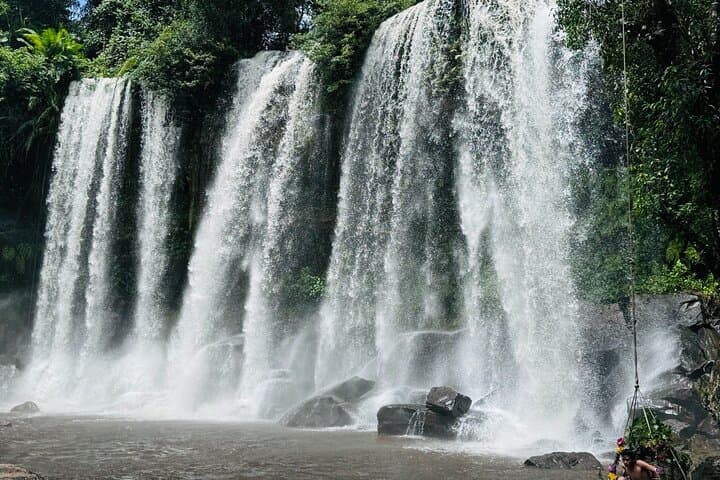
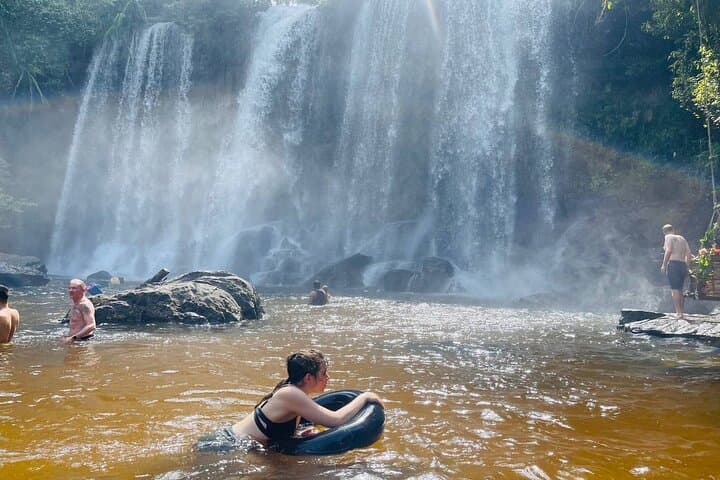
On a private, 4–5 hour tour you’ll usually visit the summit shrine with its large reclining Buddha, walk the shallow carved riverbed of the 1000 Lingas, and cool off at a quieter waterfall pool. Guides typically handle logistics and local etiquette—no climbing on carvings, respectful dress at shrines—and may include bottled water and a photographer.
Practical guidance: arrive early to avoid midday heat and crowds, wear grippy shoes (stones and river slabs are slippery), bring swimwear and a quick-dry towel, and pack sun protection and insect repellent. Respect temple rules, carry out trash, and keep to marked paths—the park is both culturally sacred and ecologically fragile.
moderate.
4–5 hours.
Suitable for most active travelers; expect short uphill walks and uneven rock surfaces—moderate stamina recommended.
Expect roughly 45–60 minutes by car depending on traffic and your exact pickup point; some roads are unsealed near the park.
Yes—swimming is common at designated pools and shallow river sections, but avoid climbing on carved stones and follow guide directions.
Some private tours include park or temple admission; confirm with your operator prior to departure to avoid surprises.
Yes—many sections are family-friendly, but there are short uphill walks and uneven surfaces that can be challenging for mobility-impaired visitors.
Phnom Kulen holds significance from ancient Khmer eras—stone lingas carved in the riverbed and mountaintop shrines reflect centuries of Hindu and Buddhist practice tied to Khmer rulers.
The park is a protected area; visitors should stick to trails, avoid touching archaeological carvings, and pack out all trash to limit erosion and cultural damage.
Marvel Angkor Tours operates guided outdoor trips and adventures with an emphasis on safety, stewardship, and memorable experiences.
You step off the shaded track and the forest opens: a carved sandstone slope, cool mist from a waterfall, and the low, sleeping form of the Reclining Buddha carved into the mountain. The air tastes faintly of wet earth and incense from nearby shrines; distant calls of birds and the gentle rush of the 1000 Lingas river frame the scene.
You step off the shaded track and the forest opens: a carved sandstone slope, cool mist from a waterfall, and the low, sleeping form of the Reclining Buddha carved into the mountain. The air tastes faintly of wet earth and incense from nearby shrines; distant calls of birds and the gentle rush of the 1000 Lingas river frame the scene.
Phnom Kulen is a sandstone plateau rising to about 487 m above sea level and sits roughly 50 km north of Siem Reap. The park’s geology—hard sandstone layers cut by seasonal streams—created natural cascades and flat rock slabs that Khmer artisans later engraved with lingas (stone carvings dedicated to Shiva). The site blends Khmer religious history (notably links to Jayavarman-era projects) with later Buddhist practice; temples, carved stones, and pilgrimage springs all speak to centuries of layered belief.
On a private, 4–5 hour tour you’ll usually visit the summit shrine with its large reclining Buddha, walk the shallow carved riverbed of the 1000 Lingas, and cool off at a quieter waterfall pool. Guides typically handle logistics and local etiquette—no climbing on carvings, respectful dress at shrines—and may include bottled water and a photographer.
Practical guidance: arrive early to avoid midday heat and crowds, wear grippy shoes (stones and river slabs are slippery), bring swimwear and a quick-dry towel, and pack sun protection and insect repellent. Respect temple rules, carry out trash, and keep to marked paths—the park is both culturally sacred and ecologically fragile.