THE ADVENTURE COLLECTIVE® · Independent discovery and booking for outdoor travel

Skip the ticket line and spend a day exploring Phnom Kulen’s waterfall, River of 1,000 Lingas and the Reclining Buddha. Time‑sensitive access and uneven terrain mean a little planning goes a long way.
Skip the ticket line and spend a day exploring Phnom Kulen’s waterfall, River of 1,000 Lingas and the Reclining Buddha. Time‑sensitive access and uneven terrain mean a little planning goes a long way.
You arrive before the road reverses direction: red dust, bright sun and the steady roar of the Phnom Kulen waterfall drawing you uphill. The park opens like a landscape of contrasts — volcanic bedrock carved into channels, dense dry‑forest ridges and sudden cool pools where visitors strip off boots to stand under the cascade.
Verified experiences and guided adventures in the surrounding area.
Operated by Green Era Travel · Phnom Kulen, Siem Reap Province
You arrive before the road reverses direction: red dust, bright sun and the steady roar of the Phnom Kulen waterfall drawing you uphill. The park opens like a landscape of contrasts — volcanic bedrock carved into channels, dense dry‑forest ridges and sudden cool pools where visitors strip off boots to stand under the cascade.
Phnom Kulen is sacred ground in Cambodian history. In the 9th century King Jayavarman II declared the Khmer Empire here; the River of 1,000 Lingas is a carved sandstone channel where Hindu devotion was literally cut into stone. Geologically the plateau is a worn remnant of volcanic flows and sandstone that feeds dramatic falls and clear plunge pools.
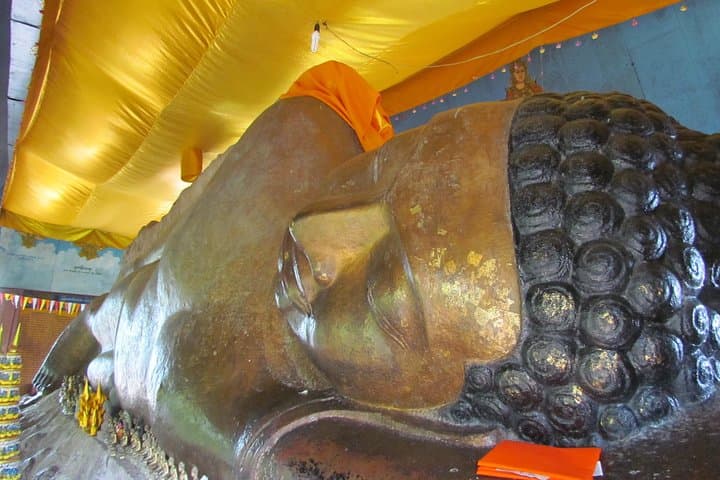
Culture is present in small shrines and the Reclining Buddha carved into the hill; visitors should observe local customs and the park’s visitor code: respect monks, do not touch carvings, and leave no trace.
Practical guidance: your one‑day park ticket covers the main sites — waterfall, River of 1,000 Lingas and the Reclining Buddha — but not Angkor’s temples. Access is time‑sensitive: vehicles can only travel up the one‑way road from about 7:00–11:30; after 11:30 traffic reverses and you cannot drive up. Expect uneven terrain, short steep climbs and slippery rock at the falls; wear sturdy shoes and plan to leave by park closing around 16:00. Bring water, sun protection and modest clothing for religious sites. Tickets delivered to Siem Reap hotels the evening before make for a smoother start.
With a mix of history, geology and splashy river sections, a day at Phnom Kulen rewards visitors who balance curiosity with common‑sense planning.
moderate.
6–8 hours.
Moderate fitness: comfortable walking on uneven ground, short steep sections and some standing at viewpoints.
Yes — Phnom Kulen has its own national park ticket; standard Angkor Archaeological Park passes do not grant access here.
Tickets are delivered to your Siem Reap hotel the evening (from 17:00) prior to your scheduled visit and are valid the following day.
Children under 12 generally do not need a ticket for the national park but must show passport ID at the checkpoint to prove age.
Access up the park road is allowed in one direction from roughly 07:00–11:30; after 11:30 traffic reverses to allow exit. The park typically closes around 16:00.
Phnom Kulen is where Jayavarman II declared independence and began the Khmer Empire; the River of 1,000 Lingas shows early Hindu ritual carved directly into bedrock.
Visitor pressure and fragile sandstone carvings require low‑impact behavior; stick to trails, avoid touching rockwork and carry out all trash to support preservation.
Green Era Travel operates guided outdoor trips and adventures with an emphasis on safety, stewardship, and memorable experiences.
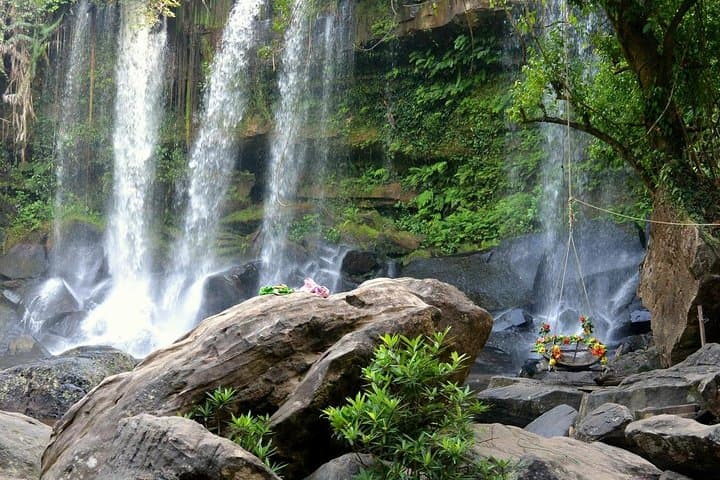
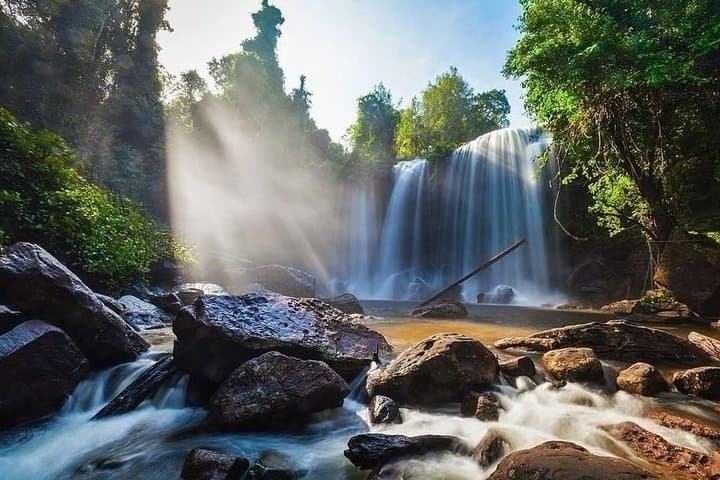
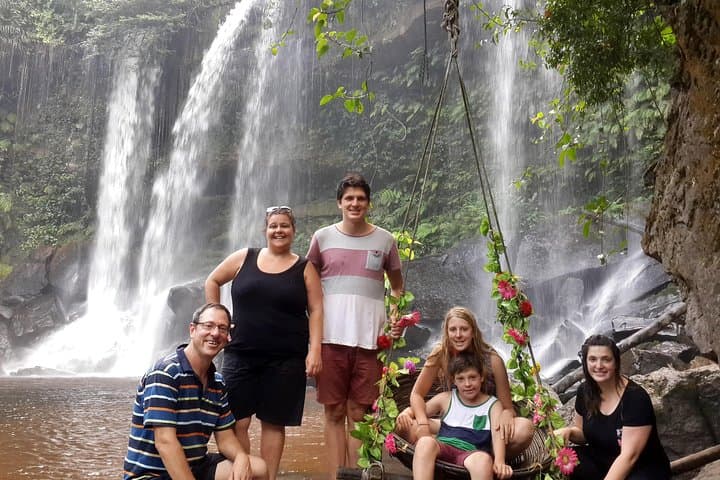
You arrive before the road reverses direction: red dust, bright sun and the steady roar of the Phnom Kulen waterfall drawing you uphill. The park opens like a landscape of contrasts — volcanic bedrock carved into channels, dense dry‑forest ridges and sudden cool pools where visitors strip off boots to stand under the cascade.
You arrive before the road reverses direction: red dust, bright sun and the steady roar of the Phnom Kulen waterfall drawing you uphill. The park opens like a landscape of contrasts — volcanic bedrock carved into channels, dense dry‑forest ridges and sudden cool pools where visitors strip off boots to stand under the cascade.
Phnom Kulen is sacred ground in Cambodian history. In the 9th century King Jayavarman II declared the Khmer Empire here; the River of 1,000 Lingas is a carved sandstone channel where Hindu devotion was literally cut into stone. Geologically the plateau is a worn remnant of volcanic flows and sandstone that feeds dramatic falls and clear plunge pools.
Culture is present in small shrines and the Reclining Buddha carved into the hill; visitors should observe local customs and the park’s visitor code: respect monks, do not touch carvings, and leave no trace.
Practical guidance: your one‑day park ticket covers the main sites — waterfall, River of 1,000 Lingas and the Reclining Buddha — but not Angkor’s temples. Access is time‑sensitive: vehicles can only travel up the one‑way road from about 7:00–11:30; after 11:30 traffic reverses and you cannot drive up. Expect uneven terrain, short steep climbs and slippery rock at the falls; wear sturdy shoes and plan to leave by park closing around 16:00. Bring water, sun protection and modest clothing for religious sites. Tickets delivered to Siem Reap hotels the evening before make for a smoother start.
With a mix of history, geology and splashy river sections, a day at Phnom Kulen rewards visitors who balance curiosity with common‑sense planning.