THE ADVENTURE COLLECTIVE® · Independent discovery and booking for outdoor travel

Drive north from Siem Reap into Phnom Kulen’s jungle to stand on a riverbed studded with 1,000 Shiva lingas, swim beneath mineral waterfalls, and explore hidden stone carvings by motorbike. This private day tour blends archaeology, geology and hands‑on adventure.
Drive north from Siem Reap into Phnom Kulen’s jungle to stand on a riverbed studded with 1,000 Shiva lingas, swim beneath mineral waterfalls, and explore hidden stone carvings by motorbike. This private day tour blends archaeology, geology and hands‑on adventure.
A humid dawn lifts off the back of the minivan and the road to Phnom Kulen opens into green—dense forest, cashew groves and off-track dirt that insist you slow down and look. The tour moves from road to riverbed: a shallow current that has been carved and carved again into thousands of Shiva lingas, each groove catching light and asking you to step carefully.
Verified experiences and guided adventures in the surrounding area.
Operated by Siem Reap Biking Tour · Siem Reap, Siem Reap Province
A humid dawn lifts off the back of the minivan and the road to Phnom Kulen opens into green—dense forest, cashew groves and off-track dirt that insist you slow down and look. The tour moves from road to riverbed: a shallow current that has been carved and carved again into thousands of Shiva lingas, each groove catching light and asking you to step carefully.
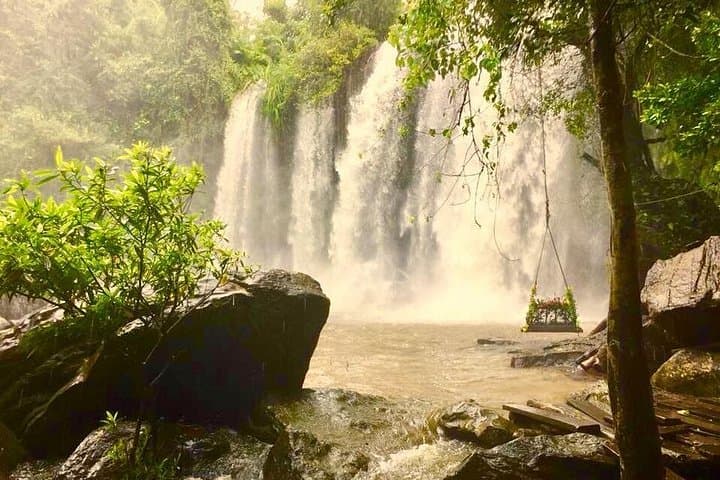
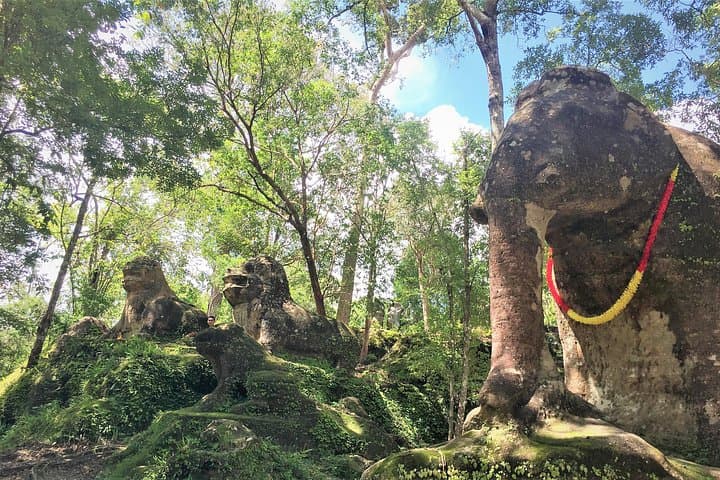
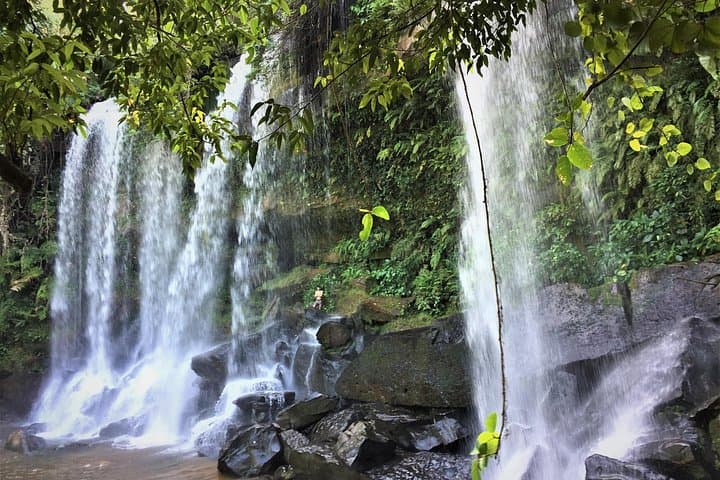
Phnom Kulen was the cradle of the Khmer state; King Jayavarman II proclaimed independence here in the 9th century, and stone carvings—reclining Buddhas, lions, and elephant images—still peer from the jungle. Geology is visible at hand: sandstone outcrops, eroded river beds and a waterfall whose mineral water colors the pools depending on season and flow. Local culture is woven through the visit—sites are active religious places and swimming in the sacred pools is treated as ritual as much as refreshment.
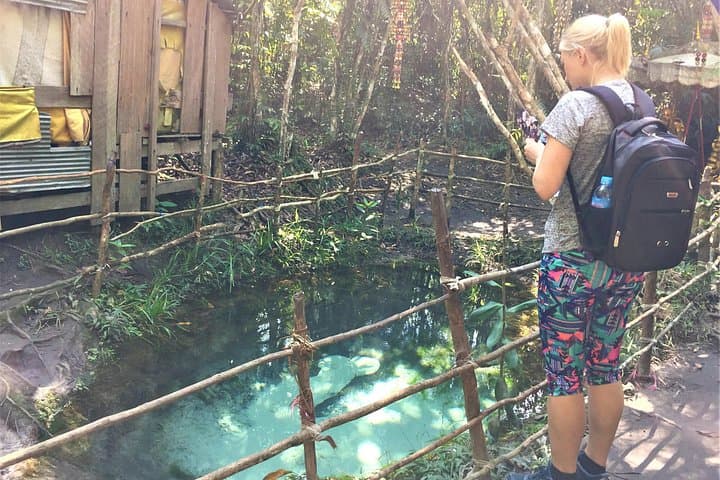
Practically, expect a mix of vehicle transfers and short treks: paved road into the park, then motorbike rides on off-trail tracks to viewpoints and ruins, plus a 300‑m village trek and a refreshment swim at the main waterfall. Guides usually include helmets, bottled water and a towel; bring quick‑dry clothing, sturdy sandals or hikers with grip, insect repellent, sun protection and modest clothing for shrine visits.
Timing matters—arrive in the morning to avoid crowds and heat; in the wet season some off‑track stretches can be slippery. Respect the sacred sites, pack out trash, and be prepared for the visceral contrast of ancient stone and green, active jungle that keeps revealing one more carved face.
moderate.
8 hours.
Moderate fitness—able to handle short treks (300 m), climbing over rocks and brief motorbike rides on uneven tracks.
Yes—visitors commonly swim at the main waterfall; avoid swimming directly over carved lingas out of respect and follow your guide’s directions for safe entry points.
Motorbike segments are short transfers between sites (typically 20–30 minutes total); helmets are provided and should be worn at all times.
Children over about 6 can usually participate, but guardians should supervise near slippery rocks and moving water; check with the operator for age policies and bring life vests if concerned.
There is a national park entrance fee for Phnom Kulen separate from the tour; small, voluntary offerings at religious sites are customary—bring modest cash.
Phnom Kulen was the site where Jayavarman II declared Khmer sovereignty in the 9th century; many stone carvings and linga carvings date to early Angkorian statecraft.
Kulen is a protected national park; visitors should stay on trails, avoid taking stones or artifacts, and avoid soaps in sacred pools to reduce chemical impact.
Siem Reap Biking Tour operates guided outdoor trips and adventures with an emphasis on safety, stewardship, and memorable experiences.
A humid dawn lifts off the back of the minivan and the road to Phnom Kulen opens into green—dense forest, cashew groves and off-track dirt that insist you slow down and look. The tour moves from road to riverbed: a shallow current that has been carved and carved again into thousands of Shiva lingas, each groove catching light and asking you to step carefully.
A humid dawn lifts off the back of the minivan and the road to Phnom Kulen opens into green—dense forest, cashew groves and off-track dirt that insist you slow down and look. The tour moves from road to riverbed: a shallow current that has been carved and carved again into thousands of Shiva lingas, each groove catching light and asking you to step carefully.
Phnom Kulen was the cradle of the Khmer state; King Jayavarman II proclaimed independence here in the 9th century, and stone carvings—reclining Buddhas, lions, and elephant images—still peer from the jungle. Geology is visible at hand: sandstone outcrops, eroded river beds and a waterfall whose mineral water colors the pools depending on season and flow. Local culture is woven through the visit—sites are active religious places and swimming in the sacred pools is treated as ritual as much as refreshment.
Practically, expect a mix of vehicle transfers and short treks: paved road into the park, then motorbike rides on off-trail tracks to viewpoints and ruins, plus a 300‑m village trek and a refreshment swim at the main waterfall. Guides usually include helmets, bottled water and a towel; bring quick‑dry clothing, sturdy sandals or hikers with grip, insect repellent, sun protection and modest clothing for shrine visits.
Timing matters—arrive in the morning to avoid crowds and heat; in the wet season some off‑track stretches can be slippery. Respect the sacred sites, pack out trash, and be prepared for the visceral contrast of ancient stone and green, active jungle that keeps revealing one more carved face.