THE ADVENTURE COLLECTIVE® · Independent discovery and booking for outdoor travel

Spend a full day north of Siem Reap exploring Phnom Kulen’s sacred river carvings and cooling off beneath a 30-meter waterfall, then wander the overgrown galleries of Beng Mealea. This small-group tour blends hands-on history, a refreshing swim, and jungle-temple exploration.
Spend a full day north of Siem Reap exploring Phnom Kulen’s sacred river carvings and cooling off beneath a 30-meter waterfall, then wander the overgrown galleries of Beng Mealea. This small-group tour blends hands-on history, a refreshing swim, and jungle-temple exploration.
A humid road eases out of Siem Reap and the landscape opens into paddy plains that give way to the blunt sandstone rise of Phnom Kulen. By midmorning the forest breathes cooler air; the river of carved lingas threads across bedrock, daring you to follow its shallow pools to the plunge of a 30-meter waterfall. Locals come here to picnic and bathe — the water tugs at you with a clear, insistent pull.
Verified experiences and guided adventures in the surrounding area.
Operated by Green Era Travel · Siem Reap, Siem Reap Province
A humid road eases out of Siem Reap and the landscape opens into paddy plains that give way to the blunt sandstone rise of Phnom Kulen. By midmorning the forest breathes cooler air; the river of carved lingas threads across bedrock, daring you to follow its shallow pools to the plunge of a 30-meter waterfall. Locals come here to picnic and bathe — the water tugs at you with a clear, insistent pull.
Phnom Kulen is more than a scenic day trip: Khmers regard it as a sacred birthplace of the Khmer Empire. Riverbed carvings of lingas and a reclining Buddha hewn into sandstone link Hindu and Buddhist traditions. Geologically, the plateau is a sandstone escarpment, eroded into channels and cliffs that concentrate runoff into dramatic cascades. Cultural layers stack here — contemporary pilgrimage, Angkorian-era carvings, and modern weekend life — giving the place both reverence and easy-going energy.
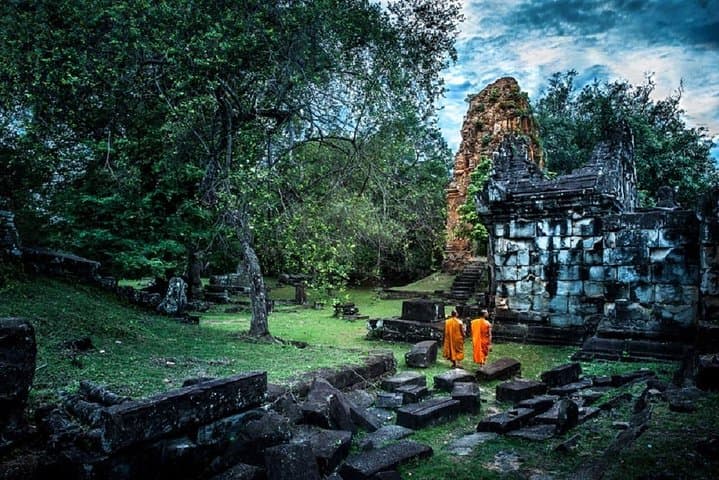
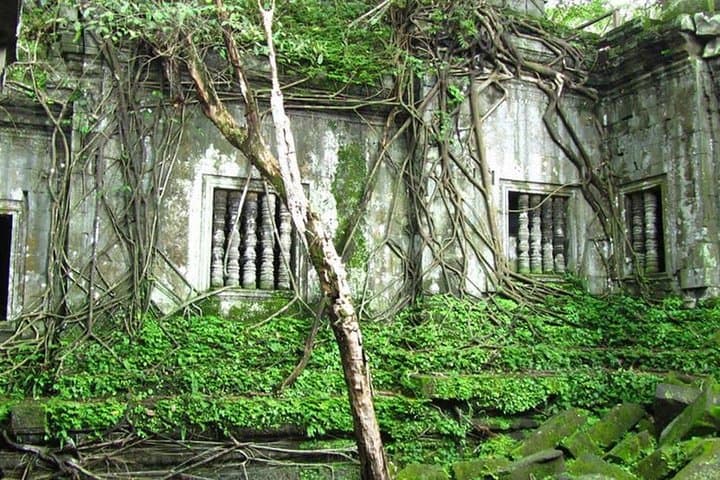
Practical guidance: expect uneven trails, some steep dirt road driving, and a short climb to viewpoint and pagoda. Bring a swimsuit, sturdy sandals or light hiking shoes, sun protection and a dry bag for electronics. The tour combines swimming, light hiking and exploring ruined temples, including Beng Mealea, a largely overgrown 12th-century complex where roots and rubble make footing unpredictable. Plan to be out for about seven hours with hotel pickup; carry cash for entrance fees or snacks. Start early to avoid midday heat, respect sacred sites, and give yourself time to move slowly — the river and jungle set their own rhythm.
moderate.
6–7 hours.
Suitable for travelers with moderate fitness comfortable with short hikes, stairs and uneven terrain; not recommended for those with mobility limits.
The tour runs about seven hours and includes hotel pickup/drop-off, bottled water, an English-speaking guide and shared air-conditioned transport; check if entry fees are included.
Yes, locals and visitors swim in the plunge pools; exercise caution on slippery rocks and avoid strong currents after heavy rain.
Children must be accompanied by an adult; the tour is not recommended for pregnant travelers due to uneven terrain and short hikes.
Wear shoes suitable for uneven, overgrown ruins, bring insect repellent, modest clothing for temple areas and water; be prepared for some hiking through vegetation.
Phnom Kulen is traditionally considered a cradle of the Khmer Empire, with Angkorian-era carvings and a large reclining Buddha carved into the sandstone that reflect overlapping Hindu and Buddhist practices.
Visitors should avoid standing directly on delicate carvings, take all trash out, and follow local guidance; rising visitor numbers have increased pressure on trails and river sites, so stick to marked areas.
Green Era Travel operates guided outdoor trips and adventures with an emphasis on safety, stewardship, and memorable experiences.


A humid road eases out of Siem Reap and the landscape opens into paddy plains that give way to the blunt sandstone rise of Phnom Kulen. By midmorning the forest breathes cooler air; the river of carved lingas threads across bedrock, daring you to follow its shallow pools to the plunge of a 30-meter waterfall. Locals come here to picnic and bathe — the water tugs at you with a clear, insistent pull.
A humid road eases out of Siem Reap and the landscape opens into paddy plains that give way to the blunt sandstone rise of Phnom Kulen. By midmorning the forest breathes cooler air; the river of carved lingas threads across bedrock, daring you to follow its shallow pools to the plunge of a 30-meter waterfall. Locals come here to picnic and bathe — the water tugs at you with a clear, insistent pull.
Phnom Kulen is more than a scenic day trip: Khmers regard it as a sacred birthplace of the Khmer Empire. Riverbed carvings of lingas and a reclining Buddha hewn into sandstone link Hindu and Buddhist traditions. Geologically, the plateau is a sandstone escarpment, eroded into channels and cliffs that concentrate runoff into dramatic cascades. Cultural layers stack here — contemporary pilgrimage, Angkorian-era carvings, and modern weekend life — giving the place both reverence and easy-going energy.
Practical guidance: expect uneven trails, some steep dirt road driving, and a short climb to viewpoint and pagoda. Bring a swimsuit, sturdy sandals or light hiking shoes, sun protection and a dry bag for electronics. The tour combines swimming, light hiking and exploring ruined temples, including Beng Mealea, a largely overgrown 12th-century complex where roots and rubble make footing unpredictable. Plan to be out for about seven hours with hotel pickup; carry cash for entrance fees or snacks. Start early to avoid midday heat, respect sacred sites, and give yourself time to move slowly — the river and jungle set their own rhythm.