THE ADVENTURE COLLECTIVE® · Independent discovery and booking for outdoor travel

Travel north from Siem Reap to Phnom Kulen for carved river lingas, off-track motorbike viewpoints, and a swim beneath a jungle waterfall. This private day tour blends tangible Khmer history with rugged terrain and seasonal contrasts.
Travel north from Siem Reap to Phnom Kulen for carved river lingas, off-track motorbike viewpoints, and a swim beneath a jungle waterfall. This private day tour blends tangible Khmer history with rugged terrain and seasonal contrasts.
Morning light cuts through tall dipterocarp trees as the Lexus eases off the main road and into rutted jungle tracks. The scent of wet stone and earth rises; the river ahead murmurs over carved lingas and the first cascade shows itself, white and clean against dark rock.
Verified experiences and guided adventures in the surrounding area.
Operated by Naga Angkor Tour · Phnom Kulen, Siem Reap Province
Morning light cuts through tall dipterocarp trees as the Lexus eases off the main road and into rutted jungle tracks. The scent of wet stone and earth rises; the river ahead murmurs over carved lingas and the first cascade shows itself, white and clean against dark rock.
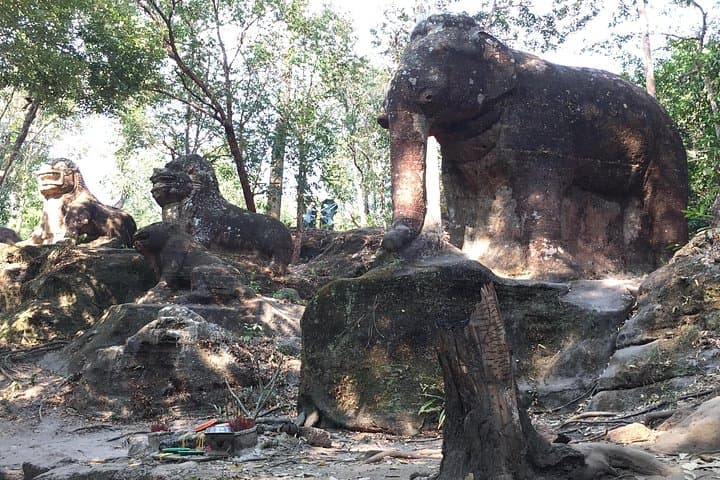
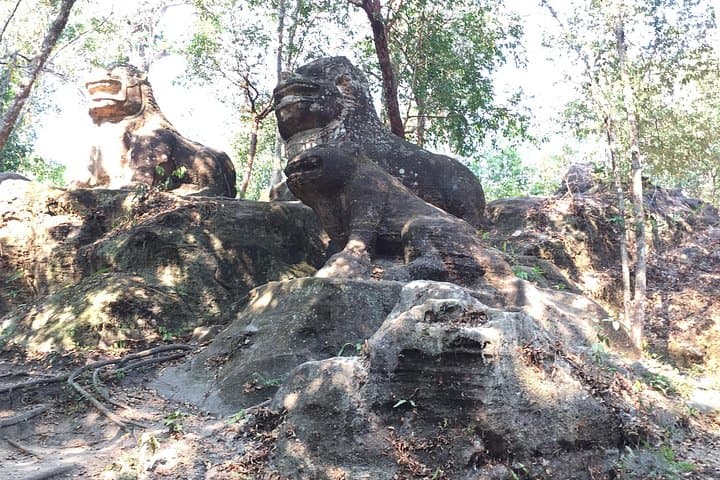
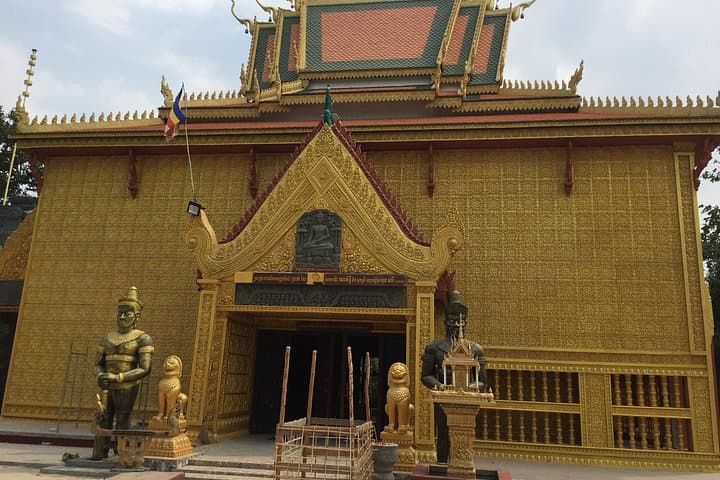
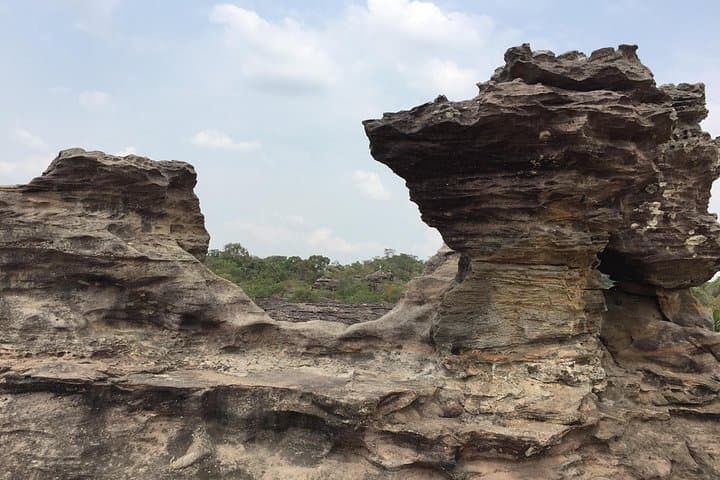
Phnom Kulen is a volcanic massif north of Siem Reap that hosted an early Khmer capital in the 9th century under King Jayavarman II. Lidar surveys have revealed buried temple complexes and lost city grids here; on the ground you'll find carved lingas in the riverbed, a reclining Buddha hewn from native sandstone, and small temple ruins half-reclaimed by forest. Geologically, the plateau is basalt and sandstone — the basalt creates stepped falls and plunge pools while sandstone provides cliff faces and stone carvings.
The cultural tone is both sacred and lived-in: villagers maintain small shrines, monks use the pools for ritual cleansing, and local motorbike riders know every off-trace lane. Expect a mix of short hikes, off-road motorbike sections, flashlight visits to bat caves, and an hour of swimming beneath the main waterfall.
Practical points: the full-day excursion runs about eight hours with moderate walking and uneven terrain; bring sturdy shoes that can get wet, insect repellent, sun protection, and a light rain layer in wet months. Park fees and a guide are usually included; follow local guidance at sacred sites and avoid soaps in the pools. Timing your visit in the dry season gives easier access to off-trail ruins; in wet months the river is more dramatic but slipperier.
moderate.
8 hours.
Moderate fitness—able to walk short steep sections, stand on uneven rock, and swim briefly.
This tour typically includes Kulen National Park entry as noted in inclusions; an Angkor Archaeological Park pass is separate and not required for Phnom Kulen.
Yes, the thousand lingas are accessible, but surfaces are carved rock and can be slippery—watch your step and avoid soaps or detergents in the water.
The day combines short walks, a motorbike transfer over off-tracks, and swimming; older children who can hike short uneven sections generally manage well, infants should be on laps as required.
Yes—motorbike riders provided will transport guests on brief off-road segments; the tour also uses a vehicle for longer transfers so riding experience is not required.
Phnom Kulen was the site where Jayavarman II declared independence in the 9th century; the area contains carved lingas and numerous temple ruins tied to early Khmer state formation.
Visitor pressure and trail erosion are concerns—stick to paths, avoid trampling vegetation, and never use soap in streams to protect aquatic life.
Naga Angkor Tour operates guided outdoor trips and adventures with an emphasis on safety, stewardship, and memorable experiences.
Morning light cuts through tall dipterocarp trees as the Lexus eases off the main road and into rutted jungle tracks. The scent of wet stone and earth rises; the river ahead murmurs over carved lingas and the first cascade shows itself, white and clean against dark rock.
Morning light cuts through tall dipterocarp trees as the Lexus eases off the main road and into rutted jungle tracks. The scent of wet stone and earth rises; the river ahead murmurs over carved lingas and the first cascade shows itself, white and clean against dark rock.
Phnom Kulen is a volcanic massif north of Siem Reap that hosted an early Khmer capital in the 9th century under King Jayavarman II. Lidar surveys have revealed buried temple complexes and lost city grids here; on the ground you'll find carved lingas in the riverbed, a reclining Buddha hewn from native sandstone, and small temple ruins half-reclaimed by forest. Geologically, the plateau is basalt and sandstone — the basalt creates stepped falls and plunge pools while sandstone provides cliff faces and stone carvings.
The cultural tone is both sacred and lived-in: villagers maintain small shrines, monks use the pools for ritual cleansing, and local motorbike riders know every off-trace lane. Expect a mix of short hikes, off-road motorbike sections, flashlight visits to bat caves, and an hour of swimming beneath the main waterfall.
Practical points: the full-day excursion runs about eight hours with moderate walking and uneven terrain; bring sturdy shoes that can get wet, insect repellent, sun protection, and a light rain layer in wet months. Park fees and a guide are usually included; follow local guidance at sacred sites and avoid soaps in the pools. Timing your visit in the dry season gives easier access to off-trail ruins; in wet months the river is more dramatic but slipperier.