THE ADVENTURE COLLECTIVE® · Independent discovery and booking for outdoor travel

Watch Philae’s temples come alive at night as lights and narration retell the legend of Isis and Osiris. This two-hour, accessible performance on Agilkia Island mixes heritage storytelling with conservation history—ideal for a cultural evening in Aswan.
Watch Philae’s temples come alive at night as lights and narration retell the legend of Isis and Osiris. This two-hour, accessible performance on Agilkia Island mixes heritage storytelling with conservation history—ideal for a cultural evening in Aswan.
The night settles over Aswan and the Nile throws back a layered reflection of light; the temple stones on Agilkia Island take on a deliberate new voice as colored beams trace hieroglyphs and the story of Isis and Osiris unfolds. You arrive by short transfer or hotel pickup, step onto a low island quay, and the air—warm, dry, and carrying river salt—seems to hold its breath as the first narration begins.
Verified experiences and guided adventures in the surrounding area.
Operated by Cheops of beautiful · Aswan, Aswan Governorate
The night settles over Aswan and the Nile throws back a layered reflection of light; the temple stones on Agilkia Island take on a deliberate new voice as colored beams trace hieroglyphs and the story of Isis and Osiris unfolds. You arrive by short transfer or hotel pickup, step onto a low island quay, and the air—warm, dry, and carrying river salt—seems to hold its breath as the first narration begins.
Philae’s monuments were carved in the late Pharaonic and Ptolemaic eras and later reassembled on Agilkia Island after the Aswan High Dam flooded their original site. The island’s granite and silt deposits show the geological interaction of Nile-borne sediments and hard igneous rock, a contrast that helped preserve intricate reliefs. Culturally the site has been a focus of Egyptian, Greek and Roman ritual life and, since the 20th-century UNESCO salvage, a symbol of international conservation.
The production blends recorded narration in multiple languages with staged lighting that highlights columns, statues and the Kiosk of Trajan. Expect short historical vignettes rather than a full archaeological lecture—this is a dramatic introduction more than an in-depth tour.
Practically: the show runs about two hours including transfer time; bring a light layer for the breeze off the Nile and comfortable shoes for uneven paths. Photography with flash can be disruptive; small flashlights or phone lights are useful for boarding boats. Book a pickup from Aswan hotels when possible to avoid late-night navigation; check language schedules in advance if you need narration in a specific tongue.
easy.
2 hours.
Suitable for all fitness levels; requires short walks on uneven surfaces and boat boarding.
The performance itself lasts about 45–60 minutes; transfers and boarding typically make the total experience about two hours.
Yes—shows are commonly presented in multiple languages including English; confirm the language schedule when booking.
The site and transfers accommodate strollers and some wheelchair access, but boat boarding may require assistance—notify operators of mobility needs in advance.
Photography without flash is usually tolerated; flash and extended video can be discouraged—respect staff directions to preserve the experience.
Philae was a major cult center for the goddess Isis; after the creation of the Aswan High Dam the temple complex was dismantled and reconstructed on Agilkia Island in a UNESCO-led salvage effort during the 1960s.
The relocation project is a high-profile example of archaeological conservation; visitors are asked not to touch reliefs, to stay on marked paths and to minimize light pollution during shows.
Cheops of beautiful operates guided outdoor trips and adventures with an emphasis on safety, stewardship, and memorable experiences.
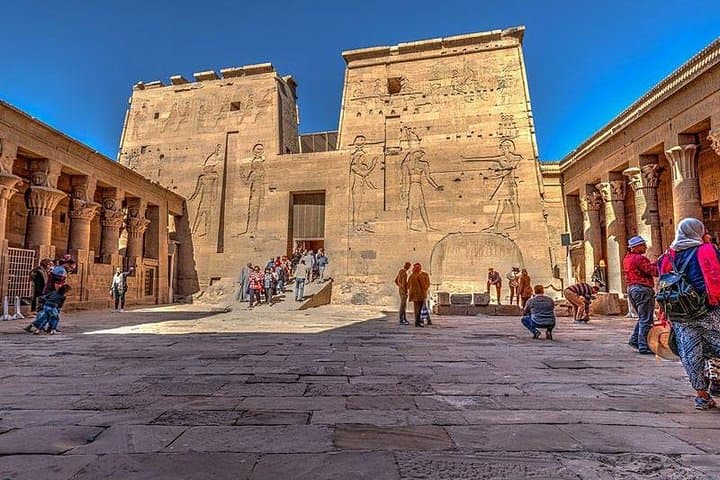
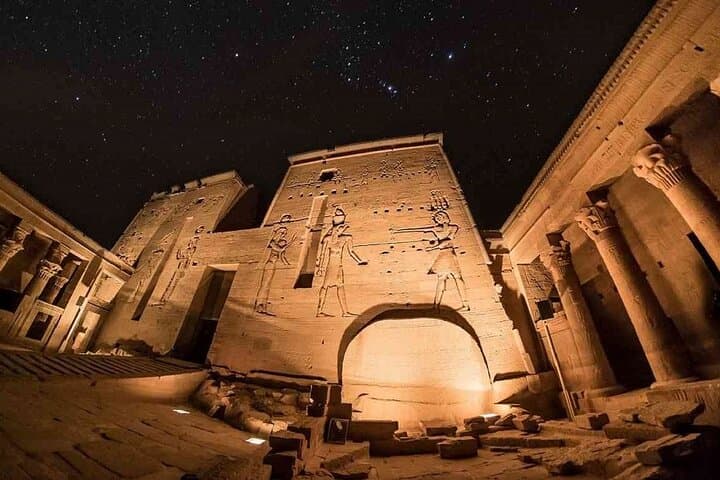
The night settles over Aswan and the Nile throws back a layered reflection of light; the temple stones on Agilkia Island take on a deliberate new voice as colored beams trace hieroglyphs and the story of Isis and Osiris unfolds. You arrive by short transfer or hotel pickup, step onto a low island quay, and the air—warm, dry, and carrying river salt—seems to hold its breath as the first narration begins.
The night settles over Aswan and the Nile throws back a layered reflection of light; the temple stones on Agilkia Island take on a deliberate new voice as colored beams trace hieroglyphs and the story of Isis and Osiris unfolds. You arrive by short transfer or hotel pickup, step onto a low island quay, and the air—warm, dry, and carrying river salt—seems to hold its breath as the first narration begins.
Philae’s monuments were carved in the late Pharaonic and Ptolemaic eras and later reassembled on Agilkia Island after the Aswan High Dam flooded their original site. The island’s granite and silt deposits show the geological interaction of Nile-borne sediments and hard igneous rock, a contrast that helped preserve intricate reliefs. Culturally the site has been a focus of Egyptian, Greek and Roman ritual life and, since the 20th-century UNESCO salvage, a symbol of international conservation.
The production blends recorded narration in multiple languages with staged lighting that highlights columns, statues and the Kiosk of Trajan. Expect short historical vignettes rather than a full archaeological lecture—this is a dramatic introduction more than an in-depth tour.
Practically: the show runs about two hours including transfer time; bring a light layer for the breeze off the Nile and comfortable shoes for uneven paths. Photography with flash can be disruptive; small flashlights or phone lights are useful for boarding boats. Book a pickup from Aswan hotels when possible to avoid late-night navigation; check language schedules in advance if you need narration in a specific tongue.