THE ADVENTURE COLLECTIVE® · Independent discovery and booking for outdoor travel

Watch Philae’s carved walls come alive after dark: a boat ride to Agilkia Island, narrated myths, and colored lights that trace Egypt’s Nile-era stories. Ideal for travelers who want a compact cultural evening without a full archaeological tour.
Watch Philae’s carved walls come alive after dark: a boat ride to Agilkia Island, narrated myths, and colored lights that trace Egypt’s Nile-era stories. Ideal for travelers who want a compact cultural evening without a full archaeological tour.
The night opens slow on the Nile, lights reflected in black water while a boat eases toward Agilkia Island and the columns of Philae rise into view. At the Sound and Light show, colored lamps and a narrated score redraw the island’s myths: Isis and Osiris, the Nile’s influence on empire, and the temple’s move stone-by-stone during the Aswan High Dam project.
Verified experiences and guided adventures in the surrounding area.
Operated by Luxor Booking Tours · Aswan, Aswan Governorate
The night opens slow on the Nile, lights reflected in black water while a boat eases toward Agilkia Island and the columns of Philae rise into view. At the Sound and Light show, colored lamps and a narrated score redraw the island’s myths: Isis and Osiris, the Nile’s influence on empire, and the temple’s move stone-by-stone during the Aswan High Dam project.
Philae’s stones are late-Pharaonic and Ptolemaic, carved with pharaohs and gods in crisp relief; in the 1960s UNESCO coordinated the relocation of the temple from Philae to higher ground on Agilkia to save it from the rising reservoir. The show itself is modern — recorded narration in several languages with staged illumination — but it uses the original architecture as its canvas, making the reliefs read like pages of history under changing light.
Expect a short boat approach, a guided seating area, and a two-hour runtime. The performance does not include daytime temple interior access; plan a daytime visit if you want to inspect hieroglyphs up close. Locals treat the show as a low-effort way to grasp Nile civilization across two millennia, and the site stays calm after dusk, with cool breezes and fewer flies than daytime tours.
Practical notes: arrive early for the pickup or boat line, bring a light jacket against the evening wind, and carry water. Photography with flash is usually allowed but can be restricted during certain scenes—follow staff instructions. The show is suitable for most travelers and provides a concise, atmospheric history lesson without the fatigue of a full archaeological walkthrough.
easy.
2 hours.
Suitable for all fitness levels; involves short boat access and light walking
The program runs about two hours including boarding and the narrated light presentation.
No; the ticket covers the evening sound-and-light presentation only—visit during the day separately to enter temple interiors.
Most tours include hotel pickup and a short motorboat transfer to Agilkia Island where Philae is located.
Yes, recordings are commonly offered in several major languages—confirm language availability when booking.
Philae’s temples date to the Ptolemaic and Roman periods; the complex was moved stone-by-stone in the 1960s to save it from flooding caused by the Aswan High Dam.
UNESCO-led relocation saved Philae from submersion; ongoing site management balances nighttime tourism with preservation of fragile reliefs and pigments.
Luxor Booking Tours operates guided outdoor trips and adventures with an emphasis on safety, stewardship, and memorable experiences.
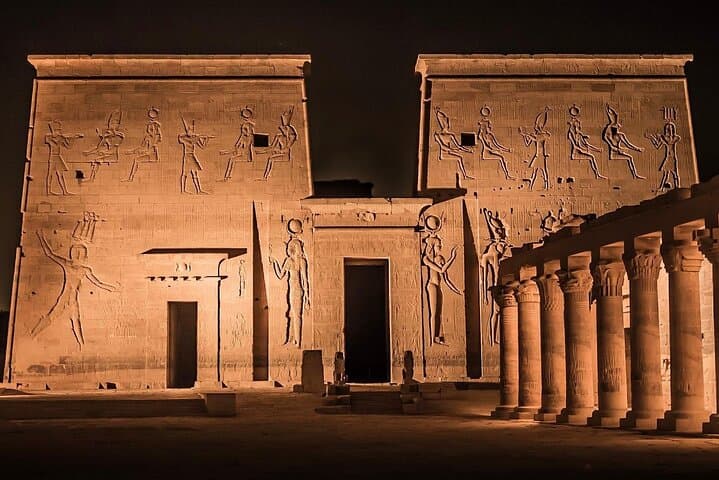
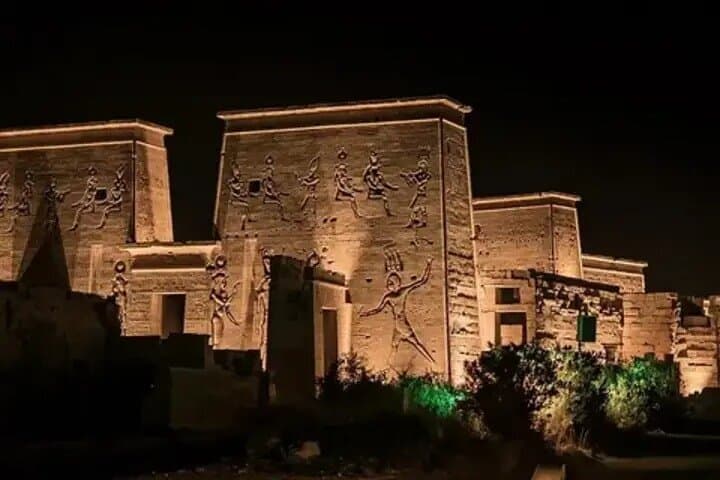
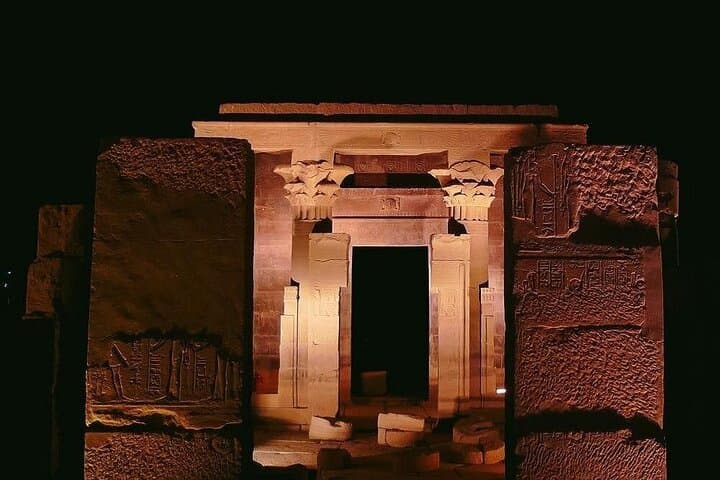
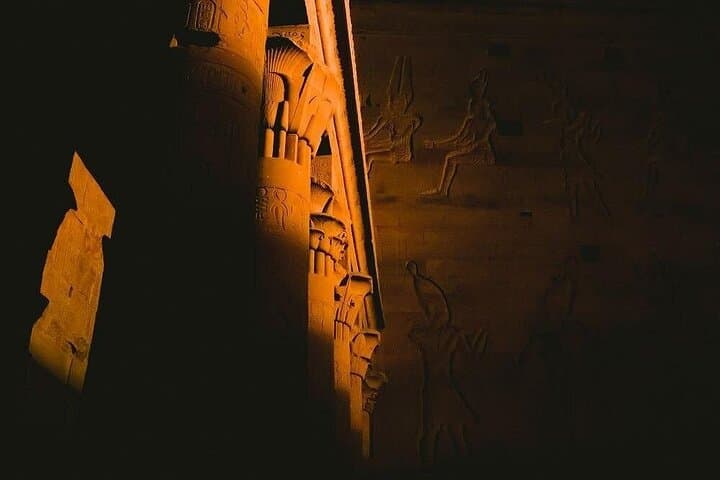
The night opens slow on the Nile, lights reflected in black water while a boat eases toward Agilkia Island and the columns of Philae rise into view. At the Sound and Light show, colored lamps and a narrated score redraw the island’s myths: Isis and Osiris, the Nile’s influence on empire, and the temple’s move stone-by-stone during the Aswan High Dam project.
The night opens slow on the Nile, lights reflected in black water while a boat eases toward Agilkia Island and the columns of Philae rise into view. At the Sound and Light show, colored lamps and a narrated score redraw the island’s myths: Isis and Osiris, the Nile’s influence on empire, and the temple’s move stone-by-stone during the Aswan High Dam project.
Philae’s stones are late-Pharaonic and Ptolemaic, carved with pharaohs and gods in crisp relief; in the 1960s UNESCO coordinated the relocation of the temple from Philae to higher ground on Agilkia to save it from the rising reservoir. The show itself is modern — recorded narration in several languages with staged illumination — but it uses the original architecture as its canvas, making the reliefs read like pages of history under changing light.
Expect a short boat approach, a guided seating area, and a two-hour runtime. The performance does not include daytime temple interior access; plan a daytime visit if you want to inspect hieroglyphs up close. Locals treat the show as a low-effort way to grasp Nile civilization across two millennia, and the site stays calm after dusk, with cool breezes and fewer flies than daytime tours.
Practical notes: arrive early for the pickup or boat line, bring a light jacket against the evening wind, and carry water. Photography with flash is usually allowed but can be restricted during certain scenes—follow staff instructions. The show is suitable for most travelers and provides a concise, atmospheric history lesson without the fatigue of a full archaeological walkthrough.