THE ADVENTURE COLLECTIVE® · Independent discovery and booking for outdoor travel

Glide across the Nile to Philae Island on a private motorboat and explore the rescued temples with a licensed local guide. This private, family-friendly tour includes transfers, skip-the-line tickets, and flexible timing for photography.
Glide across the Nile to Philae Island on a private motorboat and explore the rescued temples with a licensed local guide. This private, family-friendly tour includes transfers, skip-the-line tickets, and flexible timing for photography.
A low motorboat cuts through the Nile at dawn, spray silvering against limestone banks as Philae’s pylons appear like an island-city rising from the water. Visitors step ashore and the sound of engines fades; the river seems to nudge the temple forward while palms frame the approach.
Verified experiences and guided adventures in the surrounding area.
Operated by Eyes of Egypt · Aswan, Aswan
A low motorboat cuts through the Nile at dawn, spray silvering against limestone banks as Philae’s pylons appear like an island-city rising from the water. Visitors step ashore and the sound of engines fades; the river seems to nudge the temple forward while palms frame the approach.
Philae’s core was moved to Agilkia Island in the 1960s to save it from the rising Nile after the Aswan High Dam—what remains now is a compact complex dedicated mainly to the goddess Isis. The temple’s granite and sandstone blocks keep the fingerprints of pharaonic carving and later Graeco-Roman additions, telling a layered story of religion, politics, and Nile commerce.
Guides explain the iconography—Isis’s protective role, ritual pathways and the reuse of older monuments—and point out spots where sunlight sculpts hieroglyphs into relief. Aswan’s crystalline light makes details pop; the river’s edge hosts fishermen and birds that add local texture.
Practicalities: tours run 3–4 hours with private transfers in air-conditioned vehicles and a motorboat to the island. The visit involves mostly flat walking on stone pavements and steps; expect 1.5–2 hours on-site, time for photos, and flexible pauses. Wear sturdy, closed-toe shoes for uneven flagstones, carry water, and plan for strong sun—shade is limited. Wheelchair access is available to parts of the site via ramps and docks, but check specifics with the provider for mobility needs. A licensed local guide makes the visit efficient and richer—asks about language preferences and photo help when booking.
easy.
3–4 hours.
Suitable for most fitness levels; requires 1–2 hours of leisurely walking with some steps and short standing periods.
Parts of the approach and some areas on Agilkia Island have ramps and accessible docks, but access to inner chambers may be limited; check with the operator for specific mobility needs.
Yes—this private tour includes Philae Temple entrance tickets and motorboat transfers as part of the group price.
Guided time at the temple is typically 1.5–2 hours within a 3–4 hour door-to-door schedule that includes transfers and boat rides.
Yes—licensed local guides often assist with photography, flexible pacing, and cultural explanations; request language preferences and any special needs when booking.
Philae’s temples were one of several monument complexes relocated during the UNESCO-led salvage campaign following construction of the Aswan High Dam in the 1960s, preserving ancient architecture threatened by the rising Nile.
Conservation efforts focus on stabilizing stonework and managing visitor impact; visitors are encouraged to avoid touching fragile carvings and to carry out any waste.
Eyes of Egypt operates guided outdoor trips and adventures with an emphasis on safety, stewardship, and memorable experiences.
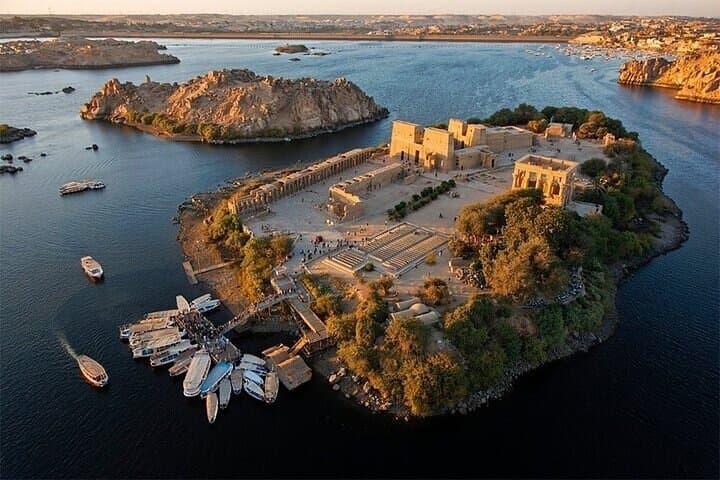
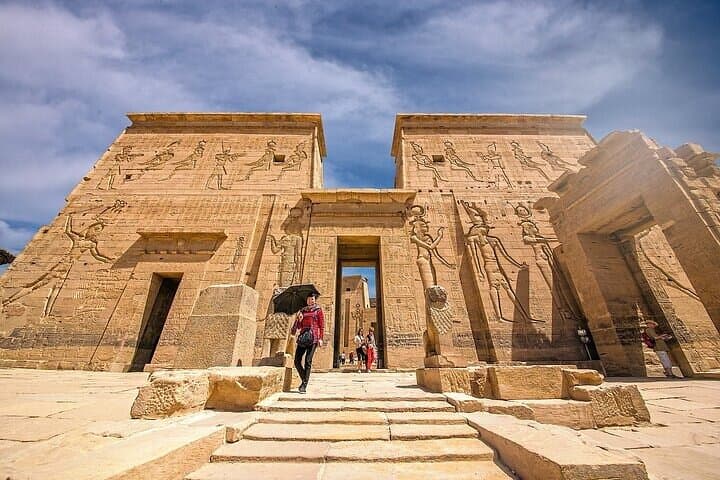
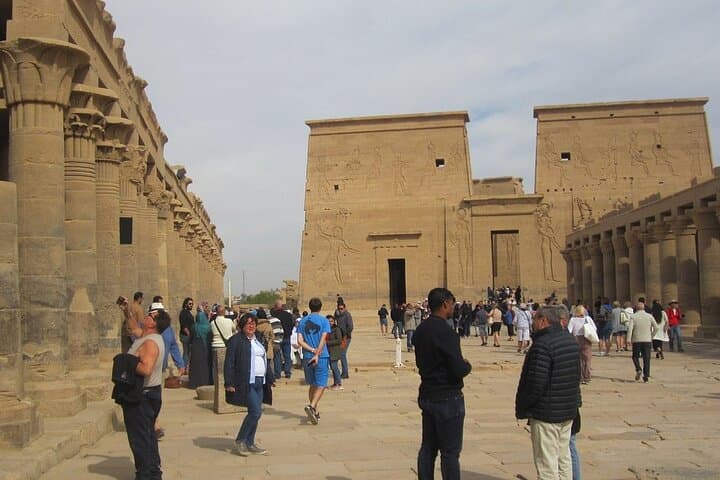
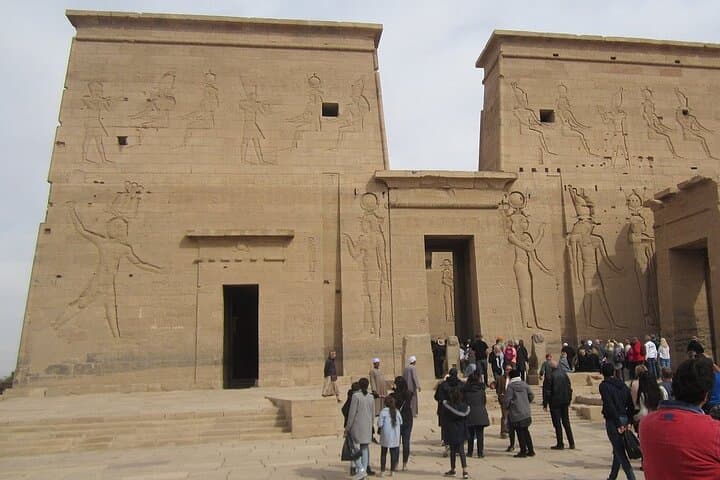
A low motorboat cuts through the Nile at dawn, spray silvering against limestone banks as Philae’s pylons appear like an island-city rising from the water. Visitors step ashore and the sound of engines fades; the river seems to nudge the temple forward while palms frame the approach.
A low motorboat cuts through the Nile at dawn, spray silvering against limestone banks as Philae’s pylons appear like an island-city rising from the water. Visitors step ashore and the sound of engines fades; the river seems to nudge the temple forward while palms frame the approach.
Philae’s core was moved to Agilkia Island in the 1960s to save it from the rising Nile after the Aswan High Dam—what remains now is a compact complex dedicated mainly to the goddess Isis. The temple’s granite and sandstone blocks keep the fingerprints of pharaonic carving and later Graeco-Roman additions, telling a layered story of religion, politics, and Nile commerce.
Guides explain the iconography—Isis’s protective role, ritual pathways and the reuse of older monuments—and point out spots where sunlight sculpts hieroglyphs into relief. Aswan’s crystalline light makes details pop; the river’s edge hosts fishermen and birds that add local texture.
Practicalities: tours run 3–4 hours with private transfers in air-conditioned vehicles and a motorboat to the island. The visit involves mostly flat walking on stone pavements and steps; expect 1.5–2 hours on-site, time for photos, and flexible pauses. Wear sturdy, closed-toe shoes for uneven flagstones, carry water, and plan for strong sun—shade is limited. Wheelchair access is available to parts of the site via ramps and docks, but check specifics with the provider for mobility needs. A licensed local guide makes the visit efficient and richer—asks about language preferences and photo help when booking.