THE ADVENTURE COLLECTIVE® · Independent discovery and booking for outdoor travel

Cross the Nile to Philae’s relocated temple, then meet Nubian artisans beneath date palms on a private 4‑hour tour from Aswan. Expect temple reliefs, short boat crossings and personal cultural exchange with village families.
Cross the Nile to Philae’s relocated temple, then meet Nubian artisans beneath date palms on a private 4‑hour tour from Aswan. Expect temple reliefs, short boat crossings and personal cultural exchange with village families.
You step off the shaded riverbank and the Nile pushes at the shoreline like an old, persistent traveler; Agilkia Island and the columns of Philae rise across the water, sun-faded hieroglyphs catching the light.
Verified experiences and guided adventures in the surrounding area.
Operated by Ancient Egypt Tours · Aswan, Aswan Governorate
You step off the shaded riverbank and the Nile pushes at the shoreline like an old, persistent traveler; Agilkia Island and the columns of Philae rise across the water, sun-faded hieroglyphs catching the light.
The private tour begins in Aswan with a short drive and a boat crossing to Philae, the island temple complex dedicated to Isis. Visitors move through a compact sequence of Ptolemaic colonnades, granite pylons and carved reliefs — a place moved stone by stone during the Aswan High Dam project to protect it from the rising waters. The island’s geology is river-cut granite; the temple’s capitals and reliefs still show the abrasion of centuries of sand and water.
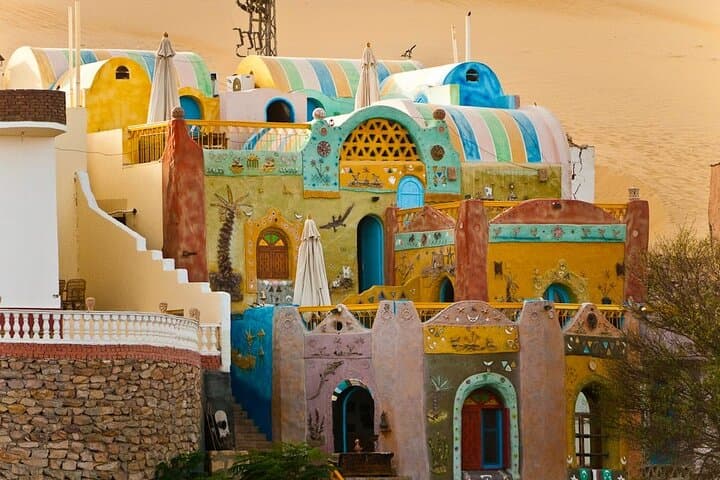
After the temple, the guide leads to a Nubian village across from Soheil Island. Colorful houses stand among date palms and small gardens, and locals welcome visitors into daily life: weaving, pottery and shared tea. This is cultural exchange as much as sightseeing — short walks on compact lanes, shaded courtyards and hands-on conversations with artisans.
Practical notes: the full program runs about four hours with roughly two hours at Philae and two in the village. Wear sun protection and sturdy flat shoes — some stone steps and uneven paths are unavoidable. The operator provides private air-conditioned transfer and entry fees; boat crossings are short but can be breezy. Carry water, small bills for local purchases, and basic respect: ask before photographing people. Early morning departures beat heat and crowds and make the colors of the Nile and village more vivid.
easy.
4 hours.
Suitable for most fitness levels — involves short walks, some steps and standing during explanations.
Yes — the tour includes entrance fees to the sites and private air‑conditioned transfers and boat crossings as listed.
The operator notes wheelchair accessibility, though some areas have uneven surfaces; inquire about assistance and boat boarding in advance.
Expect roughly two hours at Philae Temple and about two hours in the Nubian village, totaling about four hours door-to-door.
Yes — local artisans sell textiles, pottery and small crafts; bring cash in small notes and be prepared to haggle politely.
Philae was a major cult center for the goddess Isis; the temple complex was relocated to Agilkia Island in the 1960s under a UNESCO campaign to save monuments from the Aswan High Dam reservoir.
Relocation and restoration have been central here — visitors can support conservation by staying on paths, avoiding flash photography in sensitive areas and buying from local artisans.
Ancient Egypt Tours operates guided outdoor trips and adventures with an emphasis on safety, stewardship, and memorable experiences.
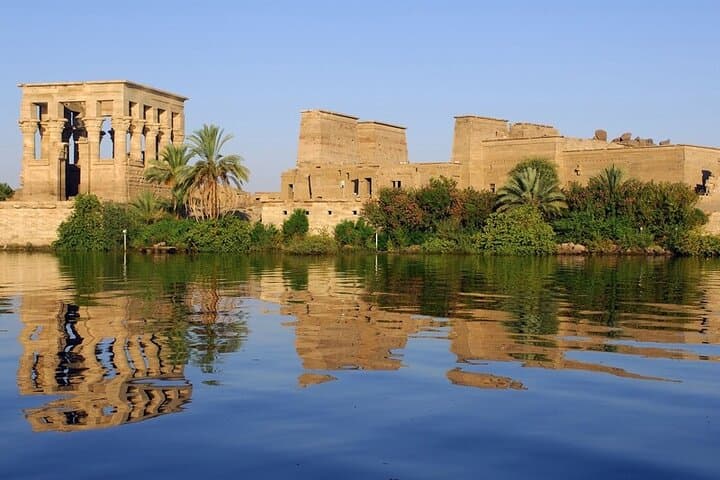
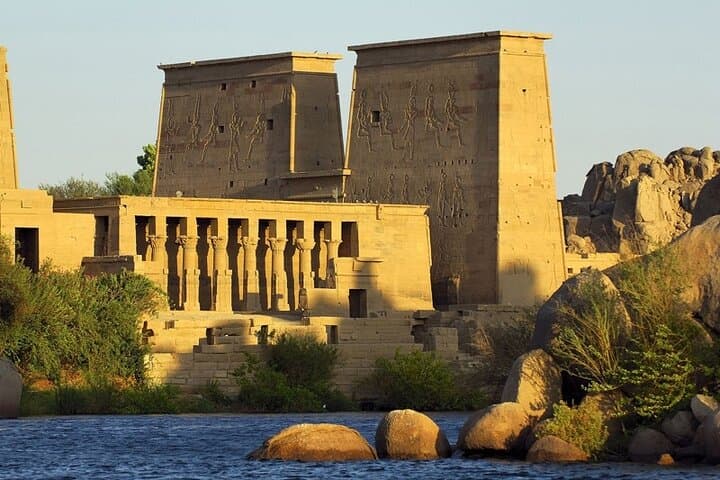
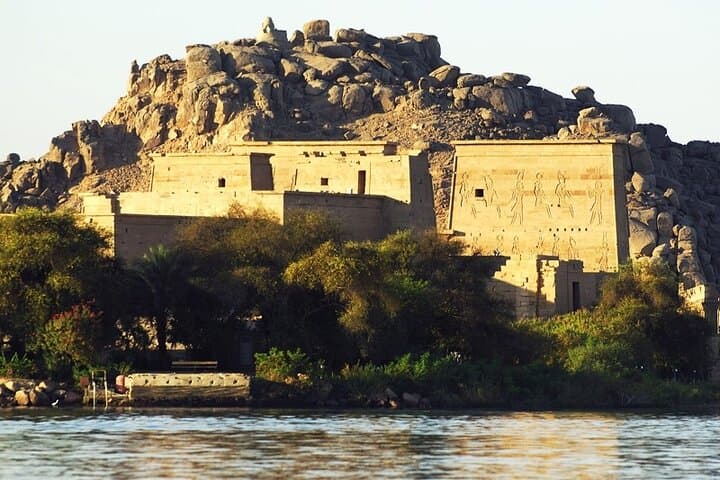
You step off the shaded riverbank and the Nile pushes at the shoreline like an old, persistent traveler; Agilkia Island and the columns of Philae rise across the water, sun-faded hieroglyphs catching the light.
You step off the shaded riverbank and the Nile pushes at the shoreline like an old, persistent traveler; Agilkia Island and the columns of Philae rise across the water, sun-faded hieroglyphs catching the light.
The private tour begins in Aswan with a short drive and a boat crossing to Philae, the island temple complex dedicated to Isis. Visitors move through a compact sequence of Ptolemaic colonnades, granite pylons and carved reliefs — a place moved stone by stone during the Aswan High Dam project to protect it from the rising waters. The island’s geology is river-cut granite; the temple’s capitals and reliefs still show the abrasion of centuries of sand and water.
After the temple, the guide leads to a Nubian village across from Soheil Island. Colorful houses stand among date palms and small gardens, and locals welcome visitors into daily life: weaving, pottery and shared tea. This is cultural exchange as much as sightseeing — short walks on compact lanes, shaded courtyards and hands-on conversations with artisans.
Practical notes: the full program runs about four hours with roughly two hours at Philae and two in the village. Wear sun protection and sturdy flat shoes — some stone steps and uneven paths are unavoidable. The operator provides private air-conditioned transfer and entry fees; boat crossings are short but can be breezy. Carry water, small bills for local purchases, and basic respect: ask before photographing people. Early morning departures beat heat and crowds and make the colors of the Nile and village more vivid.