THE ADVENTURE COLLECTIVE® · Independent discovery and booking for outdoor travel

Walk a 75-minute loop through the landmarks that shaped American money. From the First and Second Banks to the U.S. Mint and Benjamin Franklin’s grave, this tour connects sites to the long story of currency and inflation.
Walk a 75-minute loop through the landmarks that shaped American money. From the First and Second Banks to the U.S. Mint and Benjamin Franklin’s grave, this tour connects sites to the long story of currency and inflation.
You step off a busy Market Street into a block where bronze plaques and red brick lean in like storytellers. The city hums around you, but the guide’s voice threads the pauses—minting presses, bank facades, and a grave whose occupant traded in experiments more than gold. The walk moves deliberately: murals that mark fiscal crises, the austere stone of the First and Second Banks, then the civic weight of Independence Hall and the US Mint’s exterior, ending with a reflective stop at Benjamin Franklin’s burial site.
Verified experiences and guided adventures in the surrounding area.
Operated by Brian Monaghan · Philadelphia, Pennsylvania
You step off a busy Market Street into a block where bronze plaques and red brick lean in like storytellers. The city hums around you, but the guide’s voice threads the pauses—minting presses, bank facades, and a grave whose occupant traded in experiments more than gold. The walk moves deliberately: murals that mark fiscal crises, the austere stone of the First and Second Banks, then the civic weight of Independence Hall and the US Mint’s exterior, ending with a reflective stop at Benjamin Franklin’s burial site.
This tour maps money onto place: Philadelphia’s 18th- and 19th-century institutions shaped national credit, the Mint produced coinage that standardized daily exchange, and revolutionary-era debates about specie versus paper echo in modern inflation debates. Geology is incidental but visible—local red and brownstone tell the city’s building story—and the streets carry the cultural palimpsest of printing houses, merchants, and public discourse.
Expect a brisk, 75-minute walking loop with mostly paved surfaces and short standing stops; the guide blends economic context with local color and contemporary inflation talk. You won’t go inside paywalled attractions on this route, so plan to reserve extra time if you want museum tickets afterward.
Practical: wear supportive shoes, bring water and a lightweight layer, and arrive via SEPTA or on foot—drop-off and pickup points are close to the Liberty Bell and National Constitution Center. Photographs are encouraged; respectful behavior in historic sites and around gravesites is expected.
easy.
1–1.5 hours.
Light walking ability; suitable for most fitness levels and families
Yes—this route uses paved sidewalks and is listed as wheelchair accessible, but contact the operator in advance to confirm assistance and pickup points.
No—the tour focuses on exteriors and interpretation; admissions to the US Mint, museums, and Independence Hall require separate tickets.
Starts near central Old City/Market Street and ends near the Liberty Bell and National Constitution Center; exact meeting instructions are provided after booking.
Full refund available if you cancel at least 24 hours before the scheduled departure; check your booking confirmation for specifics.
Philadelphia hosted key institutions—banks, the Mint, and printing presses—that made it a national center for currency and fiscal debate in the 18th and 19th centuries.
Preserving historic façades and minimizing foot-traffic damage are priorities; stay on sidewalks and follow site signage to reduce wear on fragile surfaces.
Brian Monaghan operates guided outdoor trips and adventures with an emphasis on safety, stewardship, and memorable experiences.

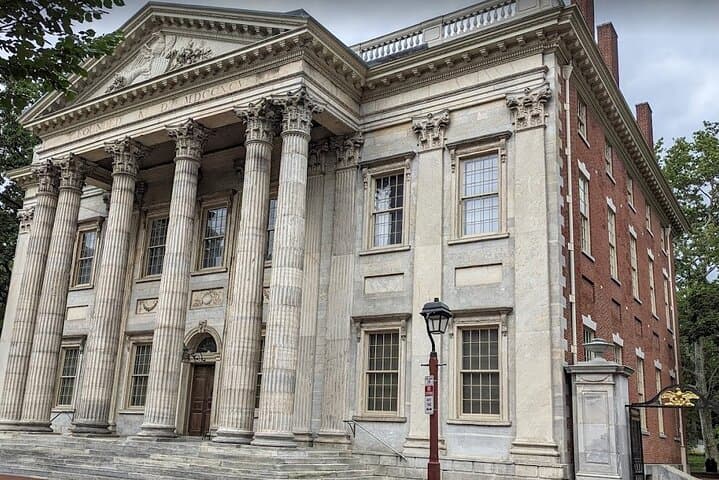
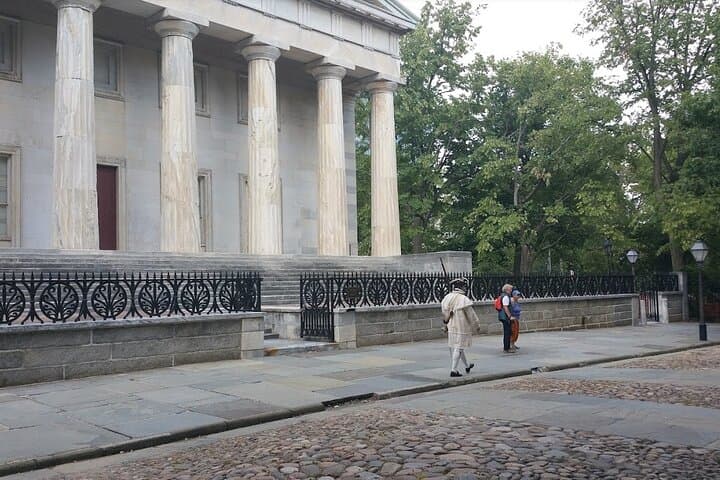
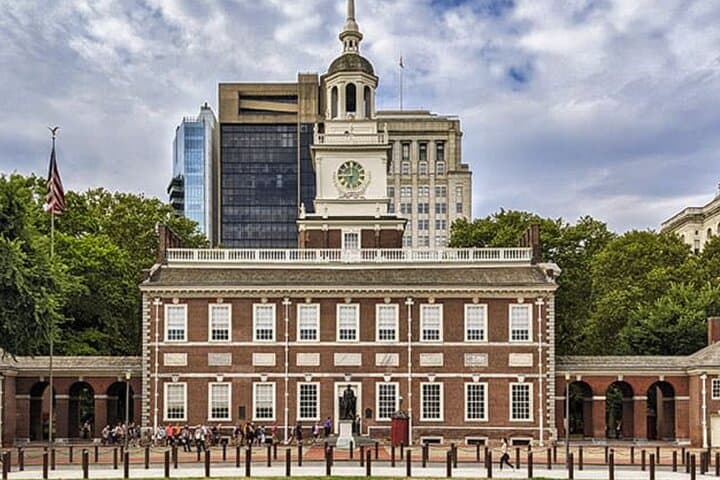
You step off a busy Market Street into a block where bronze plaques and red brick lean in like storytellers. The city hums around you, but the guide’s voice threads the pauses—minting presses, bank facades, and a grave whose occupant traded in experiments more than gold. The walk moves deliberately: murals that mark fiscal crises, the austere stone of the First and Second Banks, then the civic weight of Independence Hall and the US Mint’s exterior, ending with a reflective stop at Benjamin Franklin’s burial site.
You step off a busy Market Street into a block where bronze plaques and red brick lean in like storytellers. The city hums around you, but the guide’s voice threads the pauses—minting presses, bank facades, and a grave whose occupant traded in experiments more than gold. The walk moves deliberately: murals that mark fiscal crises, the austere stone of the First and Second Banks, then the civic weight of Independence Hall and the US Mint’s exterior, ending with a reflective stop at Benjamin Franklin’s burial site.
This tour maps money onto place: Philadelphia’s 18th- and 19th-century institutions shaped national credit, the Mint produced coinage that standardized daily exchange, and revolutionary-era debates about specie versus paper echo in modern inflation debates. Geology is incidental but visible—local red and brownstone tell the city’s building story—and the streets carry the cultural palimpsest of printing houses, merchants, and public discourse.
Expect a brisk, 75-minute walking loop with mostly paved surfaces and short standing stops; the guide blends economic context with local color and contemporary inflation talk. You won’t go inside paywalled attractions on this route, so plan to reserve extra time if you want museum tickets afterward.
Practical: wear supportive shoes, bring water and a lightweight layer, and arrive via SEPTA or on foot—drop-off and pickup points are close to the Liberty Bell and National Constitution Center. Photographs are encouraged; respectful behavior in historic sites and around gravesites is expected.