THE ADVENTURE COLLECTIVE® · Independent discovery and booking for outdoor travel

Spend a brisk day by speedboat through the Phi Phi archipelago: snorkeling in clear bays, visiting cinema-famous Maya Bay, and relaxing on Bamboo Island. Fast-paced, scenic, and ideal for travelers comfortable on open water.
Spend a brisk day by speedboat through the Phi Phi archipelago: snorkeling in clear bays, visiting cinema-famous Maya Bay, and relaxing on Bamboo Island. Fast-paced, scenic, and ideal for travelers comfortable on open water.
The morning light off Ao Nang slides across the Andaman; a speedboat's bow cuts a bright line and the islands appear like emerald teeth rising from glassy blue.
Verified experiences and guided adventures in the surrounding area.
Operated by One Asia · Ko Phi Phi, Krabi Province
The morning light off Ao Nang slides across the Andaman; a speedboat's bow cuts a bright line and the islands appear like emerald teeth rising from glassy blue.
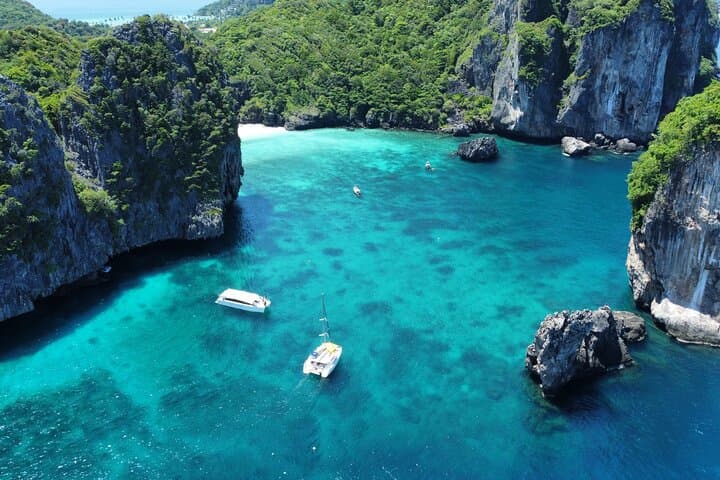
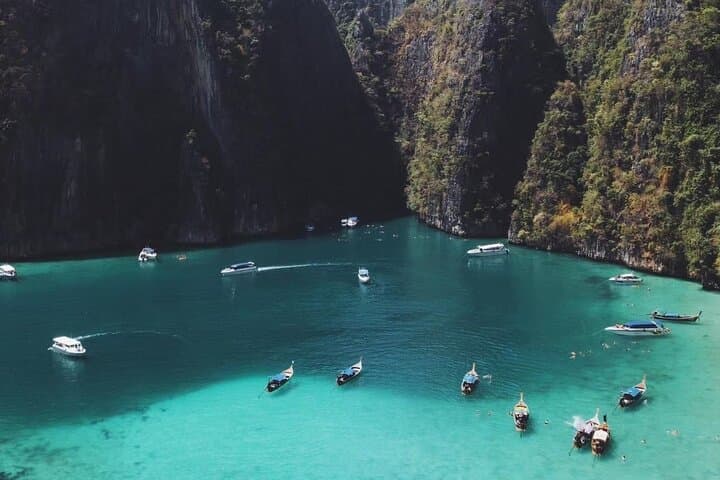
You spend the day moving fast between iconic spots: Maya Bay's dramatic limestone walls, the shallow bays of Phi Phi Leh, the white sand of Bamboo Island and the crescent beaches of Phi Phi Don where monkeys and fishermen go about their mornings. Geologically these islands are karst limestone—steep cliffs, caves and sea-sculpted bays formed over millennia. Culturally, the islands have been fishing communities and, more recently, global tourism destinations—Maya Bay gained international attention after the film The Beach and has undergone managed closures for ecological recovery.
Expect multiple snorkeling stops in clear, shallow water with abundant reef fish and occasional black-tip reef sharks in the distance. Boat transfers typically include life jackets, bottled water, lunch and basic snorkel masks; tour logistics move at a steady tourist pace with 60-minute stops at several points.
Practical tips: morning departures avoid late-afternoon chop; bring reef-safe sunscreen, a snorkeling-ready swimsuit and a light wind layer for the ride. Follow guides' safety briefings—tides and currents can change visibility and swim difficulty. If Maya Bay is closed for restoration, operators reroute to nearby coves and bays. For a full day on the water, pace your hydration, keep camera gear dry, and treat the coral and wildlife with distance—local conservation measures aim to balance access with recovery.
easy.
8 hours.
Suitable for most fitness levels; you should be comfortable entering/exiting a boat and swimming short distances.
Maya Bay has undergone periodic closures for ecological restoration; it reopened on Oct 1, 2025, but operators may adjust itineraries if local authorities restrict access.
Basic snorkel masks are usually provided, but many travelers bring their own for fit and hygiene.
Open-water crossings can be choppy—if you're prone to motion sickness, take preventative medication before departure and sit mid-boat where motion is gentlest.
Yes—tours are family-friendly but not recommended for very young children who cannot swim; life jackets are provided and guides supervise snorkeling stops.
Phi Phi's islands are karst limestone formations long used by local fishing communities; Maya Bay became internationally known after the film The Beach and later underwent closures to recover coral and sand.
Local authorities periodically close sensitive sites and restrict visitor numbers; use reef-safe products, avoid touching coral, and follow guide instructions to reduce impact.
One Asia operates guided outdoor trips and adventures with an emphasis on safety, stewardship, and memorable experiences.
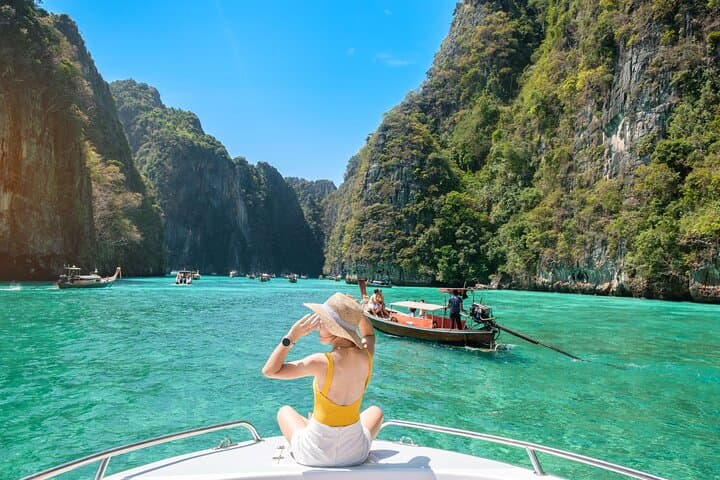
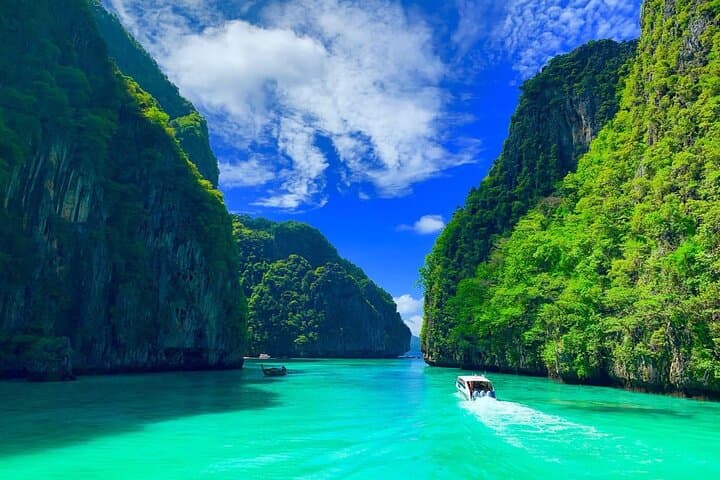
The morning light off Ao Nang slides across the Andaman; a speedboat's bow cuts a bright line and the islands appear like emerald teeth rising from glassy blue.
The morning light off Ao Nang slides across the Andaman; a speedboat's bow cuts a bright line and the islands appear like emerald teeth rising from glassy blue.
You spend the day moving fast between iconic spots: Maya Bay's dramatic limestone walls, the shallow bays of Phi Phi Leh, the white sand of Bamboo Island and the crescent beaches of Phi Phi Don where monkeys and fishermen go about their mornings. Geologically these islands are karst limestone—steep cliffs, caves and sea-sculpted bays formed over millennia. Culturally, the islands have been fishing communities and, more recently, global tourism destinations—Maya Bay gained international attention after the film The Beach and has undergone managed closures for ecological recovery.
Expect multiple snorkeling stops in clear, shallow water with abundant reef fish and occasional black-tip reef sharks in the distance. Boat transfers typically include life jackets, bottled water, lunch and basic snorkel masks; tour logistics move at a steady tourist pace with 60-minute stops at several points.
Practical tips: morning departures avoid late-afternoon chop; bring reef-safe sunscreen, a snorkeling-ready swimsuit and a light wind layer for the ride. Follow guides' safety briefings—tides and currents can change visibility and swim difficulty. If Maya Bay is closed for restoration, operators reroute to nearby coves and bays. For a full day on the water, pace your hydration, keep camera gear dry, and treat the coral and wildlife with distance—local conservation measures aim to balance access with recovery.