THE ADVENTURE COLLECTIVE® · Independent discovery and booking for outdoor travel

Spend a full day by speedboat from Phuket visiting Maya Bay, Pileh Lagoon, Viking Cave and Tonsai Bay with snorkeling stops and a buffet lunch. Expect dramatic limestone cliffs, shallow reefs and changing sea conditions—best in the dry season.
Spend a full day by speedboat from Phuket visiting Maya Bay, Pileh Lagoon, Viking Cave and Tonsai Bay with snorkeling stops and a buffet lunch. Expect dramatic limestone cliffs, shallow reefs and changing sea conditions—best in the dry season.
The morning boat cuts through oily, tropical water as limestone cliffs of Phi Phi rise like carved giants ahead, waves teasing the sand and reef that surround them.
Verified experiences and guided adventures in the surrounding area.
The morning boat cuts through oily, tropical water as limestone cliffs of Phi Phi rise like carved giants ahead, waves teasing the sand and reef that surround them.
This full-day speedboat tour from Phuket threads together the most recognizable sites in the Phi Phi archipelago: the crescent of Maya Bay, the enclosed emerald of Pileh Lagoon, the pictographic walls of Viking Cave and the beachside bustle of Tonsai Bay for a buffet lunch. Geologically the islands are young marine limestone—steep karst cliffs, submerged reef ridges and shallow lagoons carved by sea and monsoon, which shape snorkeling conditions and the dramatic scenery.
Culturally, the islands support a small, seasonal community of fishers and tourism workers; the area’s rise to global fame began with film exposure, which transformed quiet bays into international drawcards and prompted more recent conservation measures and visitor limits.
Practically: expect an 8‑hour day with multiple swim and snorkel stops—bring reef‑safe sunscreen, a fitted mask and fins if you prefer, and a light towel or quick‑dry change. Seas are calmest November–April; monsoon months (May–October) bring bigger swells and possible itinerary changes. Maya Bay access can be regulated or closed for rehabilitation—confirm on the day.
On board, staff commonly provide masks and life vests; still, basic swimming ability and comfort in open water matter. Hydrate before departure, stow valuables in a waterproof bag, and plan for sun exposure between stops. The trip balances high-impact views with hands‑on marine encounters—arrive prepared to snorkel, photograph, and move with the tide.
moderate.
8 hours.
Light to moderate fitness; must be comfortable with repeated short swims and boarding from a speedboat
Most operators supply basic masks and life vests; visitors often bring their own mask and snorkel for fit and hygiene.
Yes, non‑swimmers can participate but should wear a life vest and remain near the boat during snorkel stops.
Not always—Maya Bay access can be limited or closed for conservation; operators will substitute nearby highlights like Bamboo Island or additional snorkeling sites if needed.
Sea conditions vary by season; November–April are typically calmest, while the monsoon season (May–October) can bring choppy seas and itinerary changes.
Phi Phi’s karst islands formed from uplifted limestone; international attention rose after a late‑20th‑century film pushed tourism growth.
Local authorities have instituted visitor limits, seasonal closures and mooring rules to protect reefs; follow guidelines and use reef‑safe products.
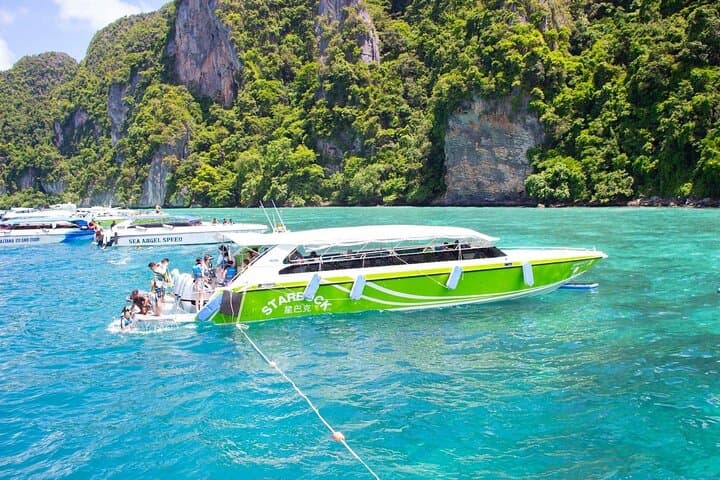
The morning boat cuts through oily, tropical water as limestone cliffs of Phi Phi rise like carved giants ahead, waves teasing the sand and reef that surround them.
The morning boat cuts through oily, tropical water as limestone cliffs of Phi Phi rise like carved giants ahead, waves teasing the sand and reef that surround them.
This full-day speedboat tour from Phuket threads together the most recognizable sites in the Phi Phi archipelago: the crescent of Maya Bay, the enclosed emerald of Pileh Lagoon, the pictographic walls of Viking Cave and the beachside bustle of Tonsai Bay for a buffet lunch. Geologically the islands are young marine limestone—steep karst cliffs, submerged reef ridges and shallow lagoons carved by sea and monsoon, which shape snorkeling conditions and the dramatic scenery.
Culturally, the islands support a small, seasonal community of fishers and tourism workers; the area’s rise to global fame began with film exposure, which transformed quiet bays into international drawcards and prompted more recent conservation measures and visitor limits.
Practically: expect an 8‑hour day with multiple swim and snorkel stops—bring reef‑safe sunscreen, a fitted mask and fins if you prefer, and a light towel or quick‑dry change. Seas are calmest November–April; monsoon months (May–October) bring bigger swells and possible itinerary changes. Maya Bay access can be regulated or closed for rehabilitation—confirm on the day.
On board, staff commonly provide masks and life vests; still, basic swimming ability and comfort in open water matter. Hydrate before departure, stow valuables in a waterproof bag, and plan for sun exposure between stops. The trip balances high-impact views with hands‑on marine encounters—arrive prepared to snorkel, photograph, and move with the tide.