THE ADVENTURE COLLECTIVE® · Independent discovery and booking for outdoor travel

Short, fast boat rides off Koh Phi Phi Don deliver two guided dives at Phi Phi Leh and the Bida Islands. Expect turtles, reef sharks, vibrant corals and small groups led by PADI professionals.
Short, fast boat rides off Koh Phi Phi Don deliver two guided dives at Phi Phi Leh and the Bida Islands. Expect turtles, reef sharks, vibrant corals and small groups led by PADI professionals.
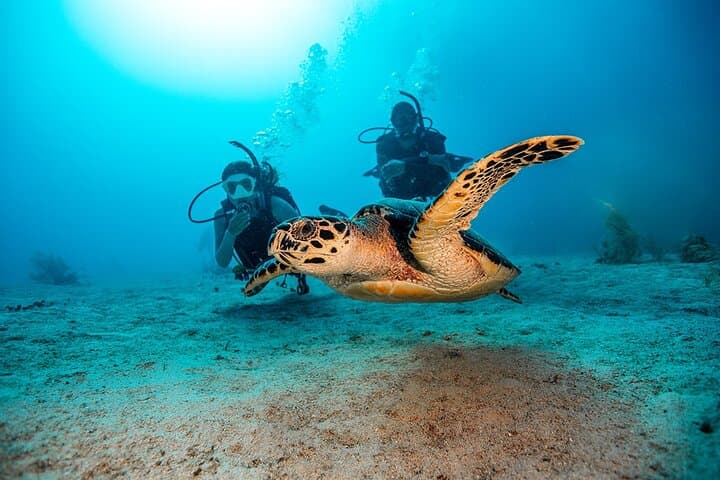
You step off the wooden pier on Koh Phi Phi Don and the island exhales salt and diesel; a longtail boat waits, low in the turquoise bowl of the bay. In 20–25 minutes the shoreline drops away, cliffs of weathered limestone sliding into clear water where coral gardens and boulder fields begin. The sea here has a personality — playful currents that push you past bommies and quiet gutters that invite a slow swim-by of a green turtle.
Verified experiences and guided adventures in the surrounding area.
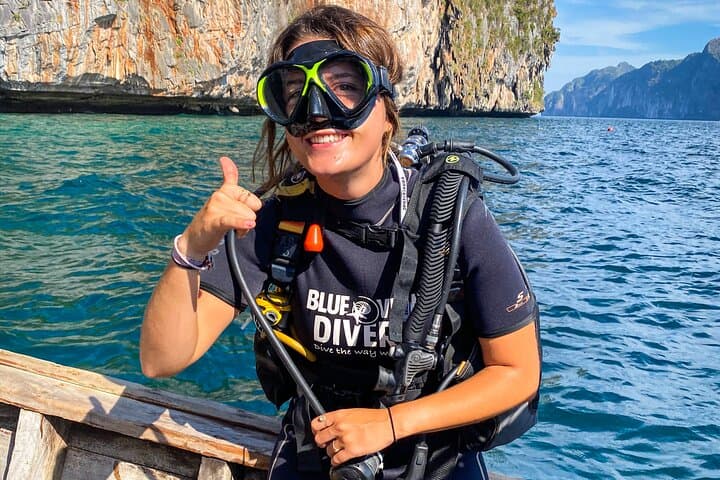
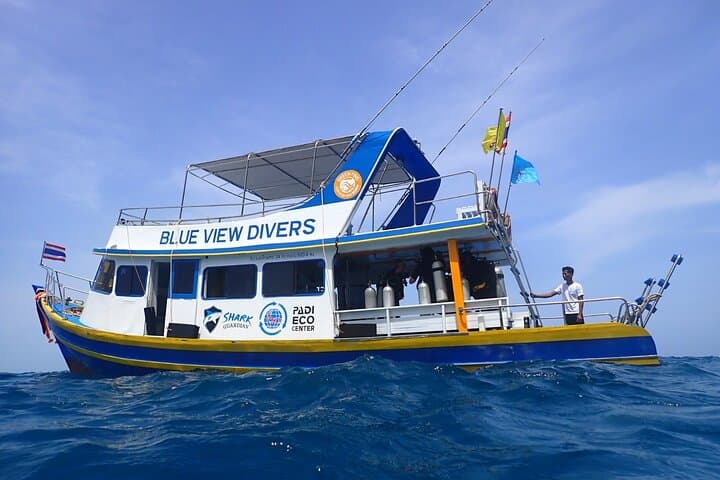
Operated by Blue View Divers · Koh Phi Phi Don, Krabi Province
You step off the wooden pier on Koh Phi Phi Don and the island exhales salt and diesel; a longtail boat waits, low in the turquoise bowl of the bay. In 20–25 minutes the shoreline drops away, cliffs of weathered limestone sliding into clear water where coral gardens and boulder fields begin. The sea here has a personality — playful currents that push you past bommies and quiet gutters that invite a slow swim-by of a green turtle.
The dives thread through sites around Phi Phi Leh and the Bida islands, areas within the Mu Ko Phi Phi marine management zone that have supported fisheries and, more recently, dive tourism. Geologically the islands are karst — steep limestone rising from the reef — which makes for vertical walls, swim-throughs and concentrated coral habitats. Locals still remember when the islands were sleepy fishing outposts; now small dive communities balance tourism with park rules and seasonal closures.
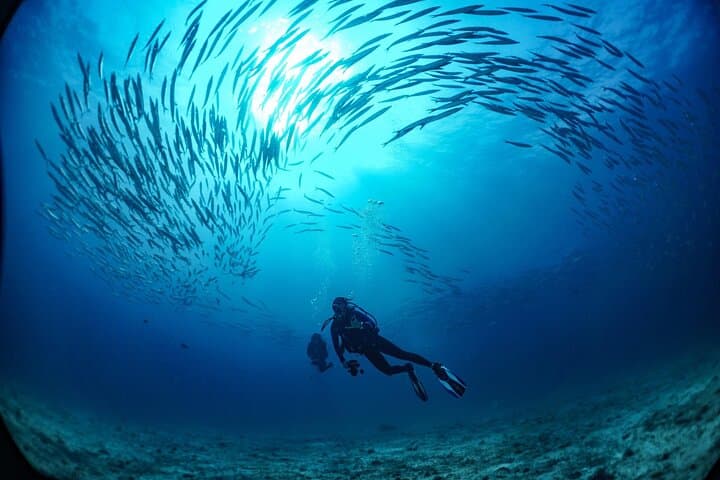
On a typical half-day you’ll do two guided dives (up to 60 minutes each), surface for lunch on board, and pick sites based on conditions to avoid crowds. Expect to see hard and soft corals, schools of snappers and barracuda, and frequent sightings of green turtles and blacktip reef sharks. The operator emphasizes small groups (two divers per instructor) and conservation-minded practices.
Practical notes: be certified and have logged a dive within 12 months or arrange a refresher. Bring your certification card, a dive computer, and reef-safe sunscreen. Plan for a morning or early-afternoon slot to match ferries and avoid midday boat traffic. The trip is accessible, high on marine life, and rewards relaxed buoyancy and patient observation.
moderate.
5 hours.
Moderate fitness; able to carry light gear and perform basic dive tasks; comfortable with surface swims.
Yes — bookings are for certified divers only; you must show your certification card and provide dive history, and a refresher is required if you haven't dived in 12 months.
Each dive can be up to 60 minutes depending on air consumption; typical depths are 8–30 meters depending on site and conditions.
Basic scuba equipment is provided by the dive centre; you may bring personal mask, fins and computer for best fit and hygiene.
Park ranger fees are paid on site and are usually not included in the booking price — bring cash in Thai baht to cover the fee.
The Phi Phi islands sit within the Mu Ko Phi Phi marine area, where small fishing communities gave way to dive tourism from the 1980s onward, shaping local livelihoods and conservation efforts.
Operators pay park fees and emphasize reef-safe practices; divers are encouraged to avoid contact with corals, use reef-friendly sunscreen and support small local dive centres.
Blue View Divers operates guided outdoor trips and adventures with an emphasis on safety, stewardship, and memorable experiences.
You step off the wooden pier on Koh Phi Phi Don and the island exhales salt and diesel; a longtail boat waits, low in the turquoise bowl of the bay. In 20–25 minutes the shoreline drops away, cliffs of weathered limestone sliding into clear water where coral gardens and boulder fields begin. The sea here has a personality — playful currents that push you past bommies and quiet gutters that invite a slow swim-by of a green turtle.
You step off the wooden pier on Koh Phi Phi Don and the island exhales salt and diesel; a longtail boat waits, low in the turquoise bowl of the bay. In 20–25 minutes the shoreline drops away, cliffs of weathered limestone sliding into clear water where coral gardens and boulder fields begin. The sea here has a personality — playful currents that push you past bommies and quiet gutters that invite a slow swim-by of a green turtle.
The dives thread through sites around Phi Phi Leh and the Bida islands, areas within the Mu Ko Phi Phi marine management zone that have supported fisheries and, more recently, dive tourism. Geologically the islands are karst — steep limestone rising from the reef — which makes for vertical walls, swim-throughs and concentrated coral habitats. Locals still remember when the islands were sleepy fishing outposts; now small dive communities balance tourism with park rules and seasonal closures.
On a typical half-day you’ll do two guided dives (up to 60 minutes each), surface for lunch on board, and pick sites based on conditions to avoid crowds. Expect to see hard and soft corals, schools of snappers and barracuda, and frequent sightings of green turtles and blacktip reef sharks. The operator emphasizes small groups (two divers per instructor) and conservation-minded practices.
Practical notes: be certified and have logged a dive within 12 months or arrange a refresher. Bring your certification card, a dive computer, and reef-safe sunscreen. Plan for a morning or early-afternoon slot to match ferries and avoid midday boat traffic. The trip is accessible, high on marine life, and rewards relaxed buoyancy and patient observation.