THE ADVENTURE COLLECTIVE® · Independent discovery and booking for outdoor travel

Spend a private 5–7 hour day exploring Luxor’s West Bank—Valley of the Kings, Hatshepsut’s temple, Medinet Habu and the Colossi of Memnon—with an English-speaking Egyptologist and private transport. Practical tips on timing, admissions, and what to pack.
Spend a private 5–7 hour day exploring Luxor’s West Bank—Valley of the Kings, Hatshepsut’s temple, Medinet Habu and the Colossi of Memnon—with an English-speaking Egyptologist and private transport. Practical tips on timing, admissions, and what to pack.
You step off the minivan onto sunbaked gravel and the West Bank opens like a book of stone—colossal seated figures looming against a cobalt sky, dry wind already nudging your scarf. The Valley of the Kings yawns below the ridgeline; tomb mouths are dark invitations and the air smells faintly of dust, resin and old incense.
Verified experiences and guided adventures in the surrounding area.
Operated by EGYPT TIA TOUR · Luxor, Luxor Governorate
You step off the minivan onto sunbaked gravel and the West Bank opens like a book of stone—colossal seated figures looming against a cobalt sky, dry wind already nudging your scarf. The Valley of the Kings yawns below the ridgeline; tomb mouths are dark invitations and the air smells faintly of dust, resin and old incense.
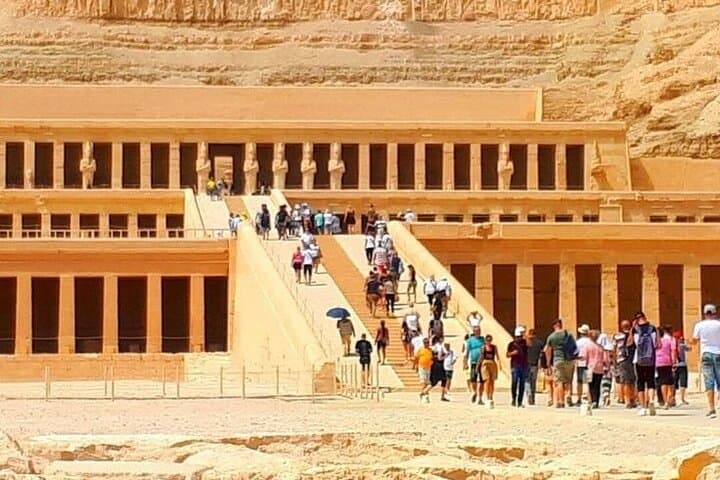
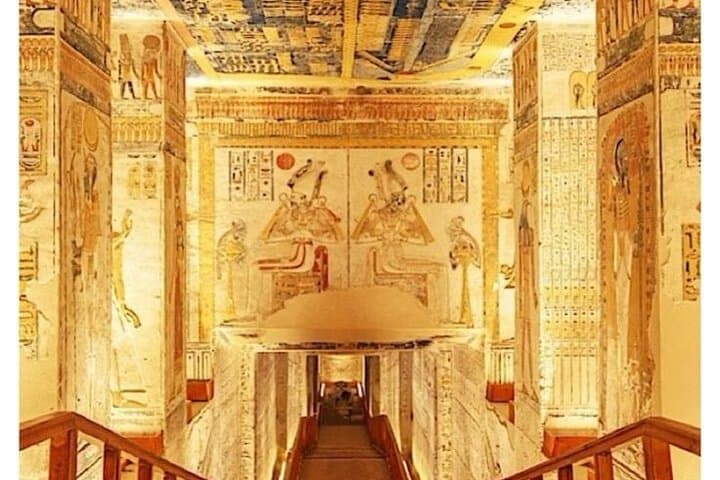
That corridor between Nile and desert holds millennia: 18th- and 19th-dynasty tombs cut deep into limestone, Hatshepsut’s tiered temple clinging to a cliff face like proof of architectural daring, Medinet Habu’s battle reliefs still pointing to Ramesses III’s campaigns. Geologically, the area is folded limestone and Nile sediments—soft enough to carve intricate chambers but brittle where flash floods have left scarred gullies. Locally, boatmen, guides and vendors keep traditions alive through storytelling, incense and small crafts sold near the landing.
Practical guide: expect a 5–7 hour private circuit with hotel pickup, an Egyptologist guide and air-conditioned transport. Walking is mostly on compacted paths and stone steps—bring sturdy shoes for uneven surfaces and be prepared to climb short staircases within tombs. Admissions may or may not be included depending on your option; carry cash in Egyptian pounds for on-site tickets, extra camera entry if desired, and tips. Peak sun and heat mean early starts are kinder; bottled water is provided but carry a refillable bottle if you prefer. Accessibility is reasonable for visitors with limited mobility at outdoor sites, though individual tomb interiors have tight passages. Pace your day: the ruins reveal more when you move deliberately and let the stones tell their stories.
easy.
5–7 hours.
Light walking ability required; able to manage stairs and short uneven sections.
Some booking options include admission; check your selected option. If not included, you can purchase tickets on site—carry Egyptian pounds.
The private tour runs about 5–7 hours with several short walks and stair climbs; expect moderate but non-strenuous walking between sites.
Yes—this tour is physically easy overall; however, tomb interiors have low passages and stairs which may limit access for some guests.
Photography policies vary by site; non-flash photos are commonly allowed in outdoor areas while some tombs restrict cameras or require a separate camera ticket.
The West Bank served as Luxor’s necropolis for pharaohs from the New Kingdom; Hatshepsut’s mortuary temple and the richly decorated tombs reflect both political ambition and funerary doctrine.
Ongoing conservation balances visitor access with preservation; limiting flash photography, controlling foot traffic and using guided routes help protect fragile painted surfaces.
EGYPT TIA TOUR operates guided outdoor trips and adventures with an emphasis on safety, stewardship, and memorable experiences.
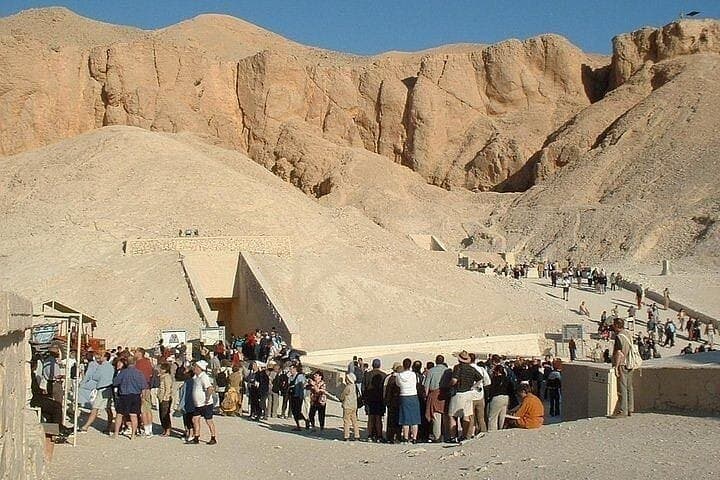
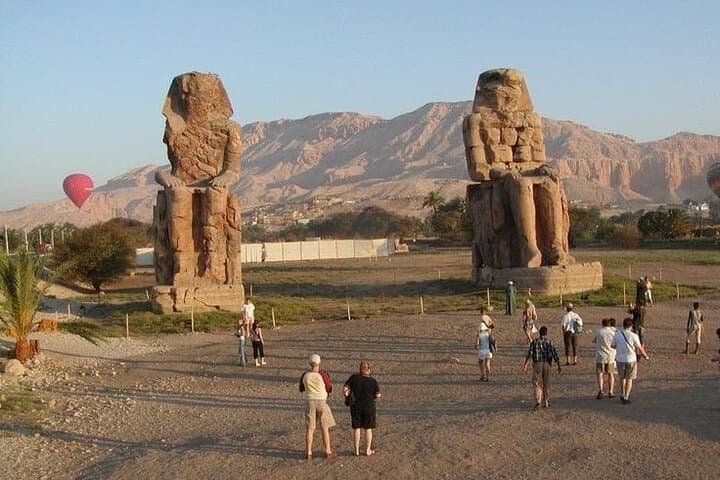
You step off the minivan onto sunbaked gravel and the West Bank opens like a book of stone—colossal seated figures looming against a cobalt sky, dry wind already nudging your scarf. The Valley of the Kings yawns below the ridgeline; tomb mouths are dark invitations and the air smells faintly of dust, resin and old incense.
You step off the minivan onto sunbaked gravel and the West Bank opens like a book of stone—colossal seated figures looming against a cobalt sky, dry wind already nudging your scarf. The Valley of the Kings yawns below the ridgeline; tomb mouths are dark invitations and the air smells faintly of dust, resin and old incense.
That corridor between Nile and desert holds millennia: 18th- and 19th-dynasty tombs cut deep into limestone, Hatshepsut’s tiered temple clinging to a cliff face like proof of architectural daring, Medinet Habu’s battle reliefs still pointing to Ramesses III’s campaigns. Geologically, the area is folded limestone and Nile sediments—soft enough to carve intricate chambers but brittle where flash floods have left scarred gullies. Locally, boatmen, guides and vendors keep traditions alive through storytelling, incense and small crafts sold near the landing.
Practical guide: expect a 5–7 hour private circuit with hotel pickup, an Egyptologist guide and air-conditioned transport. Walking is mostly on compacted paths and stone steps—bring sturdy shoes for uneven surfaces and be prepared to climb short staircases within tombs. Admissions may or may not be included depending on your option; carry cash in Egyptian pounds for on-site tickets, extra camera entry if desired, and tips. Peak sun and heat mean early starts are kinder; bottled water is provided but carry a refillable bottle if you prefer. Accessibility is reasonable for visitors with limited mobility at outdoor sites, though individual tomb interiors have tight passages. Pace your day: the ruins reveal more when you move deliberately and let the stones tell their stories.