THE ADVENTURE COLLECTIVE® · Independent discovery and booking for outdoor travel

Crossing Serra dos Órgãos is a three-day classic that links Petrópolis and Teresópolis over steep granite ridges and forested valleys. Expect exposed scrambling, short rope-assisted pitches, camping and high-elevation panoramas across the Atlantic Forest.
Crossing Serra dos Órgãos is a three-day classic that links Petrópolis and Teresópolis over steep granite ridges and forested valleys. Expect exposed scrambling, short rope-assisted pitches, camping and high-elevation panoramas across the Atlantic Forest.
A cool mist clings to the granite ribs of Serra dos Órgãos as your group steps off the trailhead, city noise folding away behind you. Pine and Atlantic Forest mingle, roots and rock alternating beneath purposeful boots. Over three days the route threads through steep ascents, narrow ridgelines and the shadow of iconic spires—Dedo de Deus (Finger of God), Castelo do Açu and the Stone of the Sine—each summit a punctuation mark against the sky.
Verified experiences and guided adventures in the surrounding area.
Operated by Rio Eco Trip · Teresópolis, Rio de Janeiro
A cool mist clings to the granite ribs of Serra dos Órgãos as your group steps off the trailhead, city noise folding away behind you. Pine and Atlantic Forest mingle, roots and rock alternating beneath purposeful boots. Over three days the route threads through steep ascents, narrow ridgelines and the shadow of iconic spires—Dedo de Deus (Finger of God), Castelo do Açu and the Stone of the Sine—each summit a punctuation mark against the sky.
The crossing links the imperial town of Petrópolis with mountain Teresópolis and traces routes used by early climbers and forest guardians. Serra dos Órgãos, created as a national park in 1939, preserves fractured granite towers formed by long erosion and tectonic uplift; those same processes gave the park its sheer faces and narrow chimneys that test balance and nerves.
Local culture blends mountain ranching and small-town hospitality—guides are often park-savvy mountaineers who know microclimates and animal tracks. Expect simple camp life: double tents, cooked dinners, and early starts to catch clear-weather windows on exposed sections. Day two includes fitted harness and rope work for short protected pitches and exposed scrambling.
Practically: the full route covers roughly 25–35 km across variable terrain with cumulative elevation gain approaching 1,500–2,000 m depending on chosen lines. Bring sturdy boots, layered clothing for rapid weather shifts, at least 2–3 liters of water capacity, and snacks for sustained energy. Follow guide briefings, respect park rules and pack out waste—the crossing is rewarding but physically demanding, offering rugged views and the concentrated wildness of Brazil’s Atlantic Forest.
challenging.
3 days (approx. 72 hours total, hiking portions ~25–35 km).
Should be in strong aerobic shape and comfortable with sustained ascents and descents; experience with multi-day backpacking recommended
The standard crossing is usually 25–35 km over three days; exact distance depends on route variations and campsite locations.
You should be comfortable with exposed scrambling; guides provide harnesses and rope for short protected sections, but previous scrambling or basic rope familiarity is helpful.
Typical inclusions are private transport, two dinners and two breakfasts, tents (double), expert guides, park fees and some climbing safety equipment; bring personal sleeping bag and backpack if not renting.
Dry season months (April–September) offer more stable weather and clearer summit views; avoid heavy rains in summer which make granite slabs slick.
Serra dos Órgãos National Park was established in 1939 to protect striking granite formations and remnant Atlantic Forest; the range has long been a training ground for Brazilian mountaineers.
The park faces pressure from visitor impact and surrounding land use; stick to trails, pack out trash, and follow guide and park regulations to reduce erosion and disturbance.
Rio Eco Trip operates guided outdoor trips and adventures with an emphasis on safety, stewardship, and memorable experiences.
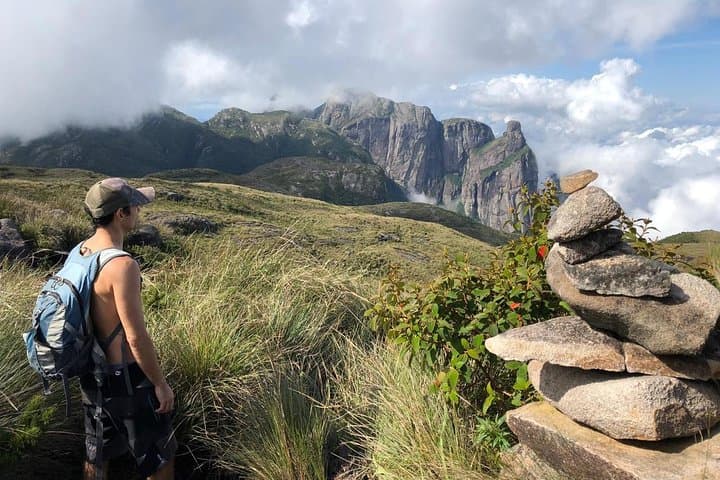
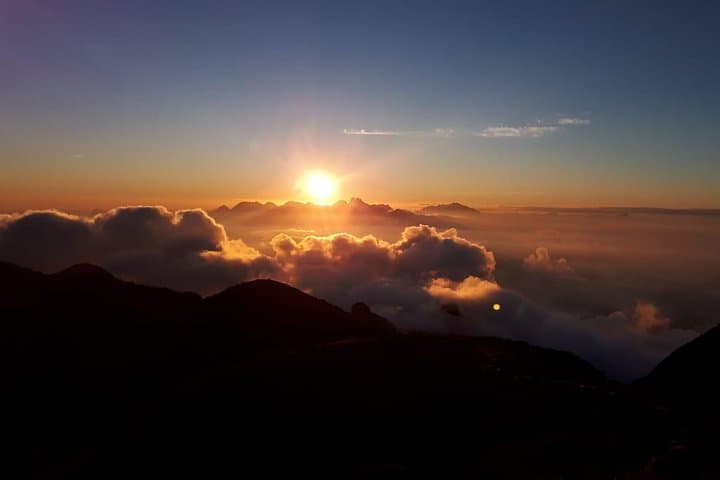
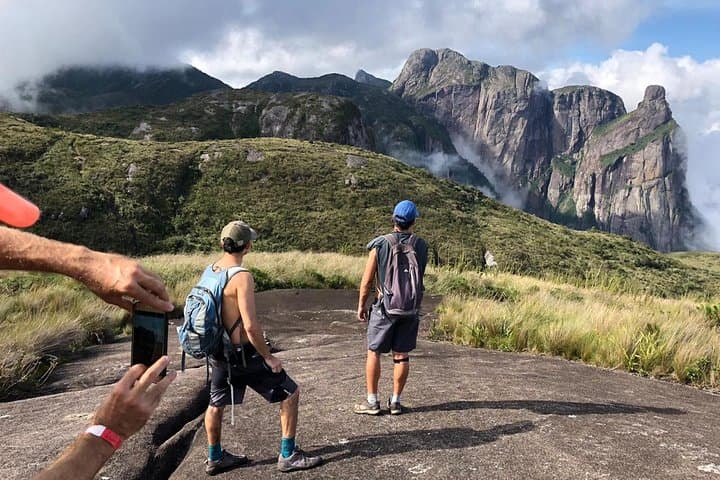
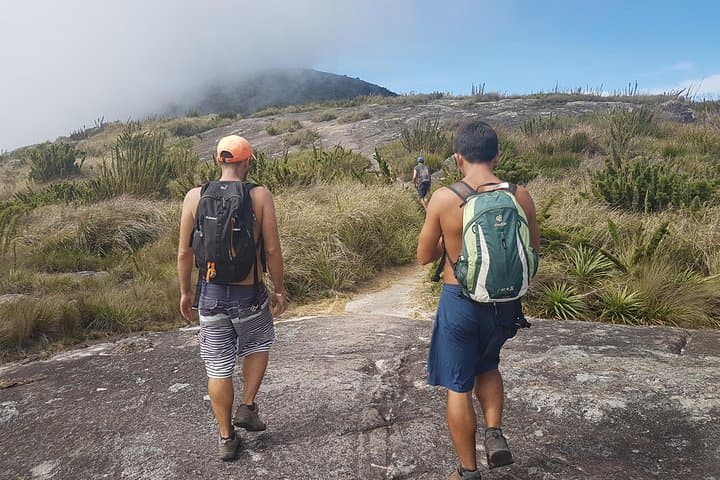
A cool mist clings to the granite ribs of Serra dos Órgãos as your group steps off the trailhead, city noise folding away behind you. Pine and Atlantic Forest mingle, roots and rock alternating beneath purposeful boots. Over three days the route threads through steep ascents, narrow ridgelines and the shadow of iconic spires—Dedo de Deus (Finger of God), Castelo do Açu and the Stone of the Sine—each summit a punctuation mark against the sky.
A cool mist clings to the granite ribs of Serra dos Órgãos as your group steps off the trailhead, city noise folding away behind you. Pine and Atlantic Forest mingle, roots and rock alternating beneath purposeful boots. Over three days the route threads through steep ascents, narrow ridgelines and the shadow of iconic spires—Dedo de Deus (Finger of God), Castelo do Açu and the Stone of the Sine—each summit a punctuation mark against the sky.
The crossing links the imperial town of Petrópolis with mountain Teresópolis and traces routes used by early climbers and forest guardians. Serra dos Órgãos, created as a national park in 1939, preserves fractured granite towers formed by long erosion and tectonic uplift; those same processes gave the park its sheer faces and narrow chimneys that test balance and nerves.
Local culture blends mountain ranching and small-town hospitality—guides are often park-savvy mountaineers who know microclimates and animal tracks. Expect simple camp life: double tents, cooked dinners, and early starts to catch clear-weather windows on exposed sections. Day two includes fitted harness and rope work for short protected pitches and exposed scrambling.
Practically: the full route covers roughly 25–35 km across variable terrain with cumulative elevation gain approaching 1,500–2,000 m depending on chosen lines. Bring sturdy boots, layered clothing for rapid weather shifts, at least 2–3 liters of water capacity, and snacks for sustained energy. Follow guide briefings, respect park rules and pack out waste—the crossing is rewarding but physically demanding, offering rugged views and the concentrated wildness of Brazil’s Atlantic Forest.