THE ADVENTURE COLLECTIVE® · Independent discovery and booking for outdoor travel

Step onto the SkyBridge between Kuala Lumpur’s twin spires and trade street noise for a precise, elevated city view. This guide explains what to expect—history, logistics, and practical tips to make the 45-minute timed visit smooth and memorable.
Step onto the SkyBridge between Kuala Lumpur’s twin spires and trade street noise for a precise, elevated city view. This guide explains what to expect—history, logistics, and practical tips to make the 45-minute timed visit smooth and memorable.
A sudden city hush takes over as you step through security and ride the elevator toward the skybridge—two stainless-steel spires framing a high, glass corridor that connects the twin towers. From the bridge the city unfolds in neat blocks and green pockets; traffic becomes a distant pulse and the towers’ geometric façades sharpen into repeating patterns that feel deliberately precise rather than accidental.
Verified experiences and guided adventures in the surrounding area.
Operated by Dream Fly Tourism LLC · Kuala Lumpur, Kuala Lumpur
A sudden city hush takes over as you step through security and ride the elevator toward the skybridge—two stainless-steel spires framing a high, glass corridor that connects the twin towers. From the bridge the city unfolds in neat blocks and green pockets; traffic becomes a distant pulse and the towers’ geometric façades sharpen into repeating patterns that feel deliberately precise rather than accidental.
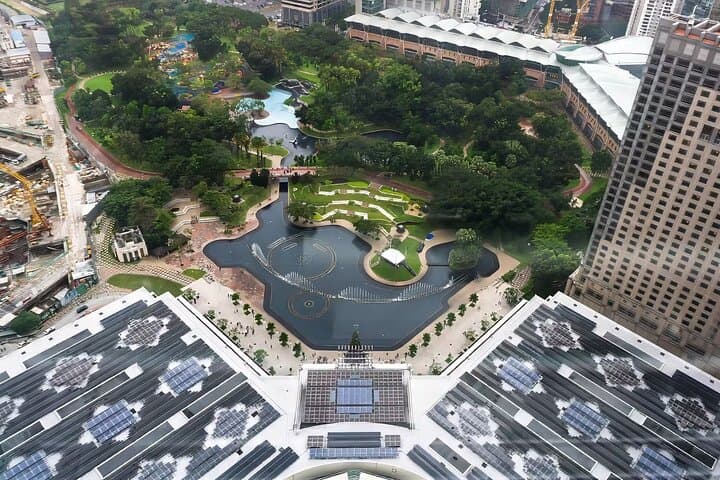
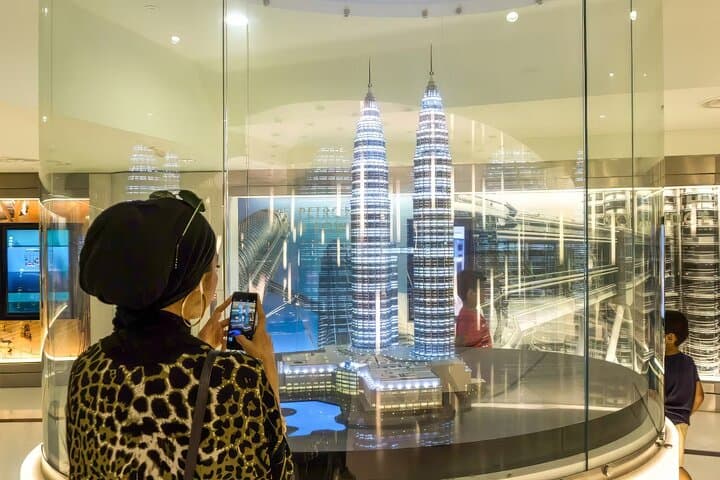
The towers were completed in 1998 and designed by César Pelli; their pointed pinnacles and repeating motifs draw on Islamic geometry as much as modern engineering, reflecting Malaysia’s late-20th-century push to project a global identity. The SkyBridge sits between the towers on the mid-level floors and provides a unique interstitial vantage, while the higher Observation Deck gives close views of the spires and the urban grid. The complex fronts KLCC Park and the Suria KLCC mall, and the nearby LRT station makes access straightforward.
Practicalities matter: tickets are timed (the experience is compact—about 45 minutes), mobile tickets are accepted, and infants must sit on laps. Expect a security check and modest queueing even with timed entry—pack light to move quickly. Midday light can be harsh for photos; aim for late afternoon for softer contrasts and city lights as dusk settles. Public transit reduces travel time and environmental impact.
This visit is an engineered city moment—fast, scenic, and heavily managed. It rewards planning: reserve a specific time, bring your camera and ID, and leave bulky bags behind so the towers’ efficiency becomes your convenience.
easy.
45 minutes.
Suitable for visitors of all fitness levels; minimal walking and elevators used.
Timed-entry tickets typically include access to the SkyBridge and the Observation Deck; guided options may be available depending on the booking.
Mobile or paper tickets are accepted, and bookings often specify mobile delivery—have your ticket ready on arrival.
The towers have elevators and are suitable for most visitors; staff can assist with mobility access but check in advance for specific needs.
Many ticket options are sold as final sale—confirm the booking terms before purchase as refunds may not be available.
Completed in 1998 and designed by César Pelli, the towers symbolized Malaysia’s modern development and briefly held the title of tallest buildings in the world.
Timed entry and limited daily capacity help protect the structure and visitor experience; using public transit reduces the trip’s carbon footprint.
Dream Fly Tourism LLC operates guided outdoor trips and adventures with an emphasis on safety, stewardship, and memorable experiences.
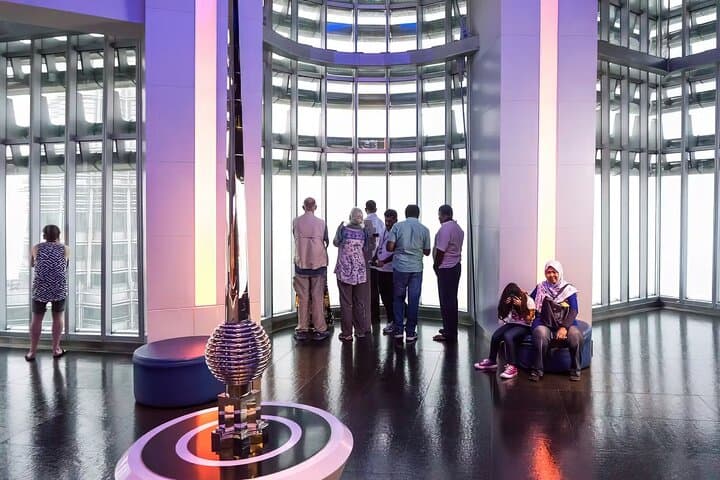
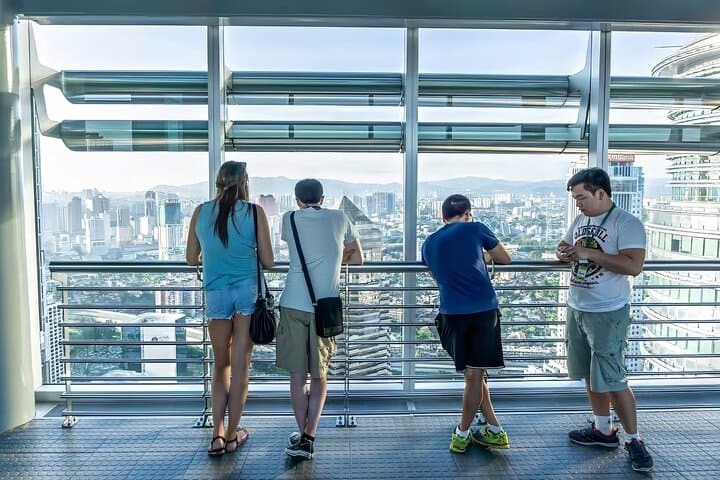
A sudden city hush takes over as you step through security and ride the elevator toward the skybridge—two stainless-steel spires framing a high, glass corridor that connects the twin towers. From the bridge the city unfolds in neat blocks and green pockets; traffic becomes a distant pulse and the towers’ geometric façades sharpen into repeating patterns that feel deliberately precise rather than accidental.
A sudden city hush takes over as you step through security and ride the elevator toward the skybridge—two stainless-steel spires framing a high, glass corridor that connects the twin towers. From the bridge the city unfolds in neat blocks and green pockets; traffic becomes a distant pulse and the towers’ geometric façades sharpen into repeating patterns that feel deliberately precise rather than accidental.
The towers were completed in 1998 and designed by César Pelli; their pointed pinnacles and repeating motifs draw on Islamic geometry as much as modern engineering, reflecting Malaysia’s late-20th-century push to project a global identity. The SkyBridge sits between the towers on the mid-level floors and provides a unique interstitial vantage, while the higher Observation Deck gives close views of the spires and the urban grid. The complex fronts KLCC Park and the Suria KLCC mall, and the nearby LRT station makes access straightforward.
Practicalities matter: tickets are timed (the experience is compact—about 45 minutes), mobile tickets are accepted, and infants must sit on laps. Expect a security check and modest queueing even with timed entry—pack light to move quickly. Midday light can be harsh for photos; aim for late afternoon for softer contrasts and city lights as dusk settles. Public transit reduces travel time and environmental impact.
This visit is an engineered city moment—fast, scenic, and heavily managed. It rewards planning: reserve a specific time, bring your camera and ID, and leave bulky bags behind so the towers’ efficiency becomes your convenience.