THE ADVENTURE COLLECTIVE® · Independent discovery and booking for outdoor travel

Spend a long, absorbing day traveling from Aqaba to Petra’s carved rock façades and on to the scarlet expanse of Wadi Rum. This private tour pairs Nabatean ruins and a two‑hour desert jeep safari with local Bedouin hospitality.
Spend a long, absorbing day traveling from Aqaba to Petra’s carved rock façades and on to the scarlet expanse of Wadi Rum. This private tour pairs Nabatean ruins and a two‑hour desert jeep safari with local Bedouin hospitality.
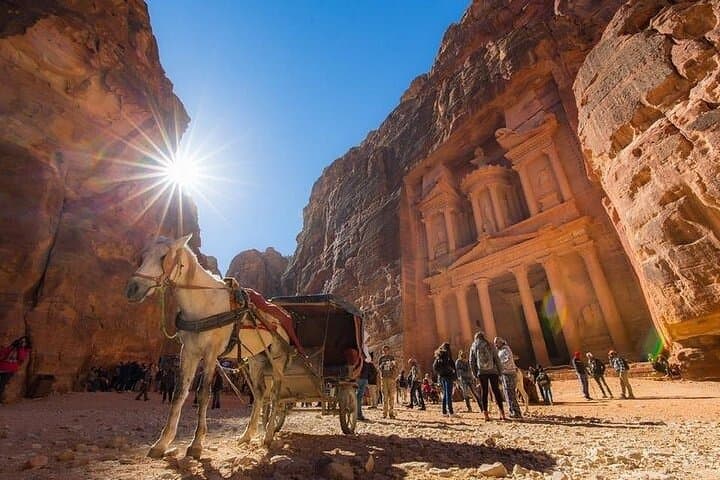
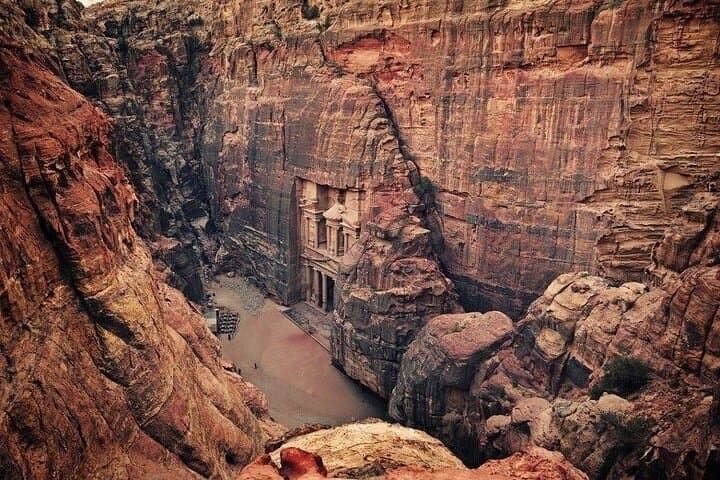
The day begins before sunrise in Aqaba, when the Gulf’s chill still hangs in the air and minarets stitch the horizon. You fold into an air‑conditioned minivan and slip east along the Desert Highway; the sea recedes and the road becomes a ribbon through ochre plains. Two hours later the sandstone walls of the Siq appear like a slot cut into another world. The cleft narrows, light shards fall in, and the Treasury — Al‑Khazneh — opens on you, carved out of living rock and demanding silence.
Verified experiences and guided adventures in the surrounding area.
Operated by Bridge Travel · Aqaba, Aqaba Governorate
The day begins before sunrise in Aqaba, when the Gulf’s chill still hangs in the air and minarets stitch the horizon. You fold into an air‑conditioned minivan and slip east along the Desert Highway; the sea recedes and the road becomes a ribbon through ochre plains. Two hours later the sandstone walls of the Siq appear like a slot cut into another world. The cleft narrows, light shards fall in, and the Treasury — Al‑Khazneh — opens on you, carved out of living rock and demanding silence.
Petra is not a single monument but a city worn into stone by Nabatean hands and Roman order. Its façades read like chapters: commercial streets, royal tombs, an immense Roman theatre and, if you choose the climb, the Monastery, reached by roughly 900–1,000 worn steps that lift you above the gorge. The sandstone here is a record of marine deposits and later tectonic uplift; wind and salt have licked its surfaces into the pinks and rusts you see at mid‑day.
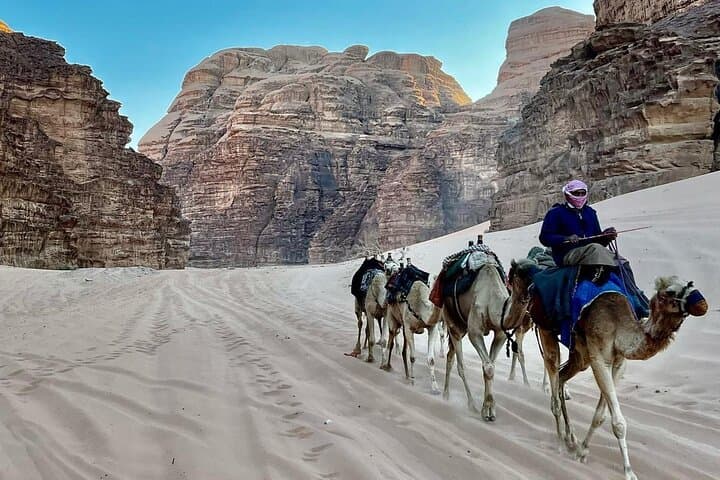
By late afternoon the landscape changes again. You drive south toward Wadi Rum, where the world flattens and then fractures into red mesas and granite domes. The desert feels intentional — a vast stage carved by millennia of wind. A two‑hour jeep safari moves through sand sheets and narrow canyons; local Bedouin guides pause for tea in a tent and narrate the landscape’s hold on local culture and survival.
History and geology here are inseparable: Nabatean irrigation and rock carving in Petra, and in Wadi Rum, ancient petroglyphs and a mix of sandstone and granite shaped by millions of years of erosion. Bedouin stewardship remains part of both places — from guiding and hospitality to small conservation efforts protecting fragile archaeological sites.
Practicalities: this is a long day (expect 10–12 hours). Pickup from Aqaba is usually around 08:00; Petra is about 135 km away and the drive is roughly two hours each way. The Siq alone is 1.2 km of walking; a short horse ride to the entrance can save a few hundred meters but not the longer walks between monuments. The Monastery requires significant stair climbing — bring good shoes, water and sun protection. Wadi Rum’s jeep tour includes short hikes; evenings cool quickly, so layers help.
Tickets, guided entry and a two‑hour Wadi Rum jeep safari are commonly included. If you want fewer crowds at Petra, arrive as the site opens or ask to extend time at the Monastery. Respect fragile rock art, avoid off‑trail driving, and tip local guides who sustain the tourism economy. For a single day that stitches together Jordan’s geological theater and human history, this itinerary delivers contrast, scale and an unmissable sense of place.
moderate.
10–12 hours.
Moderate fitness needed: you should be comfortable walking several kilometres and climbing many stairs; short jeep rides reduce continuous exertion.
Petra is about 135 km from Aqaba and the drive typically takes roughly two hours each way via the Desert Highway.
The climb to the Monastery is optional; it’s steep with approximately 900–1,000 steps and requires good fitness and sturdy shoes.
This tour generally includes entrance fees to Petra and Wadi Rum and a lunch; confirm at booking for your selected option.
The supplier notes the tour is not recommended for pregnant travelers and infants must sit on laps—check health restrictions before booking.
Wadi Rum is explored in a 4x4 jeep for a two‑hour safari; rides include short on/off excursions and a tented tea stop.
Yes — an English‑speaking local guide is provided at Petra for groups up to six people, with an escort driver for the full day.
Petra was the capital of the Nabatean kingdom, a trade hub controlling incense and spice routes; Wadi Rum holds prehistoric rock art and long‑used Bedouin corridors.
Both sites face erosion and tourist pressure; stick to marked paths, avoid touching facades and support local guides to ensure economic benefits stay with communities.
Bridge Travel operates guided outdoor trips and adventures with an emphasis on safety, stewardship, and memorable experiences.

The day begins before sunrise in Aqaba, when the Gulf’s chill still hangs in the air and minarets stitch the horizon. You fold into an air‑conditioned minivan and slip east along the Desert Highway; the sea recedes and the road becomes a ribbon through ochre plains. Two hours later the sandstone walls of the Siq appear like a slot cut into another world. The cleft narrows, light shards fall in, and the Treasury — Al‑Khazneh — opens on you, carved out of living rock and demanding silence.
The day begins before sunrise in Aqaba, when the Gulf’s chill still hangs in the air and minarets stitch the horizon. You fold into an air‑conditioned minivan and slip east along the Desert Highway; the sea recedes and the road becomes a ribbon through ochre plains. Two hours later the sandstone walls of the Siq appear like a slot cut into another world. The cleft narrows, light shards fall in, and the Treasury — Al‑Khazneh — opens on you, carved out of living rock and demanding silence.
Petra is not a single monument but a city worn into stone by Nabatean hands and Roman order. Its façades read like chapters: commercial streets, royal tombs, an immense Roman theatre and, if you choose the climb, the Monastery, reached by roughly 900–1,000 worn steps that lift you above the gorge. The sandstone here is a record of marine deposits and later tectonic uplift; wind and salt have licked its surfaces into the pinks and rusts you see at mid‑day.
By late afternoon the landscape changes again. You drive south toward Wadi Rum, where the world flattens and then fractures into red mesas and granite domes. The desert feels intentional — a vast stage carved by millennia of wind. A two‑hour jeep safari moves through sand sheets and narrow canyons; local Bedouin guides pause for tea in a tent and narrate the landscape’s hold on local culture and survival.
History and geology here are inseparable: Nabatean irrigation and rock carving in Petra, and in Wadi Rum, ancient petroglyphs and a mix of sandstone and granite shaped by millions of years of erosion. Bedouin stewardship remains part of both places — from guiding and hospitality to small conservation efforts protecting fragile archaeological sites.
Practicalities: this is a long day (expect 10–12 hours). Pickup from Aqaba is usually around 08:00; Petra is about 135 km away and the drive is roughly two hours each way. The Siq alone is 1.2 km of walking; a short horse ride to the entrance can save a few hundred meters but not the longer walks between monuments. The Monastery requires significant stair climbing — bring good shoes, water and sun protection. Wadi Rum’s jeep tour includes short hikes; evenings cool quickly, so layers help.
Tickets, guided entry and a two‑hour Wadi Rum jeep safari are commonly included. If you want fewer crowds at Petra, arrive as the site opens or ask to extend time at the Monastery. Respect fragile rock art, avoid off‑trail driving, and tip local guides who sustain the tourism economy. For a single day that stitches together Jordan’s geological theater and human history, this itinerary delivers contrast, scale and an unmissable sense of place.