THE ADVENTURE COLLECTIVE® · Independent discovery and booking for outdoor travel

Three days across Jordan’s most iconic landscapes—explore Petra’s carved canyons, ride a 4x4 through Wadi Rum’s sandstone towers, then float and mud-mask at the Dead Sea. This private itinerary packs history, geology and slow desert moments into a compact, low-friction trip.
Three days across Jordan’s most iconic landscapes—explore Petra’s carved canyons, ride a 4x4 through Wadi Rum’s sandstone towers, then float and mud-mask at the Dead Sea. This private itinerary packs history, geology and slow desert moments into a compact, low-friction trip.
You step out of the car and the heat hits like a hand—dry, mineral-rich, and oddly clean. The road from Amman has been a study in changing geology: limestone ranges, rolling scrub, then suddenly the rose-red cliffs of Petra rise like a city that refused to stay hidden. Over the next three days the landscape will keep asserting itself—ancient carved facades, moonscape sandstone, and a mirror-still sea that refuses to let you sink.
Verified experiences and guided adventures in the surrounding area.
Operated by Jordan Visit Tour · Wadi Musa, Ma'an Governorate
You step out of the car and the heat hits like a hand—dry, mineral-rich, and oddly clean. The road from Amman has been a study in changing geology: limestone ranges, rolling scrub, then suddenly the rose-red cliffs of Petra rise like a city that refused to stay hidden. Over the next three days the landscape will keep asserting itself—ancient carved facades, moonscape sandstone, and a mirror-still sea that refuses to let you sink.
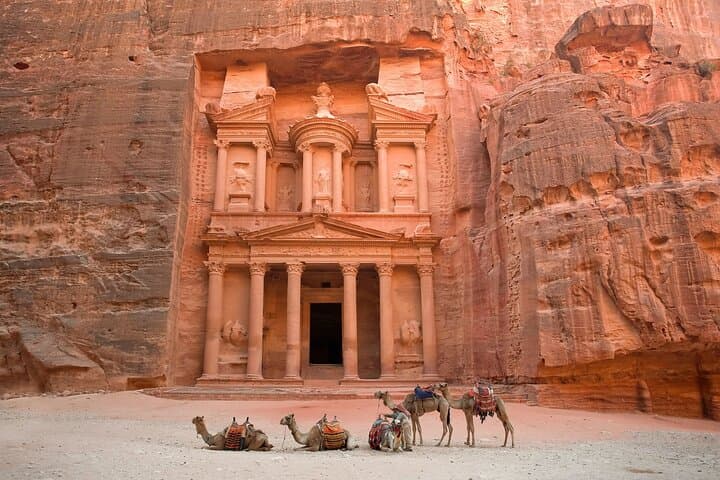
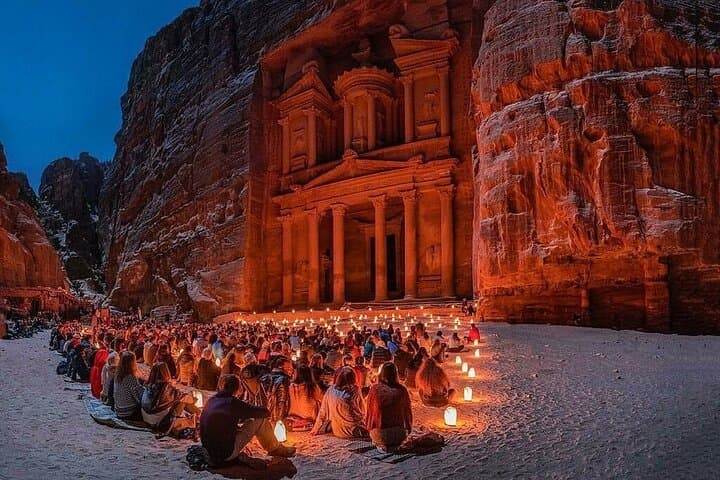
Petra is the human voice in this chorus. Carved by the Nabataeans more than two millennia ago, its narrow Siq funnels you toward the Treasury, and between Treasury and the Monastery the path demands a steady pace: expect several kilometers of walking on uneven rock and loose gravel if you explore both highlights. The town of Wadi Musa, where most travelers sleep, sits at the edge of that faded cliff-line and still trades in stories as much as in hospitality.
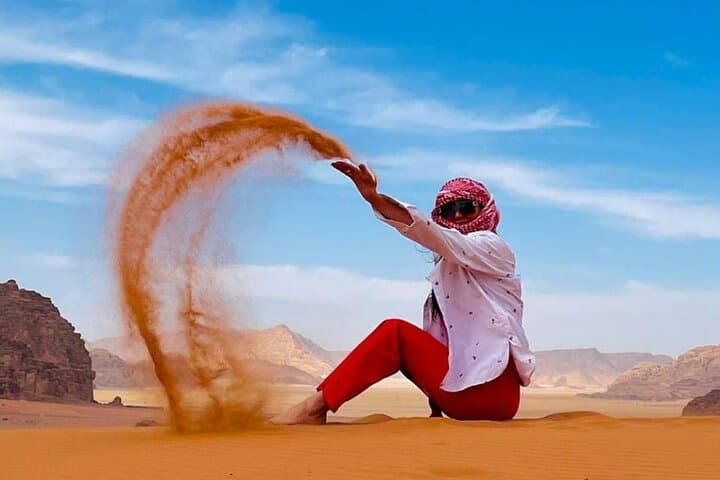
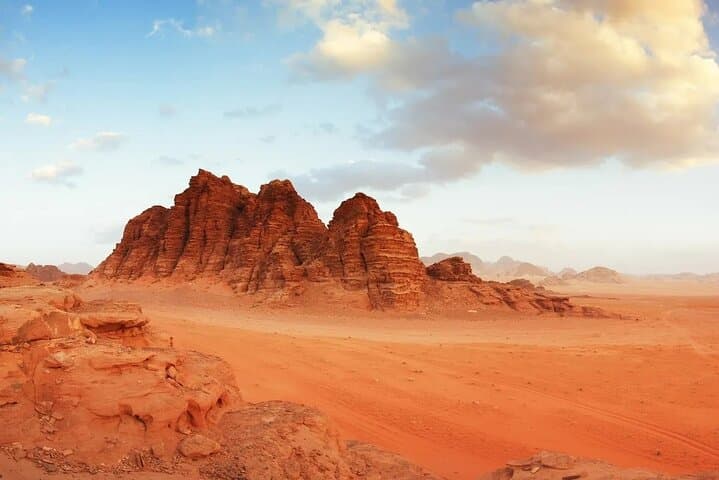
Wadi Rum is another language—a desert written in arches and wind-sculpted towers. Tucked into the southeastern desert, the area is granite and sandstone folded and friable, with petroglyphs and traces of human passage that predate modern borders. A two-hour 4x4 jeep tour lets the desert set its own tempo: dunes that shift like living things and rock formations with names like Seven Pillars and Lawrence’s Spring, which recall both Bedouin life and early 20th-century exploration.
The trip ends at the Dead Sea, the planet's lowest exposed land point. The water will hold you effortlessly; the mud will coat you in minerals that feel like a slow, restorative plaster. It’s a physiologic punctuation—dense water, shallow sun, and a hush that makes the previous days’ dust feel like a necessary proof.
Practical edge: drives between Amman, Petra, Wadi Rum and the Dead Sea are long—plan for 2.5–4 hours on some legs—so travel days are part of the experience. Buy the Jordan Pass in advance if you plan to include Petra entry and visa coverage; carry small bills for tips and Bedouin vendors; pack sun protection and sturdy shoes for rocky paths. The tour includes a private driver, two nights’ accommodation (Petra and Wadi Rum camp), a 2-hour jeep tour, resort access at the Dead Sea, and most meals, making it a compact, low-friction way to see Jordan’s headline landscapes.
Culturally, budget time to listen: your Bedouin hosts in Wadi Rum will explain zarb cooking or point out constellations; in Petra, guides can trace Nabataean water engineering that made a desert city possible. Environmentally, stick to marked paths, avoid climbing fragile façades, and choose camps that employ local staff—sustainable tourism keeps these places both alive and accessible.
moderate.
3 days.
Moderate fitness—comfortable walking for several hours on uneven terrain and short climbs; able to handle long vehicle transfers.
No—site admissions are not included in this tour. Purchasing the Jordan Pass beforehand can cover visa fees and Petra entry for many visitors.
Yes—accommodations and transfers are private and paced, but Petra involves extensive walking; consider reduced routes or transport inside the site for those with limited mobility.
This tour notes it is not recommended for pregnant travelers; the Dead Sea’s buoyancy and desert conditions pose specific risks and are best avoided during pregnancy.
Camps are typically family-run and offer deluxe tents with basic comforts; this tour includes one night at a Bedouin camp with dinner and breakfast—confirm accessibility needs ahead of booking.
Expect 2.5–4 hour drives on some legs (Amman–Petra, Wadi Rum–Dead Sea); the itinerary builds travel time into each day so you’re not rushed at key sites.
The tour lists wheelchair-accessible transport and some accessibility options, but Petra’s archaeological terrain is largely uneven—discuss specific needs with the operator before booking.
Petra was the capital of the Nabataean kingdom and a regional trade hub; Wadi Rum has long been inhabited by Bedouin tribes and saw international attention during TE Lawrence’s campaigns.
Tourism pressure and water scarcity are key concerns—choose camp operators that employ local staff, stick to marked paths, and use biodegradable sunscreen to protect fragile rock and aquatic environments.
Jordan Visit Tour operates guided outdoor trips and adventures with an emphasis on safety, stewardship, and memorable experiences.
You step out of the car and the heat hits like a hand—dry, mineral-rich, and oddly clean. The road from Amman has been a study in changing geology: limestone ranges, rolling scrub, then suddenly the rose-red cliffs of Petra rise like a city that refused to stay hidden. Over the next three days the landscape will keep asserting itself—ancient carved facades, moonscape sandstone, and a mirror-still sea that refuses to let you sink.
You step out of the car and the heat hits like a hand—dry, mineral-rich, and oddly clean. The road from Amman has been a study in changing geology: limestone ranges, rolling scrub, then suddenly the rose-red cliffs of Petra rise like a city that refused to stay hidden. Over the next three days the landscape will keep asserting itself—ancient carved facades, moonscape sandstone, and a mirror-still sea that refuses to let you sink.
Petra is the human voice in this chorus. Carved by the Nabataeans more than two millennia ago, its narrow Siq funnels you toward the Treasury, and between Treasury and the Monastery the path demands a steady pace: expect several kilometers of walking on uneven rock and loose gravel if you explore both highlights. The town of Wadi Musa, where most travelers sleep, sits at the edge of that faded cliff-line and still trades in stories as much as in hospitality.
Wadi Rum is another language—a desert written in arches and wind-sculpted towers. Tucked into the southeastern desert, the area is granite and sandstone folded and friable, with petroglyphs and traces of human passage that predate modern borders. A two-hour 4x4 jeep tour lets the desert set its own tempo: dunes that shift like living things and rock formations with names like Seven Pillars and Lawrence’s Spring, which recall both Bedouin life and early 20th-century exploration.
The trip ends at the Dead Sea, the planet's lowest exposed land point. The water will hold you effortlessly; the mud will coat you in minerals that feel like a slow, restorative plaster. It’s a physiologic punctuation—dense water, shallow sun, and a hush that makes the previous days’ dust feel like a necessary proof.
Practical edge: drives between Amman, Petra, Wadi Rum and the Dead Sea are long—plan for 2.5–4 hours on some legs—so travel days are part of the experience. Buy the Jordan Pass in advance if you plan to include Petra entry and visa coverage; carry small bills for tips and Bedouin vendors; pack sun protection and sturdy shoes for rocky paths. The tour includes a private driver, two nights’ accommodation (Petra and Wadi Rum camp), a 2-hour jeep tour, resort access at the Dead Sea, and most meals, making it a compact, low-friction way to see Jordan’s headline landscapes.
Culturally, budget time to listen: your Bedouin hosts in Wadi Rum will explain zarb cooking or point out constellations; in Petra, guides can trace Nabataean water engineering that made a desert city possible. Environmentally, stick to marked paths, avoid climbing fragile façades, and choose camps that employ local staff—sustainable tourism keeps these places both alive and accessible.