THE ADVENTURE COLLECTIVE® · Independent discovery and booking for outdoor travel

A rugged six-day traverse of the Jordan Trail linking Petra’s carved cliffs to the open dunes and towers of Wadi Rum. Remote, scenic, and guided—this trek is for hikers ready to carry their day pack and sleep under desert skies.
A rugged six-day traverse of the Jordan Trail linking Petra’s carved cliffs to the open dunes and towers of Wadi Rum. Remote, scenic, and guided—this trek is for hikers ready to carry their day pack and sleep under desert skies.
You step out of the cool shadow of Petra’s cliffs and, within an hour, the red-brown world opens into a different language: wind-sculpted ridges, gullies that dare you to cross them, and miles of sand that absorb your footsteps.
Verified experiences and guided adventures in the surrounding area.
You step out of the cool shadow of Petra’s cliffs and, within an hour, the red-brown world opens into a different language: wind-sculpted ridges, gullies that dare you to cross them, and miles of sand that absorb your footsteps.
This six-day link on the Jordan Trail threads between two UNESCO sites—Petra’s carved facades and Wadi Rum’s high desert—across the southern Wadi Araba and into the broad basins of Wadi Rum. The route is raw: long daywalks over hard-packed sand and loose scree, short climbs to vantage ridges, and nights under canvas or in simple Bedouin camps where stars outnumber the lights of any town.
Geology writes the itinerary. Sandstone layers folded and split by millennia produce narrow slot canyons, table-like mesas, and arches that change from ochre to rust as the sun moves. You’ll cross dry riverbeds that once funneled winter storms and skirt escarpments that offered the Nabataeans both shelter and strategic oversight. Culturally, the trek moves through land long traveled by Bedouin families who still guide, water, and share stories about the caravans that threaded this corridor for centuries.
Expect solitude. The route is remote and often unmarked—relying on cairns, local guides, and GPS tracks. Daily stretches average 12–20 km, with intermittent elevation gains of several hundred meters when you climb ridgelines for views. Terrain alternates: packed desert trail, loose scree, short hard rock scrambles, and sand stretches that slow your pace.
Practical essentials: carry a minimum 2–3 liters of water per day plus a means to treat or resupply where guides provide water; sun protection and layered clothing are imperative—sun at midday is harsh, nights drop chilly. Camping is typically in basic desert camps; expect shared sleeping arrangements and communal meals cooked Bedouin-style over coals. Guides handle route-finding and often arrange mule or vehicle support for heavy gear, but you should be comfortable carrying a full-day pack.
Timing matters—late autumn to early spring offers cooler temperatures and clearer nights for stargazing; summer brings extreme heat and requires altered daily schedules. Respect the landscape: stay on durable surfaces, pack out waste, and follow your guide’s instructions to avoid fragile microhabitats.
This trek is less about monuments and more about movement through a living, ancient landscape: sandstone that dares you to look closer, desert winds that push you forward, and the quiet companionship of long walking days. For hikers who want an unvarnished desert crossing, it’s an honest, memorable test of pace, endurance, and curiosity.
challenging.
6 days.
Good cardiovascular fitness and experience with multi-day backpacking; able to hike 12–20 km per day over mixed terrain.
The itinerary covers about 80–100 km over six days, averaging 12–20 km per day depending on routing and sand sections.
Recommended but not mandatory if you have strong multi-day hiking experience and travel with a knowledgeable local guide.
Mostly simple Bedouin-style desert camps with mattresses and blankets; some nights may be in basic tents—confirm details with the operator.
Resupply points are limited; guides arrange water caches or vehicle support at certain stages—don’t rely on natural sources.
Guides typically handle permits for protected areas; travelers should carry passport and confirm permits at booking time.
Late autumn to early spring (October–April) offers milder daytime temperatures and clearer nights; avoid the peak summer heat.
This corridor served as caravan routes between the interior and the Red Sea; Nabataean rock-cut architecture in the region points to long human presence.
The desert’s fragile soils and cryptobiotic crusts recover slowly—stick to established routes, pack out waste, and minimize campfire impacts.
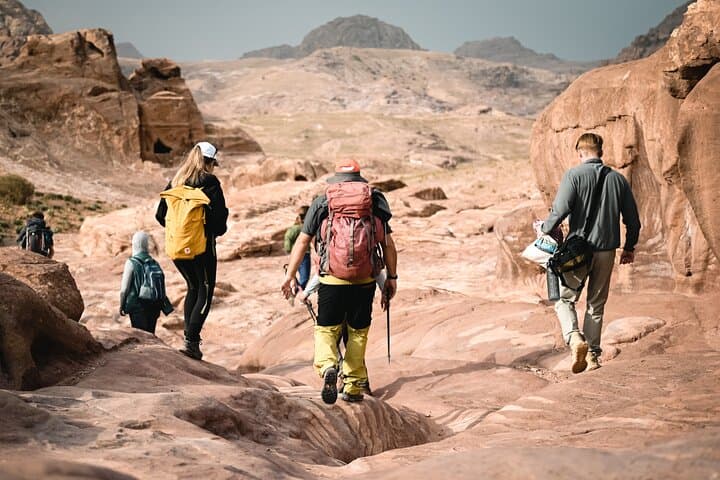
You step out of the cool shadow of Petra’s cliffs and, within an hour, the red-brown world opens into a different language: wind-sculpted ridges, gullies that dare you to cross them, and miles of sand that absorb your footsteps.
You step out of the cool shadow of Petra’s cliffs and, within an hour, the red-brown world opens into a different language: wind-sculpted ridges, gullies that dare you to cross them, and miles of sand that absorb your footsteps.
This six-day link on the Jordan Trail threads between two UNESCO sites—Petra’s carved facades and Wadi Rum’s high desert—across the southern Wadi Araba and into the broad basins of Wadi Rum. The route is raw: long daywalks over hard-packed sand and loose scree, short climbs to vantage ridges, and nights under canvas or in simple Bedouin camps where stars outnumber the lights of any town.
Geology writes the itinerary. Sandstone layers folded and split by millennia produce narrow slot canyons, table-like mesas, and arches that change from ochre to rust as the sun moves. You’ll cross dry riverbeds that once funneled winter storms and skirt escarpments that offered the Nabataeans both shelter and strategic oversight. Culturally, the trek moves through land long traveled by Bedouin families who still guide, water, and share stories about the caravans that threaded this corridor for centuries.
Expect solitude. The route is remote and often unmarked—relying on cairns, local guides, and GPS tracks. Daily stretches average 12–20 km, with intermittent elevation gains of several hundred meters when you climb ridgelines for views. Terrain alternates: packed desert trail, loose scree, short hard rock scrambles, and sand stretches that slow your pace.
Practical essentials: carry a minimum 2–3 liters of water per day plus a means to treat or resupply where guides provide water; sun protection and layered clothing are imperative—sun at midday is harsh, nights drop chilly. Camping is typically in basic desert camps; expect shared sleeping arrangements and communal meals cooked Bedouin-style over coals. Guides handle route-finding and often arrange mule or vehicle support for heavy gear, but you should be comfortable carrying a full-day pack.
Timing matters—late autumn to early spring offers cooler temperatures and clearer nights for stargazing; summer brings extreme heat and requires altered daily schedules. Respect the landscape: stay on durable surfaces, pack out waste, and follow your guide’s instructions to avoid fragile microhabitats.
This trek is less about monuments and more about movement through a living, ancient landscape: sandstone that dares you to look closer, desert winds that push you forward, and the quiet companionship of long walking days. For hikers who want an unvarnished desert crossing, it’s an honest, memorable test of pace, endurance, and curiosity.