THE ADVENTURE COLLECTIVE® · Independent discovery and booking for outdoor travel

Leave Sharm before dawn for a long, cinematic day: ferry across the Gulf of Aqaba, cross into Jordan, and spend several hours walking through Petra’s Siq to the Treasury. Practical advice on timing, border documents, terrain and what to expect on a focused day trip.
Leave Sharm before dawn for a long, cinematic day: ferry across the Gulf of Aqaba, cross into Jordan, and spend several hours walking through Petra’s Siq to the Treasury. Practical advice on timing, border documents, terrain and what to expect on a focused day trip.
Pre-dawn headlights pick out the desert as a small convoy peels away from Sharm-el-Sheikh; the sea and sand trade places on the horizon while you head north to Taba. By the time the ferry slices across the Gulf of Aqaba, salt spray and a rising sun have reset the day—then the bus takes you inland, through the ochre-streaked emptiness of Wadi Rum toward the rose-red façade of Petra.
Verified experiences and guided adventures in the surrounding area.
Operated by Cleotours Egypt · Wadi Musa, Ma'an Governorate
Pre-dawn headlights pick out the desert as a small convoy peels away from Sharm-el-Sheikh; the sea and sand trade places on the horizon while you head north to Taba. By the time the ferry slices across the Gulf of Aqaba, salt spray and a rising sun have reset the day—then the bus takes you inland, through the ochre-streaked emptiness of Wadi Rum toward the rose-red façade of Petra.
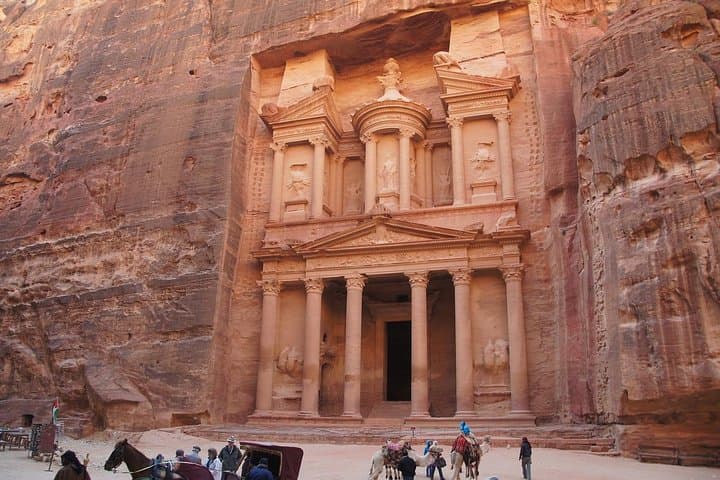
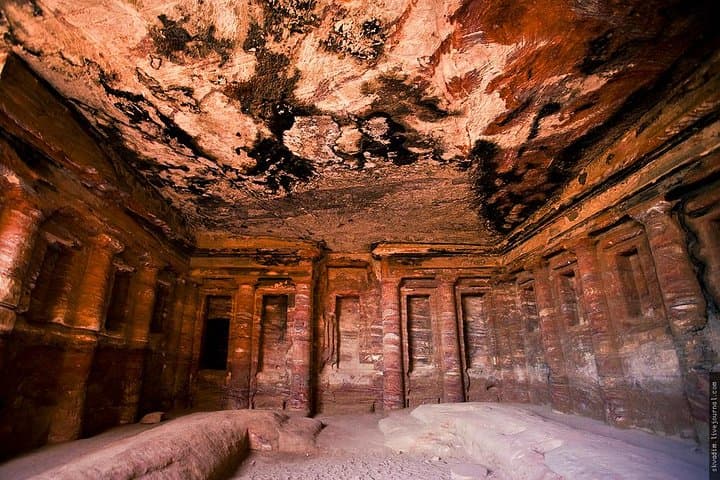
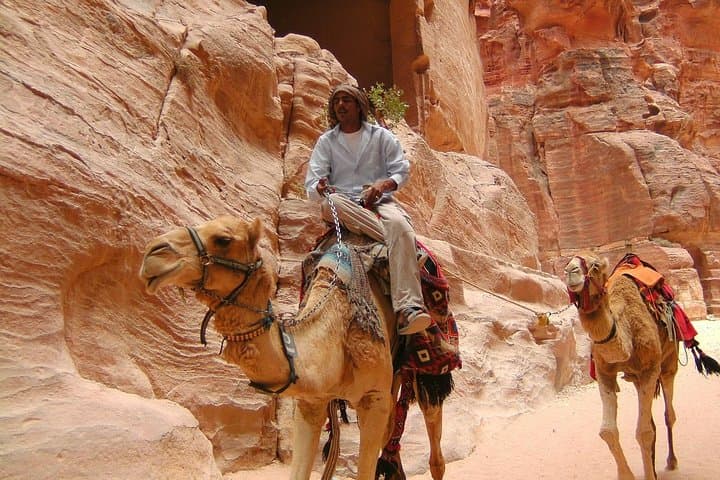
Petra sits where Nabataean engineers carved an entire city from sandstone: Al Khazneh’s carved face, cut tombs, and a Roman-style amphitheater speak to trade routes and desert ingenuity. Geologically, the canyoned approach (the Siq) reveals layered, fractured sandstone that shifts color with the light; culturally, Wadi Musa town grew to service pilgrims and explorers arriving by camel, caravan and now coach.
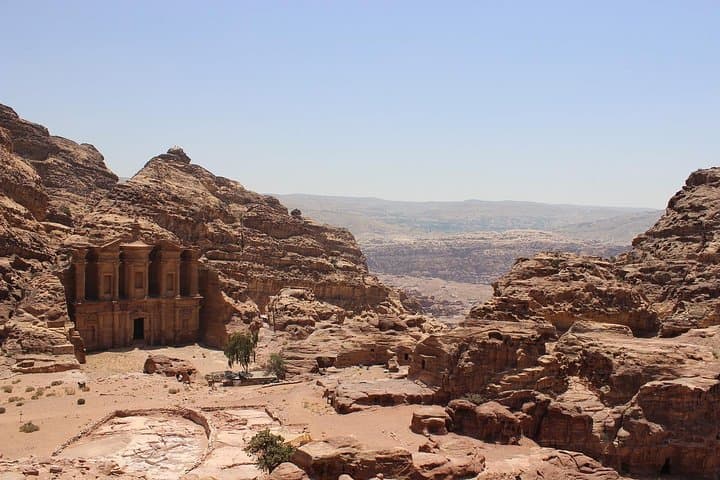
Expect about 3 km of walking one-way on compacted gravel and flagstones with modest elevation changes and uneven steps near some tombs. The itinerary typically allows ~3–4 hours inside Petra—enough to reach the Treasury, amphitheater and several major tombs, but not to fully explore the Monastery or extensive hiking trails.
Practical edge: carry passport and a copy (visa handling is included in many tours), bring 2–3 liters of water, wear sturdy shoes and sun protection, and budget for dusty terrain and intermittent sun. Border crossing and ferry schedules can shift with weather; allow flexibility in your day. From sunrise ferry to late-night return, this is a long but intensely rewarding day—Petra’s stone will challenge your legs and reward your attention.
moderate.
20–24 hours (including transfers).
Good baseline fitness for prolonged travel days and several kilometers of walking on uneven terrain; comfortable on feet for 3–5 hours.
Many organized day tours include the Jordan entry visa fee; confirm at booking and carry passport details as requested.
Expect roughly 3 km one-way through the main route to the Treasury and nearby sites, with uneven surfaces and some steps—about 3–4 hours on-site for a typical group visit.
Yes—sea crossings and border operations can be suspended for adverse weather; operators typically cancel or reschedule and outline refund timelines.
Families can participate, but the trip is long and includes uneven walking; those with limited mobility may find some areas inaccessible and should check accessibility options in advance.
Petra was the Nabataeans’ capital and a key Red Sea trade hub; its rock-cut architecture reflects centuries of cross-cultural exchange between Arabia, Egypt and the Roman world.
High visitor numbers and soft sandstone make conservation essential—stick to trails, avoid touching carved surfaces and follow local guidance to reduce erosion and wear.
Cleotours Egypt operates guided outdoor trips and adventures with an emphasis on safety, stewardship, and memorable experiences.
Pre-dawn headlights pick out the desert as a small convoy peels away from Sharm-el-Sheikh; the sea and sand trade places on the horizon while you head north to Taba. By the time the ferry slices across the Gulf of Aqaba, salt spray and a rising sun have reset the day—then the bus takes you inland, through the ochre-streaked emptiness of Wadi Rum toward the rose-red façade of Petra.
Pre-dawn headlights pick out the desert as a small convoy peels away from Sharm-el-Sheikh; the sea and sand trade places on the horizon while you head north to Taba. By the time the ferry slices across the Gulf of Aqaba, salt spray and a rising sun have reset the day—then the bus takes you inland, through the ochre-streaked emptiness of Wadi Rum toward the rose-red façade of Petra.
Petra sits where Nabataean engineers carved an entire city from sandstone: Al Khazneh’s carved face, cut tombs, and a Roman-style amphitheater speak to trade routes and desert ingenuity. Geologically, the canyoned approach (the Siq) reveals layered, fractured sandstone that shifts color with the light; culturally, Wadi Musa town grew to service pilgrims and explorers arriving by camel, caravan and now coach.
Expect about 3 km of walking one-way on compacted gravel and flagstones with modest elevation changes and uneven steps near some tombs. The itinerary typically allows ~3–4 hours inside Petra—enough to reach the Treasury, amphitheater and several major tombs, but not to fully explore the Monastery or extensive hiking trails.
Practical edge: carry passport and a copy (visa handling is included in many tours), bring 2–3 liters of water, wear sturdy shoes and sun protection, and budget for dusty terrain and intermittent sun. Border crossing and ferry schedules can shift with weather; allow flexibility in your day. From sunrise ferry to late-night return, this is a long but intensely rewarding day—Petra’s stone will challenge your legs and reward your attention.