THE ADVENTURE COLLECTIVE® · Independent discovery and booking for outdoor travel

Cross the Gulf of Aqaba by ferry, drive through desert wadis and enter Petra’s narrow Siq to stand before Al-Khazneh. This full-day tour from Taba packs ferry transit, guided exploration and cultural encounters into one long, unforgettable day.
Cross the Gulf of Aqaba by ferry, drive through desert wadis and enter Petra’s narrow Siq to stand before Al-Khazneh. This full-day tour from Taba packs ferry transit, guided exploration and cultural encounters into one long, unforgettable day.
You step off the ferry into Aqaba and the desert pulls you inland like a patient current—heat rising off sandstone ridges, wind hollowing the canyons into long, soft notes. The drive south threads through ochre wadis until the jagged silhouette of Petra appears: a city carved from living rock that seems to grow from the mountain itself.
Verified experiences and guided adventures in the surrounding area.
Operated by Sun Pyramids Tours · Wadi Musa, Ma'an Governorate
You step off the ferry into Aqaba and the desert pulls you inland like a patient current—heat rising off sandstone ridges, wind hollowing the canyons into long, soft notes. The drive south threads through ochre wadis until the jagged silhouette of Petra appears: a city carved from living rock that seems to grow from the mountain itself.
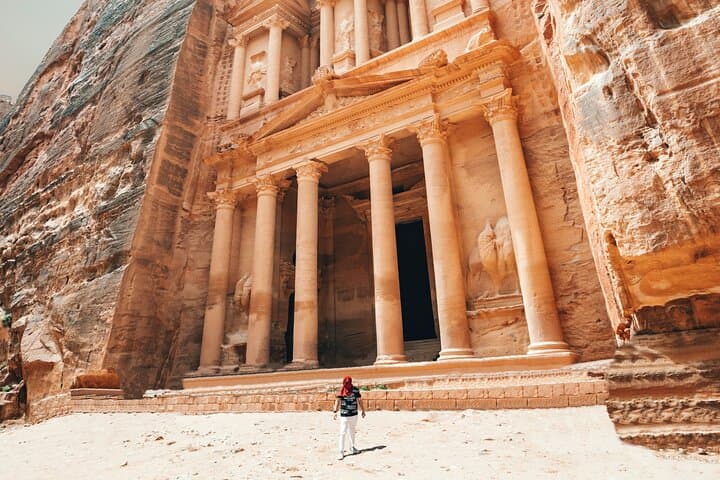
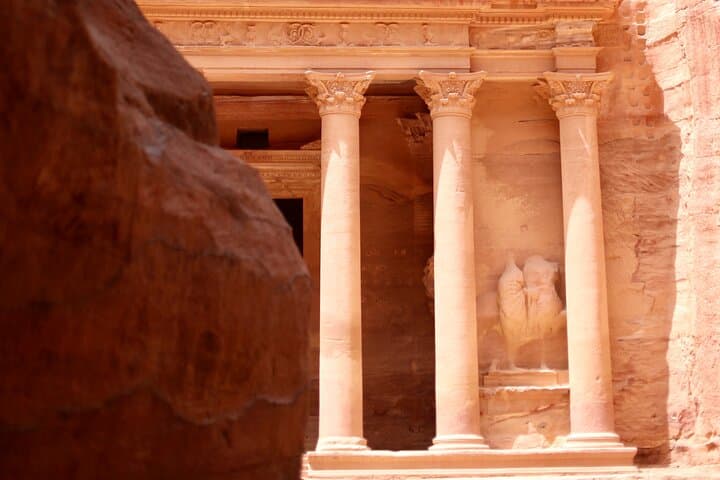
Petra was the capital of the Nabataean kingdom and a crossroads of incense and spice routes; its facades record Greek, Egyptian and Arabian influences cut into crimson sandstone. Geologically, the site sits on ancient seabed layers—sandstone strata weather into the deep reds and pale pinks that shift with the sun. You’ll pass the Siq, a narrow sandstone gorge that funnels you toward Al-Khazneh, then fan out to Roman-style colonnades, royal tombs and the vast Ad Deir monastery perched above the valley.
Local Bedouin culture still threads the experience: guides, traders and tea sellers maintain long-standing ties to these ruins, and respectful interaction supports the area’s living heritage.
Practical guidance: arrive early to avoid mid-day heat and crowds; comfortable, grippy shoes matter—expect uneven rock, loose sand and stair climbs. Carry at least 2 liters of water, sun protection and a photocopy of your passport for the ferry. The tour includes ferry transit via Aqaba and transfers by air-conditioned vehicle; expect a long, full day with several hours on foot. Time your visit in spring or autumn for milder temperatures; winter can be cool at elevation and summer storms intensify desert heat. Stay aware of local regulations—do not climb façades or remove artifacts—and leave no trace in the valley’s fragile sandstone environment.
moderate.
10–12 hours.
Moderate fitness: able to walk 4–8 miles on uneven terrain with some elevation changes and stairs.
Yes — the ferry ticket between Taba and Aqaba is included as part of the tour package.
Many nationalities can obtain a Jordanian visa on arrival in Aqaba, but check current visa rules for your passport before travel and have passport details ready for booking.
Expect several hours on foot—flat sections, narrow Siq passages and stair climbs to viewpoints; distances can total 4–8 miles depending on how many sites you visit.
The operator lists wheelchair-accessible options, but Petra’s terrain includes uneven ground and steps; contact the provider in advance to confirm specific accessibility arrangements.
Petra was the Nabataean capital from the 4th century BCE and thrived as a caravan hub; its rock-cut façades reflect a fusion of regional architectural styles.
Petra’s sandstone is fragile—avoid touching or climbing façades, follow marked paths, and support local guides and vendors who contribute to community conservation.
Sun Pyramids Tours operates guided outdoor trips and adventures with an emphasis on safety, stewardship, and memorable experiences.
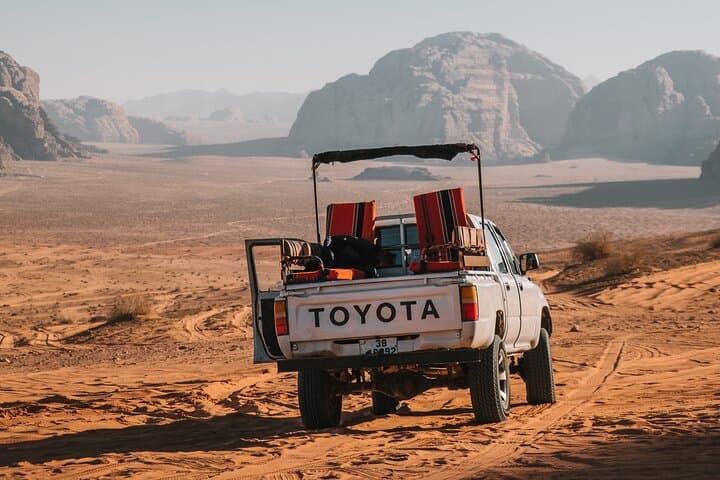
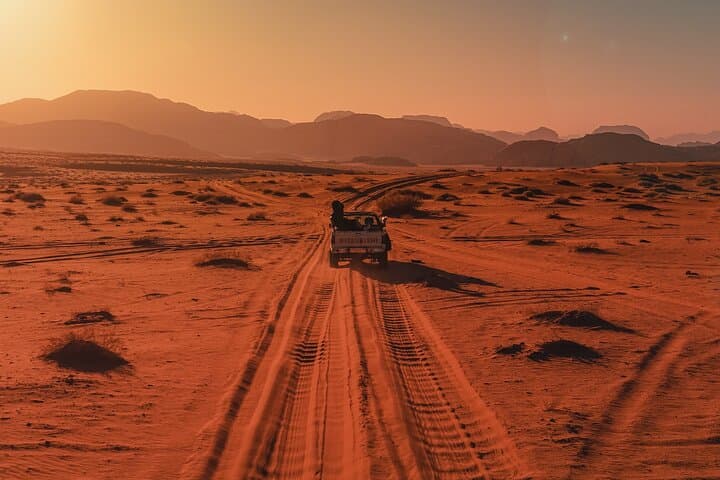
You step off the ferry into Aqaba and the desert pulls you inland like a patient current—heat rising off sandstone ridges, wind hollowing the canyons into long, soft notes. The drive south threads through ochre wadis until the jagged silhouette of Petra appears: a city carved from living rock that seems to grow from the mountain itself.
You step off the ferry into Aqaba and the desert pulls you inland like a patient current—heat rising off sandstone ridges, wind hollowing the canyons into long, soft notes. The drive south threads through ochre wadis until the jagged silhouette of Petra appears: a city carved from living rock that seems to grow from the mountain itself.
Petra was the capital of the Nabataean kingdom and a crossroads of incense and spice routes; its facades record Greek, Egyptian and Arabian influences cut into crimson sandstone. Geologically, the site sits on ancient seabed layers—sandstone strata weather into the deep reds and pale pinks that shift with the sun. You’ll pass the Siq, a narrow sandstone gorge that funnels you toward Al-Khazneh, then fan out to Roman-style colonnades, royal tombs and the vast Ad Deir monastery perched above the valley.
Local Bedouin culture still threads the experience: guides, traders and tea sellers maintain long-standing ties to these ruins, and respectful interaction supports the area’s living heritage.
Practical guidance: arrive early to avoid mid-day heat and crowds; comfortable, grippy shoes matter—expect uneven rock, loose sand and stair climbs. Carry at least 2 liters of water, sun protection and a photocopy of your passport for the ferry. The tour includes ferry transit via Aqaba and transfers by air-conditioned vehicle; expect a long, full day with several hours on foot. Time your visit in spring or autumn for milder temperatures; winter can be cool at elevation and summer storms intensify desert heat. Stay aware of local regulations—do not climb façades or remove artifacts—and leave no trace in the valley’s fragile sandstone environment.