THE ADVENTURE COLLECTIVE® · Independent discovery and booking for outdoor travel

Cross the Red Sea by ferry, drive through desert canyons and spend a day walking Petra’s stone streets. This full-day tour from Sharm El Sheikh delivers the Siq, the Treasury and the royal tombs with practical travel logistics for a long but rewarding day.
Cross the Red Sea by ferry, drive through desert canyons and spend a day walking Petra’s stone streets. This full-day tour from Sharm El Sheikh delivers the Siq, the Treasury and the royal tombs with practical travel logistics for a long but rewarding day.
You leave Sharm El Sheikh before sunrise, the bus threading north toward the Taba ferry terminal while the Red Sea ripples to your right. A short ferry crossing deposits you in Aqaba; the road then opens into ochre desert and the rose-red ridges that guard Petra. By midday you step into the Siq—a narrow slot canyon that constrains light and sound—then emerge onto the famously carved façade of the Treasury, a stone face that has watched traders and travelers for two millennia.
Verified experiences and guided adventures in the surrounding area.
Operated by Here Egypt Tours · Wadi Musa, Ma'an Governorate
You leave Sharm El Sheikh before sunrise, the bus threading north toward the Taba ferry terminal while the Red Sea ripples to your right. A short ferry crossing deposits you in Aqaba; the road then opens into ochre desert and the rose-red ridges that guard Petra. By midday you step into the Siq—a narrow slot canyon that constrains light and sound—then emerge onto the famously carved façade of the Treasury, a stone face that has watched traders and travelers for two millennia.
Petra was the Nabatean capital, a mercantile hub shaped by water engineering and rock-carving. The rose-hued sandstone shows layers of ancient seabeds and wind-polished surfaces; walking its streets is as much geology lesson as history tour. Local guides explain funerary customs, the Roman imprint of theaters and colonnades, and the Qasr al-Bint temple’s role in community life.
Practicalities shape the day: expect a long travel loop—roughly three hours by road to Taba, ferry time, then a drive to Petra—so the tour is a full 12-hour commitment. The site involves around 1.2 km through the Siq plus several kilometers of uneven paths and stone steps across terraces and tomb facades. Hydration, sun protection and steady footwear matter more than speed. Bring your passport for border procedures, allow time for customs, and plan for limited shade inside the monument.
This trip pairs dramatic archaeology with desert travel logistics—an intense, highly rewarding day that demands early starts, simple preparation and respect for a fragile World Heritage site.
moderate.
10–12 hours.
Suitable for people who can walk several kilometers over uneven terrain and handle a long day of travel; not ideal for limited-mobility travelers.
Visa requirements depend on your nationality—many travelers must obtain a Jordanian visa at the border or in advance; check current regulations before travel.
Expect several kilometers over varied terrain including a 1.2 km walk through the Siq plus additional walking between major sites and viewpoints; the pace is moderate but continuous.
Yes, the cruise/ferry ticket is included in the tour, but schedules can change—operators may reroute overland border crossings if ferries are rescheduled or canceled.
Lunch is included at a local restaurant, but national park entrance fees to Petra are typically not included by third-party agents—confirm with the operator before booking.
Petra was the Nabatean capital and a crossroads for incense and spice routes; its water-capture systems and carved facades reflect a sophisticated desert urbanism.
High visitor numbers and soft sandstone make staying on marked paths and avoiding climbing on façades important; carry out waste and conserve water in local communities.
Here Egypt Tours operates guided outdoor trips and adventures with an emphasis on safety, stewardship, and memorable experiences.
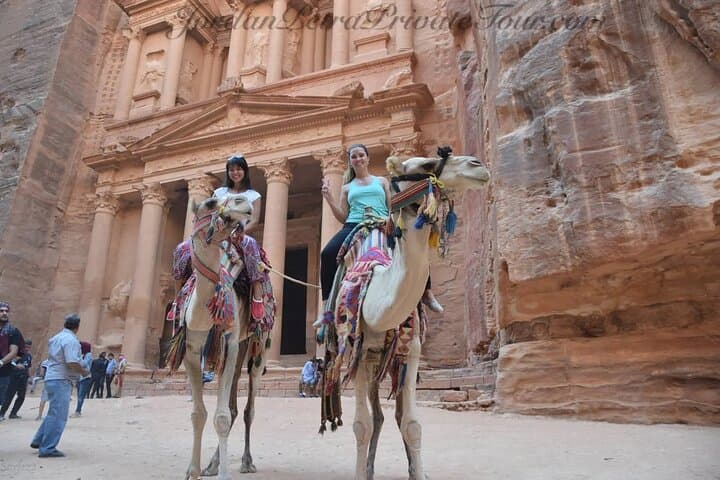
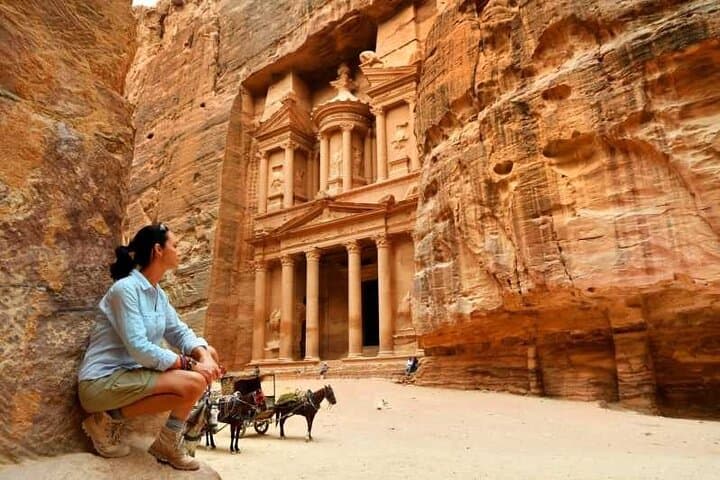
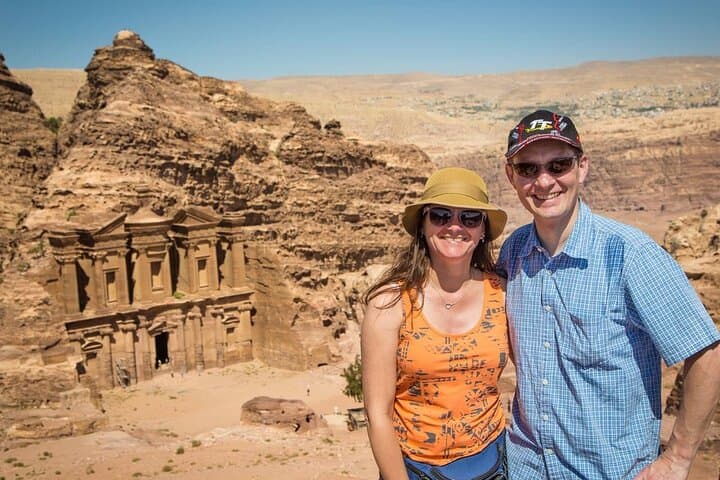
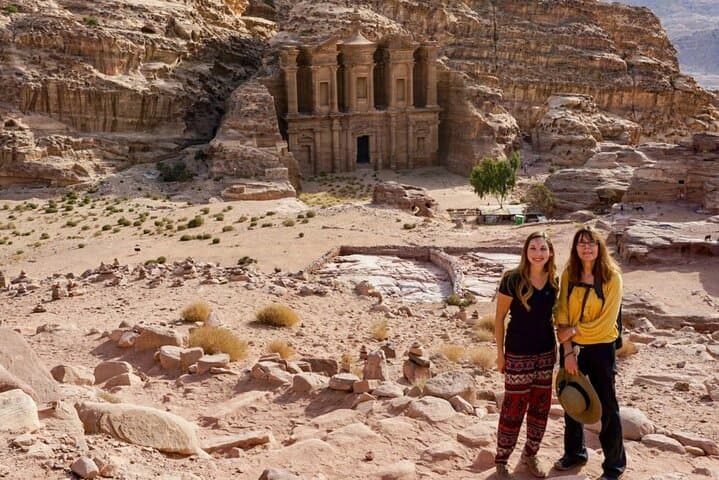
You leave Sharm El Sheikh before sunrise, the bus threading north toward the Taba ferry terminal while the Red Sea ripples to your right. A short ferry crossing deposits you in Aqaba; the road then opens into ochre desert and the rose-red ridges that guard Petra. By midday you step into the Siq—a narrow slot canyon that constrains light and sound—then emerge onto the famously carved façade of the Treasury, a stone face that has watched traders and travelers for two millennia.
You leave Sharm El Sheikh before sunrise, the bus threading north toward the Taba ferry terminal while the Red Sea ripples to your right. A short ferry crossing deposits you in Aqaba; the road then opens into ochre desert and the rose-red ridges that guard Petra. By midday you step into the Siq—a narrow slot canyon that constrains light and sound—then emerge onto the famously carved façade of the Treasury, a stone face that has watched traders and travelers for two millennia.
Petra was the Nabatean capital, a mercantile hub shaped by water engineering and rock-carving. The rose-hued sandstone shows layers of ancient seabeds and wind-polished surfaces; walking its streets is as much geology lesson as history tour. Local guides explain funerary customs, the Roman imprint of theaters and colonnades, and the Qasr al-Bint temple’s role in community life.
Practicalities shape the day: expect a long travel loop—roughly three hours by road to Taba, ferry time, then a drive to Petra—so the tour is a full 12-hour commitment. The site involves around 1.2 km through the Siq plus several kilometers of uneven paths and stone steps across terraces and tomb facades. Hydration, sun protection and steady footwear matter more than speed. Bring your passport for border procedures, allow time for customs, and plan for limited shade inside the monument.
This trip pairs dramatic archaeology with desert travel logistics—an intense, highly rewarding day that demands early starts, simple preparation and respect for a fragile World Heritage site.