THE ADVENTURE COLLECTIVE® · Independent discovery and booking for outdoor travel

Travel from Amman to Petra in a single day to walk the Siq, stand before the Treasury, climb to the Monastery and explore Roman-era remains. This private eight-hour tour pairs dramatic scenery with practical logistics for a compact, full-day archaeological adventure.
Travel from Amman to Petra in a single day to walk the Siq, stand before the Treasury, climb to the Monastery and explore Roman-era remains. This private eight-hour tour pairs dramatic scenery with practical logistics for a compact, full-day archaeological adventure.
A cool dawn light spills onto red sandstone as the road from Amman unwinds toward the Rift Valley; the bus eases into Wadi Musa and the canyon mouth narrows. You step from the visitor center, the Siq’s towering walls funneling you toward the Treasury — a carved façade that will make you stop, look up and measure your breath against the stone.
Verified experiences and guided adventures in the surrounding area.
Operated by Oman Day Tours · Wadi Musa, Ma'an Governorate
A cool dawn light spills onto red sandstone as the road from Amman unwinds toward the Rift Valley; the bus eases into Wadi Musa and the canyon mouth narrows. You step from the visitor center, the Siq’s towering walls funneling you toward the Treasury — a carved façade that will make you stop, look up and measure your breath against the stone.
Petra was the capital of the Nabataean kingdom and a crossroads for incense and spice routes. Geologically the city lives in soft, banded sandstone—easily sculpted, repeatedly scarred by earthquakes—which explains both Petra’s delicate façades and the ruins scattered across its plateaus. Culture here is alive in Wadi Musa: Bedouin guides and local craftspeople keep traditions linked to the site’s Nabataean and Ottoman-era stories.
The tour moves at a steady pace—horse or walk through the Siq, time at the Treasury, a climb to the Monastery for a panoramic hold, then the Roman theater, temples and altar—as a private driver returns you to Amman the same day.
Practicalities: expect dusty trails, carved steps and uneven surfaces; wear broken-in shoes, carry sun protection and 1–2 liters of water. Timing matters—arrive early to avoid the mid-day heat and most crowds. Respect restricted areas, follow your guide’s route, and leave no trace on the fragile sandstone. With a bit of planning, an eight-hour trip turns into a clear, unforgettable encounter with one of the region’s great archaeological landscapes.
moderate.
8 hours.
Light to moderate fitness — able to walk on uneven ground and climb several flights of carved steps over the day.
The drive is typically about 2.5 to 3 hours each way, depending on traffic and your pickup location in Amman.
Petra’s main routes are accessible for most ages but expect uneven surfaces and some steep climbs; private tours can adapt pace and provide vehicle support for limited mobility.
This tour description lists national park fees as included; verify at booking that Jordan’s Petra entry fee is covered in your package.
Short horse rides from the visitor center through the Siq are commonly offered, but quality and pricing vary—confirm availability and welfare standards with the operator.
Petra served as the Nabataean capital from around the 4th century BCE and grew wealthy as a caravan hub controlling incense and spice routes; it later fell under Roman influence and was partially abandoned after earthquakes.
Petra’s soft sandstone and visitor pressure require careful management—stick to marked paths, avoid touching delicate façades, and follow local guides’ instructions to reduce erosion and impact.
Oman Day Tours operates guided outdoor trips and adventures with an emphasis on safety, stewardship, and memorable experiences.


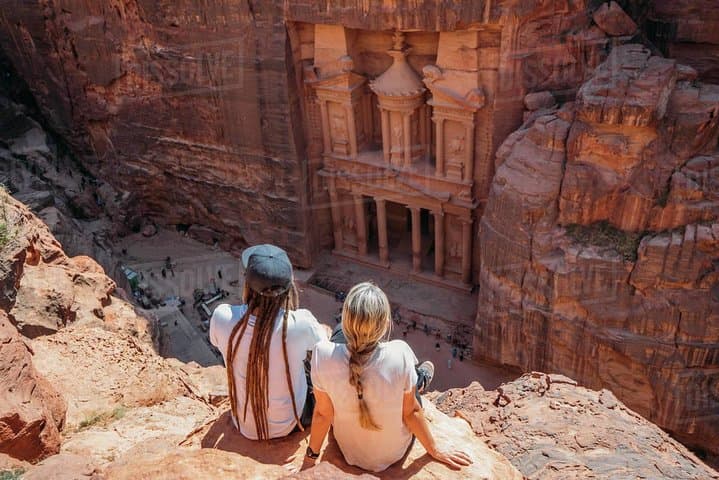

A cool dawn light spills onto red sandstone as the road from Amman unwinds toward the Rift Valley; the bus eases into Wadi Musa and the canyon mouth narrows. You step from the visitor center, the Siq’s towering walls funneling you toward the Treasury — a carved façade that will make you stop, look up and measure your breath against the stone.
A cool dawn light spills onto red sandstone as the road from Amman unwinds toward the Rift Valley; the bus eases into Wadi Musa and the canyon mouth narrows. You step from the visitor center, the Siq’s towering walls funneling you toward the Treasury — a carved façade that will make you stop, look up and measure your breath against the stone.
Petra was the capital of the Nabataean kingdom and a crossroads for incense and spice routes. Geologically the city lives in soft, banded sandstone—easily sculpted, repeatedly scarred by earthquakes—which explains both Petra’s delicate façades and the ruins scattered across its plateaus. Culture here is alive in Wadi Musa: Bedouin guides and local craftspeople keep traditions linked to the site’s Nabataean and Ottoman-era stories.
The tour moves at a steady pace—horse or walk through the Siq, time at the Treasury, a climb to the Monastery for a panoramic hold, then the Roman theater, temples and altar—as a private driver returns you to Amman the same day.
Practicalities: expect dusty trails, carved steps and uneven surfaces; wear broken-in shoes, carry sun protection and 1–2 liters of water. Timing matters—arrive early to avoid the mid-day heat and most crowds. Respect restricted areas, follow your guide’s route, and leave no trace on the fragile sandstone. With a bit of planning, an eight-hour trip turns into a clear, unforgettable encounter with one of the region’s great archaeological landscapes.