THE ADVENTURE COLLECTIVE® · Independent discovery and booking for outdoor travel

Make Petra in a day from Amman with private round-trip transfers and about six hours to explore the Siq, the Treasury and the ascent to the Monastery. This practical guide outlines what to expect on terrain, timing, and local logistics for a focused Petra visit.
Make Petra in a day from Amman with private round-trip transfers and about six hours to explore the Siq, the Treasury and the ascent to the Monastery. This practical guide outlines what to expect on terrain, timing, and local logistics for a focused Petra visit.
The morning drive from Amman unfurls a raw desert horizon; the road eases and the distant rose-red cliffs of Petra rise like a city cut out of stone. Visitors stepping from an air-conditioned sedan enter the Siq — a narrow, winding gorge of polished sandstone that funnels into the sudden reveal of Al-Khazneh (the Treasury). The slot canyon hums with history, and the Treasury’s façade stands like a carved gateway through time.
Verified experiences and guided adventures in the surrounding area.
Operated by Jordan Private Tours and Travel · Wadi Musa, Ma'an Governorate
The morning drive from Amman unfurls a raw desert horizon; the road eases and the distant rose-red cliffs of Petra rise like a city cut out of stone. Visitors stepping from an air-conditioned sedan enter the Siq — a narrow, winding gorge of polished sandstone that funnels into the sudden reveal of Al-Khazneh (the Treasury). The slot canyon hums with history, and the Treasury’s façade stands like a carved gateway through time.
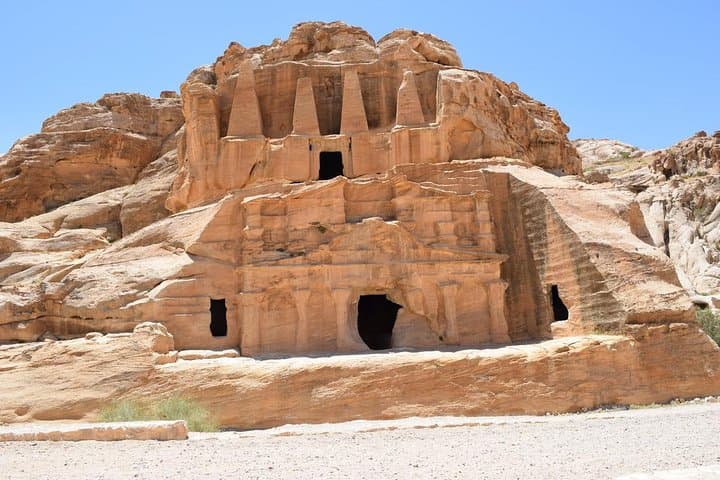
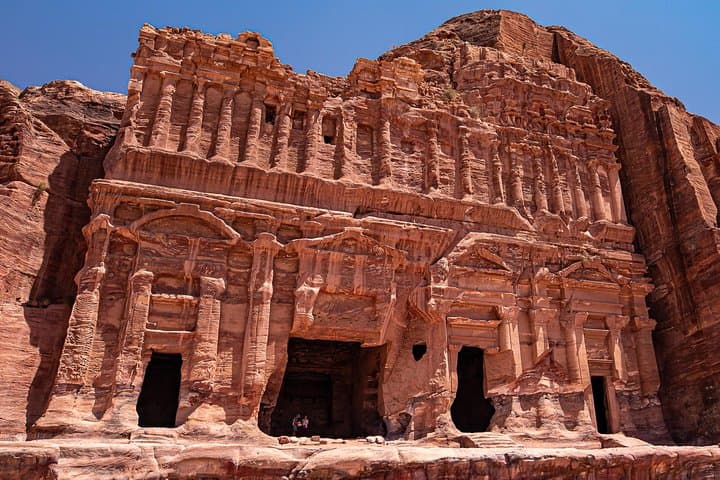
Petra was the Nabatean capital from the 4th century BCE, built into Cambrian sandstone that shows layers of red, pink and ochre. Over centuries the city’s water channels, tombs and façades have weathered wind and flash floods; cultural preservation and Jordanian stewardship keep access regulated today. Local culture in Wadi Musa reflects Bedouin hospitality—tea, guide services and mule handlers remain part of the visitor economy.
Practically, expect paved and packed-sand trails, uneven stone steps and steep switchbacks to the Monastery (Al-Deir), which requires a climb of several hundred steps and 200–300 m of elevation gain from the main square. A typical private round-trip from Amman allocates about 6 hours inside Petra and a full day with driving time. Admission is handled separately from transfers; the tour provides pickup, drop-off, bottled water and an English-speaking driver in a modern vehicle.
Plan an early start for cooler temperatures and softer light on the stone, wear sturdy shoes, carry at least 2–3 liters of water, and allow time for slow, respectful exploration — the site rewards lingering at viewpoints and reading weathered inscriptions as much as rushing from sight to sight.
moderate.
10–12 hours (≈6 hours in Petra).
Should be comfortable walking up to several miles on uneven ground, and able to climb several hundred steps.
No — entrance tickets to Petra are usually purchased separately at the site or online; the transfer arranges transport only unless explicitly stated otherwise.
The drive typically takes about 3 to 3.5 hours each way depending on traffic and route, making it a full-day trip from Amman.
Basic facilities and refreshment stalls exist near the Visitor Centre and at key points like the Basin and near the Treasury, though options are limited compared with a city; bring snacks and water.
Many routes through Petra are manageable for families, but the climb to the Monastery is strenuous; consider using mules, limiting distance, and pacing visits for those with limited mobility.
Petra served as the Nabatean kingdom’s capital and trade hub from the 4th century BCE, famed for its rock-cut architecture and hydraulic engineering.
Sandstone is fragile: stay on marked paths, avoid leaning on façades and support local guides and preservation fees that fund conservation efforts.
Jordan Private Tours and Travel operates guided outdoor trips and adventures with an emphasis on safety, stewardship, and memorable experiences.
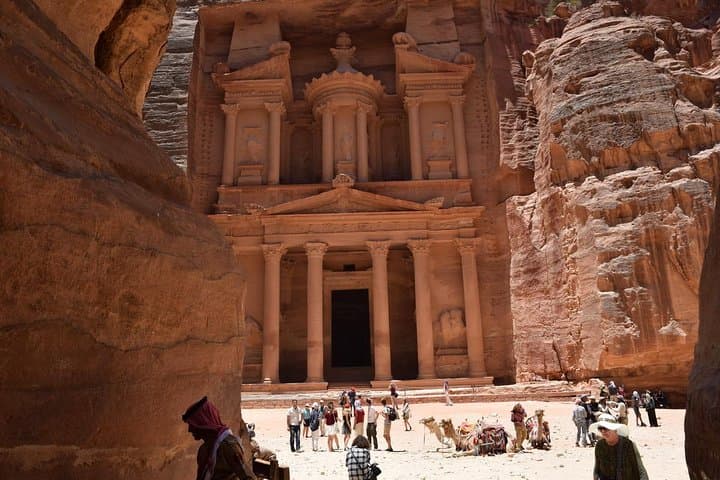
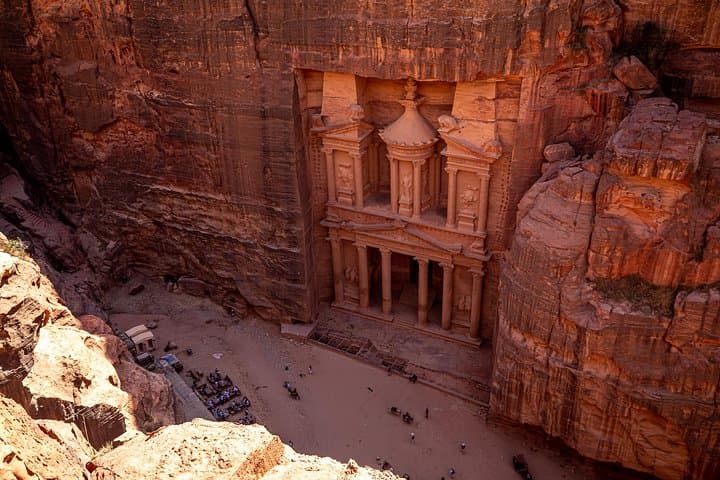
The morning drive from Amman unfurls a raw desert horizon; the road eases and the distant rose-red cliffs of Petra rise like a city cut out of stone. Visitors stepping from an air-conditioned sedan enter the Siq — a narrow, winding gorge of polished sandstone that funnels into the sudden reveal of Al-Khazneh (the Treasury). The slot canyon hums with history, and the Treasury’s façade stands like a carved gateway through time.
The morning drive from Amman unfurls a raw desert horizon; the road eases and the distant rose-red cliffs of Petra rise like a city cut out of stone. Visitors stepping from an air-conditioned sedan enter the Siq — a narrow, winding gorge of polished sandstone that funnels into the sudden reveal of Al-Khazneh (the Treasury). The slot canyon hums with history, and the Treasury’s façade stands like a carved gateway through time.
Petra was the Nabatean capital from the 4th century BCE, built into Cambrian sandstone that shows layers of red, pink and ochre. Over centuries the city’s water channels, tombs and façades have weathered wind and flash floods; cultural preservation and Jordanian stewardship keep access regulated today. Local culture in Wadi Musa reflects Bedouin hospitality—tea, guide services and mule handlers remain part of the visitor economy.
Practically, expect paved and packed-sand trails, uneven stone steps and steep switchbacks to the Monastery (Al-Deir), which requires a climb of several hundred steps and 200–300 m of elevation gain from the main square. A typical private round-trip from Amman allocates about 6 hours inside Petra and a full day with driving time. Admission is handled separately from transfers; the tour provides pickup, drop-off, bottled water and an English-speaking driver in a modern vehicle.
Plan an early start for cooler temperatures and softer light on the stone, wear sturdy shoes, carry at least 2–3 liters of water, and allow time for slow, respectful exploration — the site rewards lingering at viewpoints and reading weathered inscriptions as much as rushing from sight to sight.