THE ADVENTURE COLLECTIVE® · Independent discovery and booking for outdoor travel

Cross the Gulf of Aqaba by ferry and spend a full day walking into Petra’s rock-carved heart. This full-day excursion from Sharm El Sheikh blends a short sea voyage with a guided exploration of the Nabataean city’s Siq, Treasury and ancient streets.
Cross the Gulf of Aqaba by ferry and spend a full day walking into Petra’s rock-carved heart. This full-day excursion from Sharm El Sheikh blends a short sea voyage with a guided exploration of the Nabataean city’s Siq, Treasury and ancient streets.
You step onto the ferry as the Sinai cliffs shrink behind you and the Gulf of Aqaba opens, its surface daring you toward a different shore.
Verified experiences and guided adventures in the surrounding area.
Operated by Charming Egypt Tours · Wadi Musa, Ma'an Governorate
You step onto the ferry as the Sinai cliffs shrink behind you and the Gulf of Aqaba opens, its surface daring you toward a different shore.
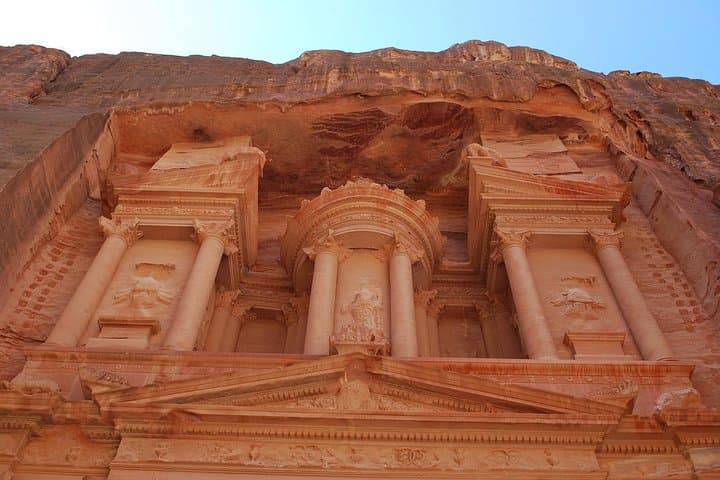
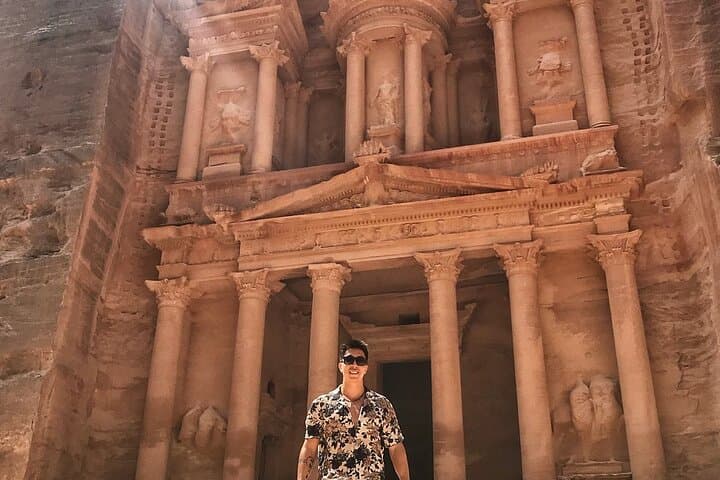
By midmorning you’re in Jordan’s Wadi Musa, the air carrying the dry mineral scent of sandstone. The approach to Petra begins with a horse or short walk to the Siq, a 1.2 km narrow canyon that funnels you between high rock walls until the Treasury appears — a carved façade that has watched over travelers for two millennia.
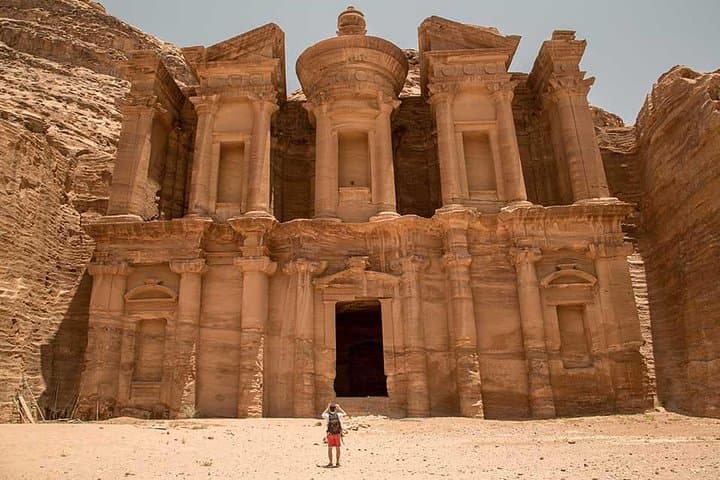
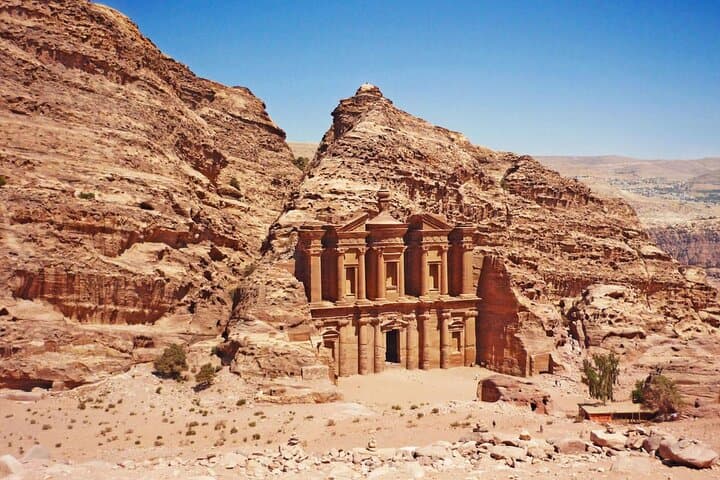
Petra was the capital of the Nabataeans, a desert trading people who carved whole streets, theatres and tombs into rose-red rock. Geologically, the city sits where Jurassic sandstone met tectonic uplift, creating banded cliffs and sheltered canyons. Culturally, the site blends Nabataean, Hellenistic and Roman influences; you’ll pass colonnaded streets, Roman theatres and royal tombs on foot.
Expect a long, active day: the trip from Sharm includes a 3–4 hour drive to Taba, a ferry crossing to Aqaba, and several hours exploring Petra with an English-speaking guide. Lunch is usually in a local restaurant in Wadi Musa.
Practical edge: carry your passport (border crossing required) and a refillable water bottle, wear supportive shoes for uneven stone and steps, and plan for sun and wind exposure. Early starts beat the heat and crowds; photography windows shift as light moves across the canyon walls. Stay on marked paths to protect fragile rock surfaces and respect local customs in Wadi Musa.
moderate.
12–14 hours.
Suitable for someone with good stamina for a long day of walking; expect uneven terrain and steps.
Visa requirements depend on your nationality; many travelers can obtain a visa on arrival at the Egyptian–Jordanian crossing but check current embassy guidance before travel.
Expect several hours on foot across uneven stone, steps and sand; the main Siq is 1.2 km and additional walking covers the Treasury, colonnaded street and tombs.
Yes—the ferry across the Gulf of Aqaba is part of the itinerary and operated regularly; operators use standard passenger ferries and staff will assist with boarding procedures.
Children can join but must be accompanied by an adult; the itinerary notes infant lap seating and that child rates apply under specific conditions.
Petra was the Nabataean capital and a major caravan crossroads; its carved façades, water channels and tombs reflect Nabataean engineering and later Roman influence.
Heavy visitation stresses fragile sandstone and archaeological surfaces—stay on marked paths, avoid touching carved faces, and support local conservation efforts and community-run services.
Charming Egypt Tours operates guided outdoor trips and adventures with an emphasis on safety, stewardship, and memorable experiences.
You step onto the ferry as the Sinai cliffs shrink behind you and the Gulf of Aqaba opens, its surface daring you toward a different shore.
You step onto the ferry as the Sinai cliffs shrink behind you and the Gulf of Aqaba opens, its surface daring you toward a different shore.
By midmorning you’re in Jordan’s Wadi Musa, the air carrying the dry mineral scent of sandstone. The approach to Petra begins with a horse or short walk to the Siq, a 1.2 km narrow canyon that funnels you between high rock walls until the Treasury appears — a carved façade that has watched over travelers for two millennia.
Petra was the capital of the Nabataeans, a desert trading people who carved whole streets, theatres and tombs into rose-red rock. Geologically, the city sits where Jurassic sandstone met tectonic uplift, creating banded cliffs and sheltered canyons. Culturally, the site blends Nabataean, Hellenistic and Roman influences; you’ll pass colonnaded streets, Roman theatres and royal tombs on foot.
Expect a long, active day: the trip from Sharm includes a 3–4 hour drive to Taba, a ferry crossing to Aqaba, and several hours exploring Petra with an English-speaking guide. Lunch is usually in a local restaurant in Wadi Musa.
Practical edge: carry your passport (border crossing required) and a refillable water bottle, wear supportive shoes for uneven stone and steps, and plan for sun and wind exposure. Early starts beat the heat and crowds; photography windows shift as light moves across the canyon walls. Stay on marked paths to protect fragile rock surfaces and respect local customs in Wadi Musa.