THE ADVENTURE COLLECTIVE® · Independent discovery and booking for outdoor travel

Set off from Amman on a 2.5‑hour drive to Petra and walk the Siq to the iconic Treasury, then climb to the Monastery and explore Roman-era ruins. This full-day private tour blends geology, Nabatean history and practical logistics for a single, memorable day.
Set off from Amman on a 2.5‑hour drive to Petra and walk the Siq to the iconic Treasury, then climb to the Monastery and explore Roman-era ruins. This full-day private tour blends geology, Nabatean history and practical logistics for a single, memorable day.
The day begins on a two-and-a-half-hour drive south from Amman, the highway opening onto the ochre folds of southern Jordan until the road drops into Wadi Musa and the stone city reveals itself.
Verified experiences and guided adventures in the surrounding area.
Operated by Oman Day Tours · Wadi Musa, Ma'an
The day begins on a two-and-a-half-hour drive south from Amman, the highway opening onto the ochre folds of southern Jordan until the road drops into Wadi Musa and the stone city reveals itself.
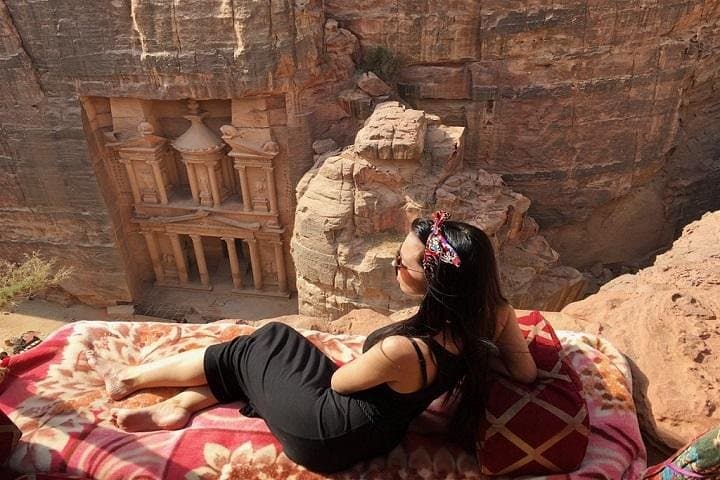
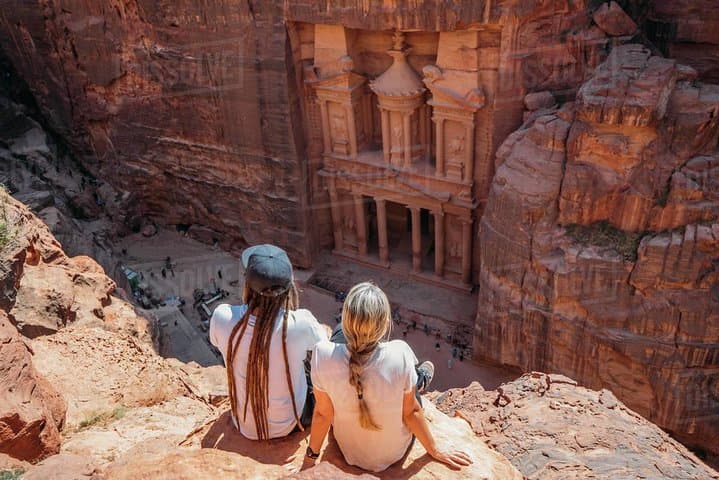
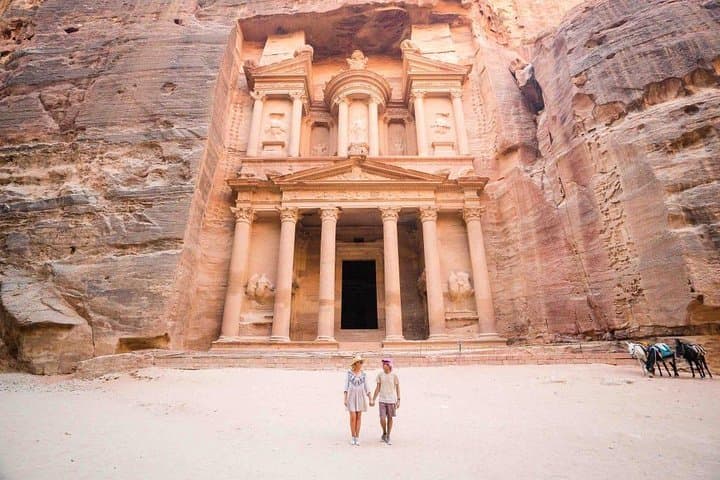
You enter Petra through the visitor center and pass into the Siq, a 1.2 km narrow cleft whose high walls funnel light and shadow toward the Treasury’s carved façade. Rocks here are not inert: the sandstone layers store the slow work of wind and water, and the gorge seems to push you forward until Al Khazneh appears—an exacting, weathered face hewn by Nabatean hands.
Petra’s story is multilayered: a Nabatean capital that controlled caravan routes, later Romanized with an amphitheater and temples, and marked by earthquakes that reshaped its urban fabric. Geology and culture converge—soft sandstone beds yield dramatic façades and fragile archaeological surfaces.
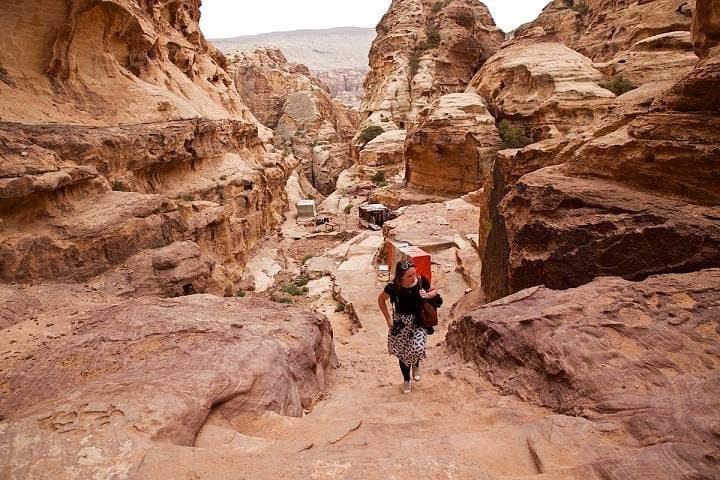
Expect varied terrain: flat, packed-sand walks through the Siq, uneven carved steps and terraces, and a steep climb of roughly 800 stone steps to reach the Monastery (Ad Deir). Altitude is around 1,000 m, with sun and wind that can change quickly.
Practical details: most day tours include round-trip private transfer, bottled water and national park fees; plan for an 8‑hour round trip from Amman. Start early to avoid midday heat, wear sturdy shoes for loose sand and stone steps, and bring sun protection and cash for local vendors and optional horse or donkey rides. Respect local dress norms and the archaeological site—stay on marked paths and pack out trash. The payoff is immediate: broad canyon views, intimate rock textures and architecture that reward both patience and a steady pace.
easy.
8 hours.
Suitable for travelers with average fitness; requires walking on uneven ground and stair climbs to reach key viewpoints.
Expect about 2.5 hours each way by car, depending on traffic and exact pickup location in Amman.
Some tours include a short horse ride from the visitor center to the Treasury; confirm with the operator—rides are optional and often staffed by independent providers.
This tour lists national park fees as included, but always verify before travel and keep your ticket for re-entry if needed.
Visits involve several kilometers of walking on packed sand, paved rock and stone steps; plan for uphill sections to reach the Monastery (roughly 800 steps).
Petra was the Nabatean capital and an important caravan hub; Romans later added civic structures such as the amphitheater and temples.
Petra’s soft sandstone is vulnerable to erosion and visitor impact—respect barriers, avoid touching fragile carvings and use designated paths to limit wear.
Oman Day Tours operates guided outdoor trips and adventures with an emphasis on safety, stewardship, and memorable experiences.
The day begins on a two-and-a-half-hour drive south from Amman, the highway opening onto the ochre folds of southern Jordan until the road drops into Wadi Musa and the stone city reveals itself.
The day begins on a two-and-a-half-hour drive south from Amman, the highway opening onto the ochre folds of southern Jordan until the road drops into Wadi Musa and the stone city reveals itself.
You enter Petra through the visitor center and pass into the Siq, a 1.2 km narrow cleft whose high walls funnel light and shadow toward the Treasury’s carved façade. Rocks here are not inert: the sandstone layers store the slow work of wind and water, and the gorge seems to push you forward until Al Khazneh appears—an exacting, weathered face hewn by Nabatean hands.
Petra’s story is multilayered: a Nabatean capital that controlled caravan routes, later Romanized with an amphitheater and temples, and marked by earthquakes that reshaped its urban fabric. Geology and culture converge—soft sandstone beds yield dramatic façades and fragile archaeological surfaces.
Expect varied terrain: flat, packed-sand walks through the Siq, uneven carved steps and terraces, and a steep climb of roughly 800 stone steps to reach the Monastery (Ad Deir). Altitude is around 1,000 m, with sun and wind that can change quickly.
Practical details: most day tours include round-trip private transfer, bottled water and national park fees; plan for an 8‑hour round trip from Amman. Start early to avoid midday heat, wear sturdy shoes for loose sand and stone steps, and bring sun protection and cash for local vendors and optional horse or donkey rides. Respect local dress norms and the archaeological site—stay on marked paths and pack out trash. The payoff is immediate: broad canyon views, intimate rock textures and architecture that reward both patience and a steady pace.