THE ADVENTURE COLLECTIVE® · Independent discovery and booking for outdoor travel

Spend a single, expansive day moving from Petra’s rock-carved canyons to Wadi Rum’s wind-sculpted dunes. This private tour from Amman (or the Dead Sea) pairs close-up archaeology with a sunset desert safari and practical, all-day logistics.
Spend a single, expansive day moving from Petra’s rock-carved canyons to Wadi Rum’s wind-sculpted dunes. This private tour from Amman (or the Dead Sea) pairs close-up archaeology with a sunset desert safari and practical, all-day logistics.
You step off the van where stone gives way to a slit of shadow: the Siq, a throat of rose-red sandstone that funnels you toward Petra’s carved heart. The air smells of dust and history; your guide’s voice threads facts into the hush. Hours later, after the Treasury’s façade has sank into your memory, the road opens and the landscape changes—sharp cliffs morph into vast dunes and wind-sculpted mesas of Wadi Rum, where a jeep cuts through sand and the sky unfurls like an ocean.
Verified experiences and guided adventures in the surrounding area.
Operated by Alamal Travel &Tourism · Petra, Ma'an Governorate
You step off the van where stone gives way to a slit of shadow: the Siq, a throat of rose-red sandstone that funnels you toward Petra’s carved heart. The air smells of dust and history; your guide’s voice threads facts into the hush. Hours later, after the Treasury’s façade has sank into your memory, the road opens and the landscape changes—sharp cliffs morph into vast dunes and wind-sculpted mesas of Wadi Rum, where a jeep cuts through sand and the sky unfurls like an ocean.
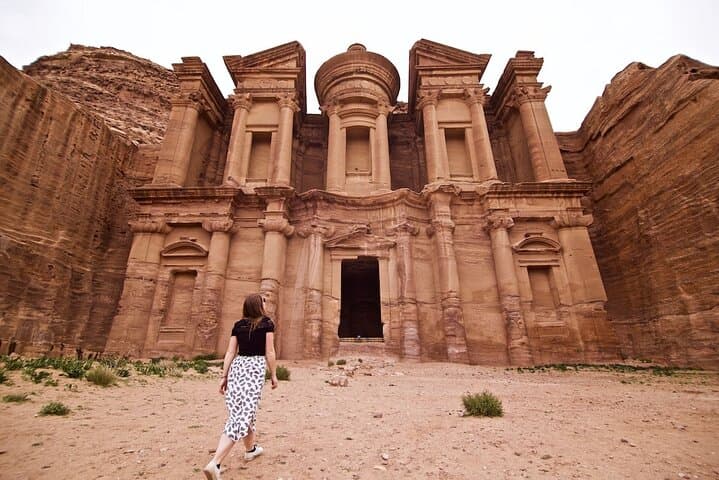
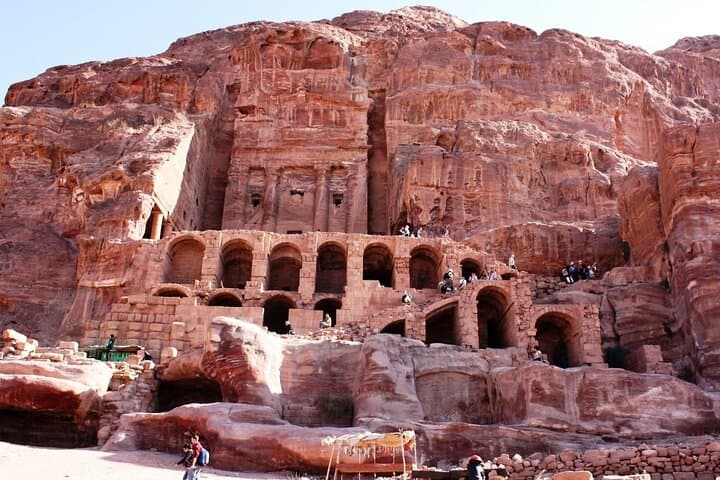
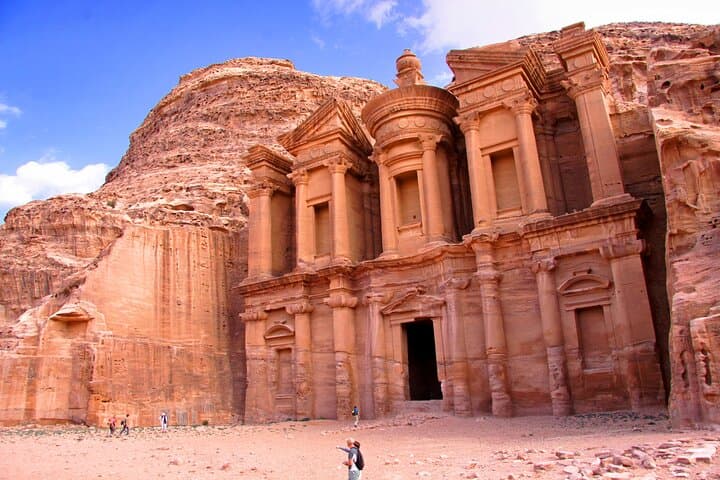
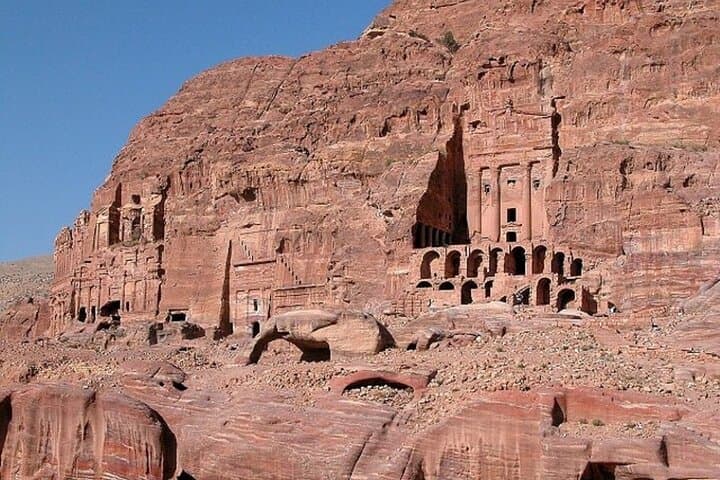
This private day tour stitches two of Jordan’s headline sights into one long day. Petra, the Nabatean city hewn into sandstone cliffs beginning around the 4th century BCE, is both archaeological site and geological classroom: layers of sedimentary rock painted in iron reds and ochres, folded and weathered into ornate façades. The Siq is a natural fault, the Treasury a masterclass in rock-cut architecture. Wadi Rum, by contrast, is a desert of sandstone and granite shaped by wind and rare rains—a lunar landscape where Bedouin camps and petroglyphs speak to millennia of human movement across the dunes.
Culturally, these places are active: local Bedouin still guide and host in Wadi Rum, and Petra’s tourism supports small workshops and cafes in nearby Wadi Musa. The drive from Amman or the Dead Sea follows the Desert Highway or the scenic King’s Highway—expect 3–4 hours to Petra depending on route and traffic, then a further 1–2 hours to Wadi Rum.
Practical edge: this is a long day (roughly 12–14 hours), so plan for stamina rather than technical difficulty. Most of Petra’s highlights require walking over uneven stone—Siq to Treasury is about 1.2 km—and optional side climbs to viewpoints or the Monastery add steeper sections. Wadi Rum’s jeep safari is easy on the legs but exposes you to sun and sand.
Pack water (more than you think), sun protection, sturdy footwear with good grip, and layers for desert night temps that drop quickly after sunset. If you want entry tickets handled, choose the option that includes them—otherwise buy at the gate. Bring local cash for small purchases and gratuities; Wi‑Fi may be available on the vehicle, but cell service is patchy once you leave highways.
For photographers: sunrise through the Siq and the golden hour over Wadi Rum are unbeatable. For culture: ask guides about Bedouin life and inquire at local stalls for authentic snacks. This tour is private and flexible—use that to pace your time at Petra so you can still catch Wadi Rum’s desert sunset without rushing.
moderate.
12–14 hours.
Suitable for travelers with good endurance for all-day walking and short climbs; not technical but expect uneven terrain and long transfers.
Entry tickets are included only if you select that option when booking; otherwise plan to purchase at Petra’s ticket office in Wadi Musa.
Expect 3–4 hours to Petra from Amman depending on route and traffic; the Dead Sea adds variable time—your itinerary lists total tour time around 12–14 hours.
Yes—this listing is for a private tour with an English-speaking driver; guides at sites may be local specialists arranged as needed.
Only bottled water and on-board amenities are listed; bring snacks or plan to buy food in Wadi Musa, where restaurants and cafes are available.
Yes—infant seats are available and the tour is described as suitable for all fitness levels, but it’s a long day so consider children’s tolerance for extended travel and walking.
Wadi Rum’s jeep drives are accessible for most, but Petra’s narrow Siq and uneven surfaces can be challenging—contact the operator for specific mobility accommodations.
Petra was the capital of the Nabatean kingdom from roughly the 4th century BCE; trade routes funneled spices and goods through its high-traffic caravan corridors.
Both Petra and Wadi Rum face wear from heavy visitation; support local guides, avoid climbing fragile façades, and follow Leave No Trace principles to reduce impact.
Alamal Travel &Tourism operates guided outdoor trips and adventures with an emphasis on safety, stewardship, and memorable experiences.
You step off the van where stone gives way to a slit of shadow: the Siq, a throat of rose-red sandstone that funnels you toward Petra’s carved heart. The air smells of dust and history; your guide’s voice threads facts into the hush. Hours later, after the Treasury’s façade has sank into your memory, the road opens and the landscape changes—sharp cliffs morph into vast dunes and wind-sculpted mesas of Wadi Rum, where a jeep cuts through sand and the sky unfurls like an ocean.
You step off the van where stone gives way to a slit of shadow: the Siq, a throat of rose-red sandstone that funnels you toward Petra’s carved heart. The air smells of dust and history; your guide’s voice threads facts into the hush. Hours later, after the Treasury’s façade has sank into your memory, the road opens and the landscape changes—sharp cliffs morph into vast dunes and wind-sculpted mesas of Wadi Rum, where a jeep cuts through sand and the sky unfurls like an ocean.
This private day tour stitches two of Jordan’s headline sights into one long day. Petra, the Nabatean city hewn into sandstone cliffs beginning around the 4th century BCE, is both archaeological site and geological classroom: layers of sedimentary rock painted in iron reds and ochres, folded and weathered into ornate façades. The Siq is a natural fault, the Treasury a masterclass in rock-cut architecture. Wadi Rum, by contrast, is a desert of sandstone and granite shaped by wind and rare rains—a lunar landscape where Bedouin camps and petroglyphs speak to millennia of human movement across the dunes.
Culturally, these places are active: local Bedouin still guide and host in Wadi Rum, and Petra’s tourism supports small workshops and cafes in nearby Wadi Musa. The drive from Amman or the Dead Sea follows the Desert Highway or the scenic King’s Highway—expect 3–4 hours to Petra depending on route and traffic, then a further 1–2 hours to Wadi Rum.
Practical edge: this is a long day (roughly 12–14 hours), so plan for stamina rather than technical difficulty. Most of Petra’s highlights require walking over uneven stone—Siq to Treasury is about 1.2 km—and optional side climbs to viewpoints or the Monastery add steeper sections. Wadi Rum’s jeep safari is easy on the legs but exposes you to sun and sand.
Pack water (more than you think), sun protection, sturdy footwear with good grip, and layers for desert night temps that drop quickly after sunset. If you want entry tickets handled, choose the option that includes them—otherwise buy at the gate. Bring local cash for small purchases and gratuities; Wi‑Fi may be available on the vehicle, but cell service is patchy once you leave highways.
For photographers: sunrise through the Siq and the golden hour over Wadi Rum are unbeatable. For culture: ask guides about Bedouin life and inquire at local stalls for authentic snacks. This tour is private and flexible—use that to pace your time at Petra so you can still catch Wadi Rum’s desert sunset without rushing.