THE ADVENTURE COLLECTIVE® · Independent discovery and booking for outdoor travel

See two of Jordan’s most iconic landscapes in a single, action-packed day. This private tour moves from Petra’s rose-red canyons to Wadi Rum’s wind-sculpted dunes, balancing history, geology and practical tips for a 9–15 hour adventure.
See two of Jordan’s most iconic landscapes in a single, action-packed day. This private tour moves from Petra’s rose-red canyons to Wadi Rum’s wind-sculpted dunes, balancing history, geology and practical tips for a 9–15 hour adventure.
You wake before dawn as the van eases out of Amman, the city lights shrinking behind you and the Transjordanian desert stretching ahead — a brown, folded plain that will become red and gold by afternoon. The road eats miles fast; drivers here are practiced at long days. By midmorning you arrive at Petra’s mouth, the Siq’s throat narrowing into a ribbon of shadow where sandstone walls lean in to whisper secrets older than empires.
Verified experiences and guided adventures in the surrounding area.
Operated by Elite Tours · Wadi Musa, Ma'an Governorate
You wake before dawn as the van eases out of Amman, the city lights shrinking behind you and the Transjordanian desert stretching ahead — a brown, folded plain that will become red and gold by afternoon. The road eats miles fast; drivers here are practiced at long days. By midmorning you arrive at Petra’s mouth, the Siq’s throat narrowing into a ribbon of shadow where sandstone walls lean in to whisper secrets older than empires.
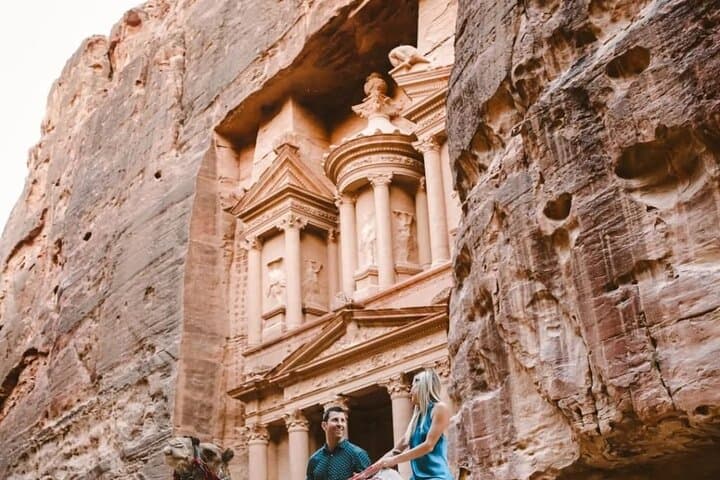
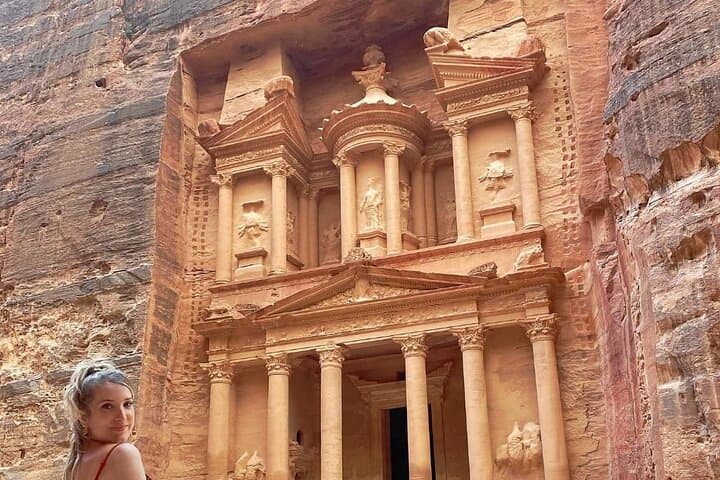
Entering the Siq is cinematic. Light filters through a slot canyon and then, suddenly, the Treasury (Al-Khazneh) opens like a stage set — a carved facade bleeding pink into sunlight. The itinerary moves at a steady, private-visitor pace: walk or ride down to the Siq’s entrance, follow the Street of Facades, climb to the Roman Theater and thread up to the Royal Tombs. Expect stairs, loose rock, and stretches of level walking; a local guide will parse Nabataean history, the city’s water-harvesting feats, and how 19th-century explorers reintroduced Petra to the world.
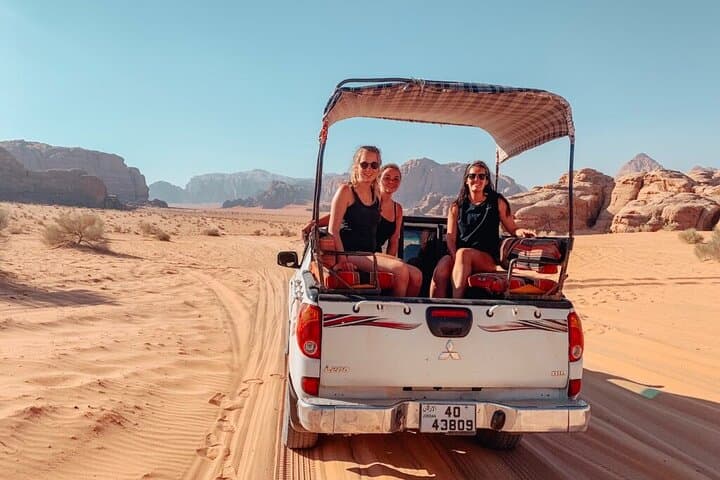
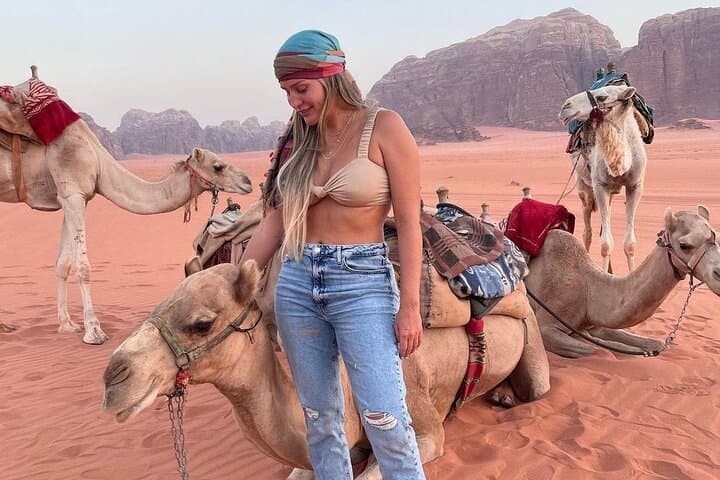
The day’s second act is Wadi Rum, a low mountain range and desert basin where wind and water have sculpted sandstone and granite into towers, bridges and endless dunes. Geologically, Wadi Rum records Cambrian sandstone layered over older rocks; erosion has softened the lines until the landscape seems to breathe. Bedouin culture is part of the route: guides often lead short walks to rock inscriptions and natural arches, and you’ll pass small camps where tea is offered with customary hospitality.
Practical realities matter: this is a long day — plan for 9–15 hours on the road and on foot. Petra and Wadi Rum have separate entry fees (Jordan Pass can bundle Petra if purchased before arrival). Wear comfortable walking shoes with a good tread, carry 1.5–2 liters of water minimum, and layer for wide temperature swings — the desert’s noon heat can be intense but nights and canyon shadows run cool.
Timing is everything. Start early at Petra to avoid the hottest light and the midday crowds, and save Wadi Rum for late afternoon when the rock warms to orange and the sunset broadens the horizon. If you’re shooting photos, the Treasury glows at sunrise and late afternoon; Wadi Rum’s dunes silhouette best at golden hour. Respect local customs: dress modestly, ask before photographing people, and leave no trace — these sites weather slowly under pressure, and visitor decisions matter.
A private tour compresses two world-class places into a single, memorable day. It’s not a gentle postcard trip — it’s a full-tilt encounter with Nabataean ruins, desert geology, and Bedouin landscapes that both dare and reward the traveler who’s willing to rise early and keep going.
moderate.
9–15 hours.
Comfortable walking fitness with ability to climb stairs and hike on uneven, sandy terrain; prepare for long vehicle transfers.
No; admission fees are not included. Buying a Jordan Pass before arrival can cover Petra’s entry and streamline border formalities.
Expect roughly 3 hours from Amman to Petra and about 1.5 hours from Petra to Wadi Rum, depending on traffic and stops.
Short donkey or horse rides to Petra’s Siq entrance and camel or jeep rides in Wadi Rum are available locally for an additional fee; check accessibility and animal welfare standards.
Yes—this private option accommodates varying fitness levels, but Petra includes significant walking and stairs; notify operator of mobility needs in advance.
Meals are typically not included—pack snacks or ask your operator to arrange lunch; Wadi Rum has simple Bedouin dining options if time allows.
Yes; as a private tour it’s flexible—discuss timings, pick-up points and specific interests with your guide when booking.
Petra was the Nabataean capital and a sophisticated water-harvesting city; Wadi Rum features millennia of rock art and was a staging ground in the Arab Revolt (Lawrence of Arabia).
Both sites are sensitive to erosion and tourist pressure—follow marked paths, minimize waste, and support local Bedouin-run services to ensure community benefit.
Elite Tours operates guided outdoor trips and adventures with an emphasis on safety, stewardship, and memorable experiences.
You wake before dawn as the van eases out of Amman, the city lights shrinking behind you and the Transjordanian desert stretching ahead — a brown, folded plain that will become red and gold by afternoon. The road eats miles fast; drivers here are practiced at long days. By midmorning you arrive at Petra’s mouth, the Siq’s throat narrowing into a ribbon of shadow where sandstone walls lean in to whisper secrets older than empires.
You wake before dawn as the van eases out of Amman, the city lights shrinking behind you and the Transjordanian desert stretching ahead — a brown, folded plain that will become red and gold by afternoon. The road eats miles fast; drivers here are practiced at long days. By midmorning you arrive at Petra’s mouth, the Siq’s throat narrowing into a ribbon of shadow where sandstone walls lean in to whisper secrets older than empires.
Entering the Siq is cinematic. Light filters through a slot canyon and then, suddenly, the Treasury (Al-Khazneh) opens like a stage set — a carved facade bleeding pink into sunlight. The itinerary moves at a steady, private-visitor pace: walk or ride down to the Siq’s entrance, follow the Street of Facades, climb to the Roman Theater and thread up to the Royal Tombs. Expect stairs, loose rock, and stretches of level walking; a local guide will parse Nabataean history, the city’s water-harvesting feats, and how 19th-century explorers reintroduced Petra to the world.
The day’s second act is Wadi Rum, a low mountain range and desert basin where wind and water have sculpted sandstone and granite into towers, bridges and endless dunes. Geologically, Wadi Rum records Cambrian sandstone layered over older rocks; erosion has softened the lines until the landscape seems to breathe. Bedouin culture is part of the route: guides often lead short walks to rock inscriptions and natural arches, and you’ll pass small camps where tea is offered with customary hospitality.
Practical realities matter: this is a long day — plan for 9–15 hours on the road and on foot. Petra and Wadi Rum have separate entry fees (Jordan Pass can bundle Petra if purchased before arrival). Wear comfortable walking shoes with a good tread, carry 1.5–2 liters of water minimum, and layer for wide temperature swings — the desert’s noon heat can be intense but nights and canyon shadows run cool.
Timing is everything. Start early at Petra to avoid the hottest light and the midday crowds, and save Wadi Rum for late afternoon when the rock warms to orange and the sunset broadens the horizon. If you’re shooting photos, the Treasury glows at sunrise and late afternoon; Wadi Rum’s dunes silhouette best at golden hour. Respect local customs: dress modestly, ask before photographing people, and leave no trace — these sites weather slowly under pressure, and visitor decisions matter.
A private tour compresses two world-class places into a single, memorable day. It’s not a gentle postcard trip — it’s a full-tilt encounter with Nabataean ruins, desert geology, and Bedouin landscapes that both dare and reward the traveler who’s willing to rise early and keep going.