THE ADVENTURE COLLECTIVE® · Independent discovery and booking for outdoor travel

Walk the Siq to Petra’s Treasury by morning light, sleep beneath Wadi Rum’s stars by night. This three-day private tour pairs Nabataean ruins, desert 4x4s and Bedouin hospitality for travelers who want immersive access without group constraints.
Walk the Siq to Petra’s Treasury by morning light, sleep beneath Wadi Rum’s stars by night. This three-day private tour pairs Nabataean ruins, desert 4x4s and Bedouin hospitality for travelers who want immersive access without group constraints.
You step out of the air-conditioned van as the sun tilts toward sandstone — a ribbon of red and gold—and the Siq yawns open before you. The canyon narrows, light slicing the walls, and the world outside the rock feels as if it’s been left behind. By the time the Treasury appears, carved into the cliff face and framed by the Siq’s mouth, most visitors quiet down; the place makes a sound of its own.
Verified experiences and guided adventures in the surrounding area.
Operated by Tour Experts · Wadi Musa, Ma'an Governorate
You step out of the air-conditioned van as the sun tilts toward sandstone — a ribbon of red and gold—and the Siq yawns open before you. The canyon narrows, light slicing the walls, and the world outside the rock feels as if it’s been left behind. By the time the Treasury appears, carved into the cliff face and framed by the Siq’s mouth, most visitors quiet down; the place makes a sound of its own.
This three-day private tour moves at a practical, deliberate pace: 3 hours south from Amman (roughly 230 km) to Petra, a half-day to explore the site on day one, an afternoon transfer to Wadi Rum on day two, an overnight in a Bedouin-style camp, and a morning 4x4 sweep of the desert before the drive back to Amman or Queen Alia International Airport. Petra’s main route into the city follows the Siq (about 1.2 km) to the Treasury; from the Treasury, expect an uphill walk to the Royal Tombs and, if you push on, roughly 800 stone steps and a 200–300 m elevation gain to reach the Monastery.
Petra was the Nabataean capital, a trade crossroads where hydraulic engineering and sandstone carving met to produce facades and tombs that have survived wind and time. Wadi Rum, a short 1.5–2 hour drive from Petra, is a different language of geology: Cambrian sandstone and granite folded into towering ridges, natural bridges and dunes that shift underfoot and glow at sunset. Both places carry Bedouin culture actively present in local camps and guides; the desert’s hospitality is a key part of the overnight scene.
Practicalities matter here. Petra entry and certain permits are not included in this tour; purchase a Jordan Pass before travel if you plan independent arrivals to streamline entry fees and skip separate visa costs. Wear broken-in hiking shoes for the rocky, uneven paths in Petra and closed-toe shoes for Wadi Rum’s dunes. Temperatures swing—clear nights in the desert can drop sharply—so pack layers. Hydrate aggressively: bottled water is provided on the tour, but bring a reusable bottle to refill.
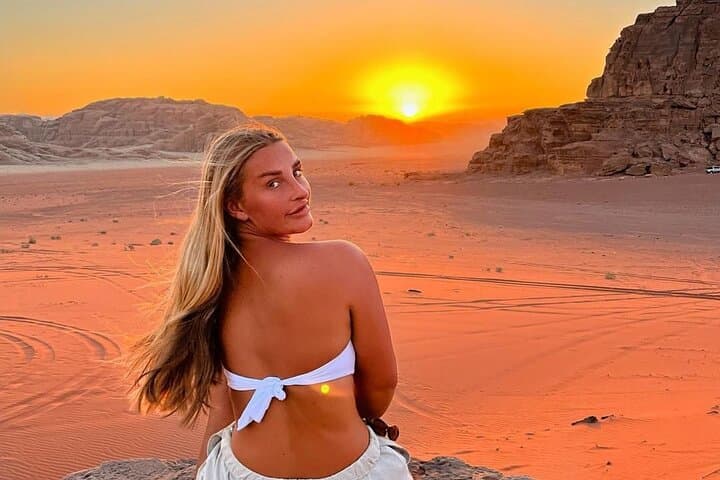
Timing changes the experience. Early mornings deliver quieter pockets in Petra; late afternoons flood the canyon with warm side-light that photographers prize. In Wadi Rum, aim for the golden hour on a dune or beside a rock arch; the desert’s shadows lengthen dramatically.
This private itinerary is ideal for travelers who want guided context without rigid group pacing: you get an English-speaking driver, private transport, two breakfasts and two dinners, and a desert night under Bedouin skies. Expect walking over uneven ground, moderate climbs and long stretches inside an open-air landscape that alternately nudges and absorbs you. With a bit of planning—Jordan Pass, sturdy shoes, layered clothing—you’ll move between empire-carved stone and open desert in a compact, memorable three days.
moderate.
3 days.
Moderate fitness recommended—able to walk 3–6 miles over uneven terrain and climb several hundred stone steps.
No—Petra admission is not included. Buying the Jordan Pass in advance can simplify entry fees and your visa if applicable.
Expect roughly 3 hours (about 230 km) by private vehicle depending on traffic and your pickup point.
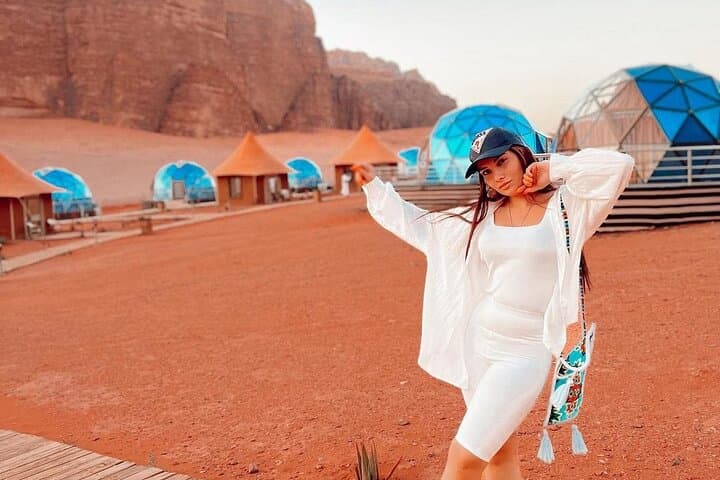
Camps range from basic Bedouin tents to luxury options; most provide mattresses, shared/showers, and a traditional dinner—check your booking choice for specific amenities.
The operator notes wheelchair-accessible options for transport, but access within Petra involves uneven, stepped terrain; discuss mobility needs when booking.
Two breakfasts and two dinners are included; bottled water and an English-speaking driver are provided as part of the package.
Spring and fall offer milder daytime temperatures and comfortable nights; winter brings cooler weather and occasional rain, while summer can be very hot in the desert.
Petra was the Nabataean capital and a crucial caravan hub in antiquity; its rock-cut architecture and water-management systems made it a wealthy, strategic city.
Visitors are urged to stick to marked paths, avoid touching fragile carved surfaces and limit single-use plastics; many camps work with local communities to manage waste and water use.
Tour Experts operates guided outdoor trips and adventures with an emphasis on safety, stewardship, and memorable experiences.
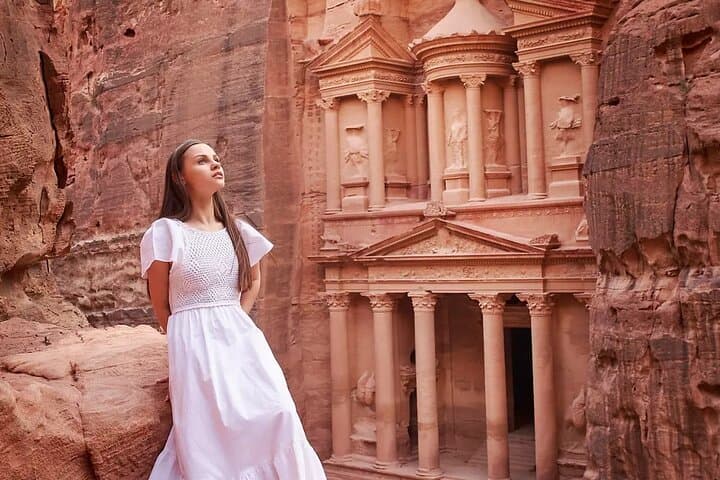
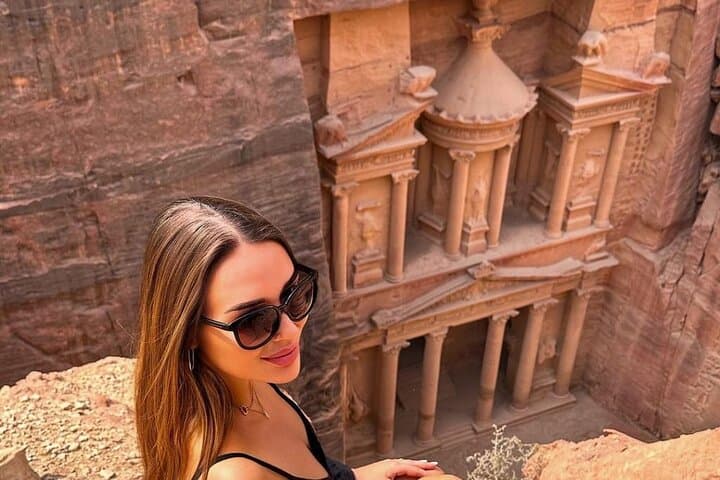
You step out of the air-conditioned van as the sun tilts toward sandstone — a ribbon of red and gold—and the Siq yawns open before you. The canyon narrows, light slicing the walls, and the world outside the rock feels as if it’s been left behind. By the time the Treasury appears, carved into the cliff face and framed by the Siq’s mouth, most visitors quiet down; the place makes a sound of its own.
You step out of the air-conditioned van as the sun tilts toward sandstone — a ribbon of red and gold—and the Siq yawns open before you. The canyon narrows, light slicing the walls, and the world outside the rock feels as if it’s been left behind. By the time the Treasury appears, carved into the cliff face and framed by the Siq’s mouth, most visitors quiet down; the place makes a sound of its own.
This three-day private tour moves at a practical, deliberate pace: 3 hours south from Amman (roughly 230 km) to Petra, a half-day to explore the site on day one, an afternoon transfer to Wadi Rum on day two, an overnight in a Bedouin-style camp, and a morning 4x4 sweep of the desert before the drive back to Amman or Queen Alia International Airport. Petra’s main route into the city follows the Siq (about 1.2 km) to the Treasury; from the Treasury, expect an uphill walk to the Royal Tombs and, if you push on, roughly 800 stone steps and a 200–300 m elevation gain to reach the Monastery.
Petra was the Nabataean capital, a trade crossroads where hydraulic engineering and sandstone carving met to produce facades and tombs that have survived wind and time. Wadi Rum, a short 1.5–2 hour drive from Petra, is a different language of geology: Cambrian sandstone and granite folded into towering ridges, natural bridges and dunes that shift underfoot and glow at sunset. Both places carry Bedouin culture actively present in local camps and guides; the desert’s hospitality is a key part of the overnight scene.
Practicalities matter here. Petra entry and certain permits are not included in this tour; purchase a Jordan Pass before travel if you plan independent arrivals to streamline entry fees and skip separate visa costs. Wear broken-in hiking shoes for the rocky, uneven paths in Petra and closed-toe shoes for Wadi Rum’s dunes. Temperatures swing—clear nights in the desert can drop sharply—so pack layers. Hydrate aggressively: bottled water is provided on the tour, but bring a reusable bottle to refill.
Timing changes the experience. Early mornings deliver quieter pockets in Petra; late afternoons flood the canyon with warm side-light that photographers prize. In Wadi Rum, aim for the golden hour on a dune or beside a rock arch; the desert’s shadows lengthen dramatically.
This private itinerary is ideal for travelers who want guided context without rigid group pacing: you get an English-speaking driver, private transport, two breakfasts and two dinners, and a desert night under Bedouin skies. Expect walking over uneven ground, moderate climbs and long stretches inside an open-air landscape that alternately nudges and absorbs you. With a bit of planning—Jordan Pass, sturdy shoes, layered clothing—you’ll move between empire-carved stone and open desert in a compact, memorable three days.